Photo credit: AI-generated image created using ChatGPT. Illustrative only
Anybody who’s ordered a firearm online knows the smooth part is the “add to cart.” The part that can bite you is the paperwork and the shipping details—especially the FFL selection. One buyer laid out a painful example in the original post: a simple click sent a gun to the wrong dealer, and now that dealer wants more money to complete the transfer.
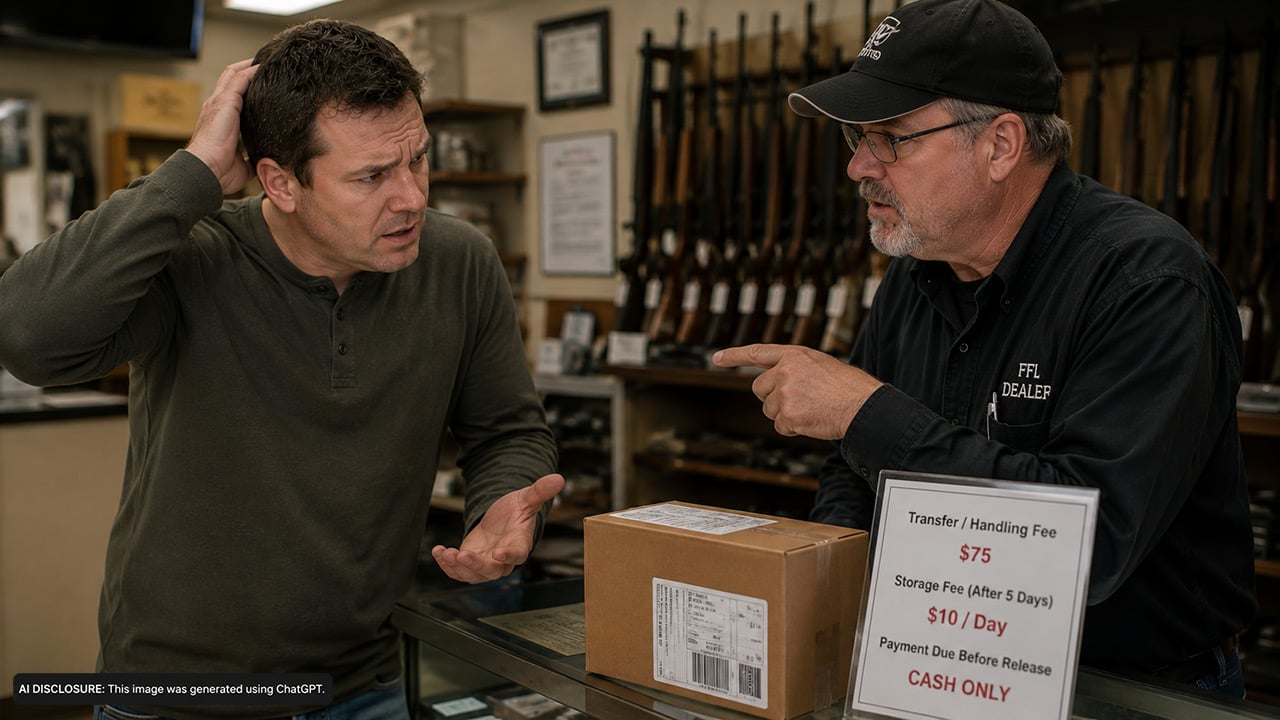
The buyer said they realized the mistake within minutes and tried to stop it. They emailed the seller right away asking them to hold off until the correct FFL info could be provided. The next day, they emailed again with the proper dealer information and asked the seller to ship it there instead. No response came back—and about a week later the buyer got a phone call from the wrong shop: the gun had arrived, and the transfer would cost $50, not the $20 they would’ve paid at their intended FFL.
How the mix-up happened (and why it’s so easy to do)
Most online gun purchases hinge on one detail: where the gun is shipped. Many websites let you pick from a list of FFLs, and if you’ve got multiple dealers in your area—or you’ve moved, or you’ve used a different shop in the past—it’s not hard to click the wrong one when you’re moving fast.
In this case, the buyer said they caught it almost immediately and tried to correct it, which is the right instinct. But “caught it quick” doesn’t always mean “fixed quick,” especially if the seller’s customer service is slow or if the order goes into processing automatically.
When the wrong FFL has the gun, the leverage shifts
Once that box lands at an FFL’s door and gets logged in, the situation changes. The buyer can’t just swing by and pick it up somewhere else, and the seller can’t simply tell the receiving dealer to hand it over like it’s a pair of boots.
The buyer’s frustration makes sense: they tried to correct the shipping destination and ended up being told they’d have to pay $50 to get their own purchase transferred. That extra $30 doesn’t sound like a lot until you look at it like this: it’s the cost of a couple boxes of hunting ammo, a tank of gas to the lease, or a new set of game camera cards—paid purely because the wrong business ended up holding the package.
Transfer fees aren’t standardized, and shops don’t like surprises
FFL transfer fees are all over the map. Some rural shops keep them low because it brings folks in the door. Others price them higher because transfers can be paperwork-heavy, time-consuming, and not very profitable compared to selling inventory off the shelf.
From the wrong dealer’s point of view, they received a firearm addressed to them, they have to do the intake and storage, and they may see it as a straightforward transfer—at their posted rate. From the buyer’s point of view, it feels like getting penalized for something they tried to fix.
The missing email trail is what really stings
The buyer said they don’t have an email trail because they used the dealer’s website contact tool instead of their own email account. That’s a hard lesson, and it’s one a lot of folks learn the expensive way—whether it’s a gun order, a treestand shipment, or a warranty claim on optics.
When you don’t have a time-stamped message in your sent folder, it gets tougher to prove you acted quickly. You know you reached out. The seller may or may not have received it, may or may not be able to find it, and may or may not have acted on it. That uncertainty is exactly where these headaches live.
What practical options the buyer seemed to have
Based on what the buyer shared, the immediate problem is simple: the firearm is sitting with a dealer the buyer didn’t mean to use, and the fee is higher than expected. There are a few angles a person can try in a situation like this without turning it into a feud.
First is a calm phone call to the seller—not another webform message—explaining that they attempted to correct the FFL selection within minutes and again the next day, and asking what the seller can do to make it right. Sometimes the seller can’t change where it went, but they may be willing to offer a credit, discount shipping on a future order, or otherwise help if they believe the buyer made a good-faith effort.
Second is a calm conversation with the receiving dealer. Not everybody will budge on their fee, but some shops will meet you halfway if you explain you didn’t select them intentionally and you’re not trying to waste their time. The dealer may still say no—and that’s their call—but it’s often worth asking politely before you assume the answer.
Third is to ask whether the gun can be transferred from the wrong FFL to the correct FFL. That may involve additional shipping and another transfer step, and it may not save money in the end. It’s also not something you can assume will happen fast. But in some cases, it’s a workable path if both dealers are cooperative and the added cost doesn’t exceed the difference you were trying to avoid.
The big takeaway for online gun orders: slow down and document everything
This is one of those mistakes that can happen to any of us when we’re ordering late at night, juggling kids, or trying to snag something before it goes out of stock. But it’s also one of those mistakes that can cost real money and real time.
If you order firearms online regularly, it’s worth treating the FFL selection like you treat a shot in the timber: slow your breathing and confirm your target. Make sure the dealer name and location are exactly right before you hit submit. And if you need to fix something, use a method that leaves a clear record—your own email, an order-support ticket that sends a copy, or a phone call followed by an email recap.
In the end, the buyer’s situation is a reminder that “just a click” can turn into a week-long hassle. The best protection is careful checkout work and a paper trail you can pull up when somebody says, “We never got that message.”
Like The Avid Outdoorsman’s content? Be sure to follow us.
Here’s more from us: