Photo credit: AI-generated image created using ChatGPT. Illustrative only
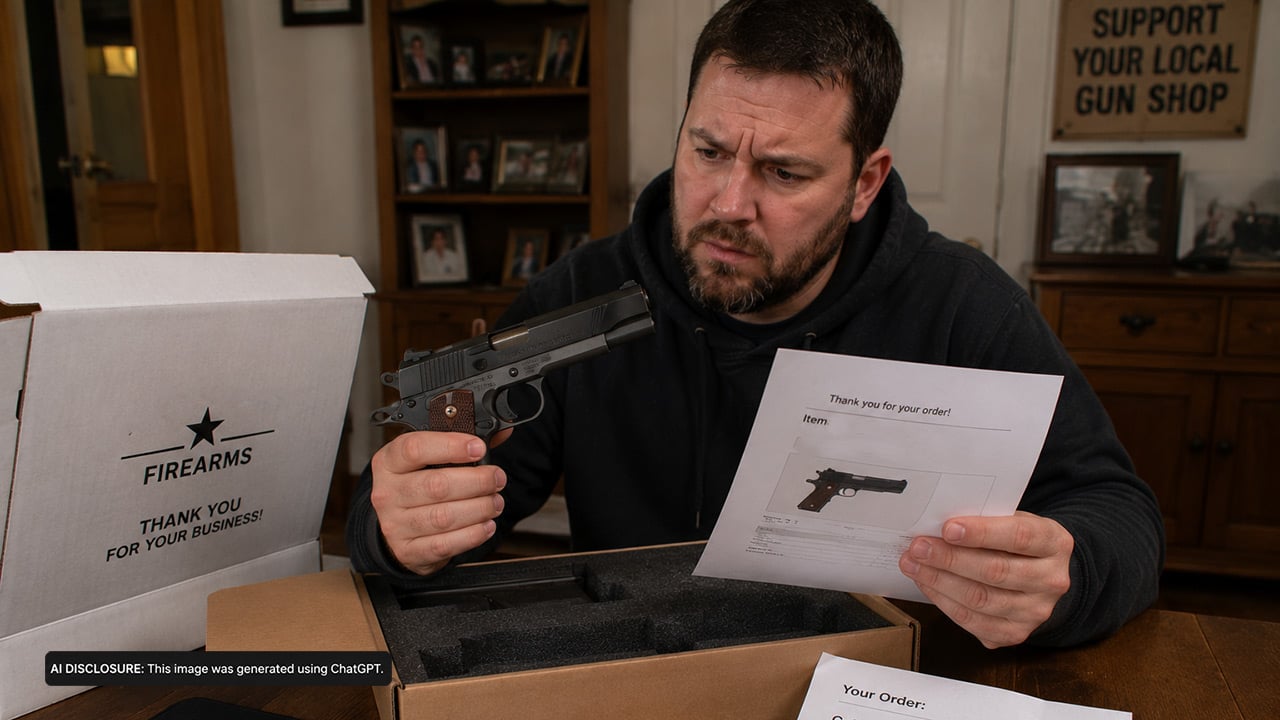
Buying a pistol online usually feels pretty straightforward: find what you want, pay, have it shipped to your local FFL, inspect it, and walk out with the right gun. But one buyer found out how fast that routine can get sideways when a small shop sent the wrong 1911 to his dealer—close enough to look “right” at a glance, but not the model he paid for.
In the source post, the buyer said he ordered a full-size 1911 from an online mom-and-pop gun store and had it shipped to his FFL. When he showed up to do the normal inspection before accepting the transfer, the pistol in the case wasn’t what he ordered. The paperwork showed the right gun on the receipt, but the SKU and model number on the actual firearm pointed to a different 1911—specifically a subcompact.
The mistake showed up at the only moment it really matters
Most folks who’ve bought online know the drill: your FFL calls, you come in, you look it over, and only then do you sign for it. That inspection step is the pressure relief valve in the whole system, and it saved this buyer from being stuck with a pistol he didn’t want.
He said he didn’t take receipt of the gun once he realized it was wrong. That’s a key detail. Once a firearm is transferred to you on the paperwork, things can get a lot more complicated, a lot more expensive, and a lot slower. Catching the problem before transfer keeps it in the “shipping error” lane instead of the “returning a firearm after transfer” lane.
“It’s their mess up” meets the reality of small shops
Where this story gets interesting is the buyer’s mindset. He wasn’t out for blood, and he wasn’t trying to torch a business over an honest packing mistake. He pointed out the shop had a good reputation and solid reviews, and he figured they were just busy and rushed.
At the same time, he was looking at the very real hassle on his end: waiting on a return shipment, having the shop verify the mistake, then shipping the correct pistol out again. Anybody who’s bought guns online during high-demand times knows that “simple fix” can turn into a week or two of dead time, plus extra trips to the FFL.
That’s the tension a lot of gun owners recognize. You want to treat a small business fairly, but you also don’t want to eat the cost in time and frustration when you didn’t cause the problem.
No response turned a simple fix into a decision point
The buyer said he tried calling multiple times, left voicemails, and sent texts without hearing back—at least at first. He also admitted he’d only given it about an hour at that point, which is short in the gun world, especially for a small shop that’s juggling walk-in customers, compliance tasks, shipping, and phone calls.
Still, when you’re the one standing at your FFL counter staring at the wrong pistol, time feels different. You cleared your schedule, maybe you lined up ammo, maybe you had a holster on the way, and you were banking on the deal being done right the first time.
What really pushed him toward a hard line was opportunity: his FFL had just received the exact 1911 he originally wanted, for the same price. That meant he wasn’t just waiting on a correction—he had another path to the same end goal sitting in the display case that day.
The cleanest move in these situations: don’t accept the transfer
From a practical gun-owner standpoint, the buyer’s instinct makes sense: if it’s wrong, don’t take it. Firearms aren’t like ordering a flashlight off a big-box website where you click “return” and drop it on a porch the next day. Serial numbers, transfer forms, shipping rules, and shop policies all stack up fast.
When a gun arrives at your FFL and it’s not what you ordered, the cleanest route is usually to decline the transfer and let the seller and the receiving dealer sort out return shipping and inventory correction. That keeps your name off paperwork tied to a firearm you didn’t want in the first place, and it keeps you from being the middleman in someone else’s warehouse mistake.
The buyer even compared it to the way folks handle problems with big retailers—decline it and let them figure it out. The only difference is that the gun industry has tighter margins and more friction, which is why he hesitated. He didn’t want to punish a small shop for an honest error.
How it ended: a straight-up “oops” and a refund
The update is the kind of ending you like to see. The store eventually called him back and confirmed it was an error. According to the buyer, the shop said the subcompact 1911 they shipped was the only one they had in inventory under that SKU, so they were confident the wrong item went out.
At that point the buyer told them the timing wasn’t going to work for him. Instead of dragging it out or getting defensive, the shop agreed to refund him and take the return. He described it as great service—just slower on the phone than he wanted in the moment.
That last part is worth remembering. Three hours without a call back can feel like a week when you’re trying to close a deal, but it doesn’t automatically mean the shop is trying to dodge you. Sometimes it’s just a small crew buried in orders.
The real-world lesson for anyone buying a handgun online
This little mix-up is a good reminder of why you never skip the counter check at the FFL. Look at the model marking, confirm the SKU if it’s available, and make sure what’s in the case is what you ordered—not just “a 1911,” but the right size and exact variant.
Full-size versus subcompact isn’t a minor typo. It changes sight radius, recoil feel, magazine capacity in many setups, and even what the gun is good for. A subcompact 1911 might make sense for concealed carry, while a full-size is often what folks want for range time, home defense, or that classic 1911 shootability.
It also reinforces a polite but firm standard: you can have empathy for a small business and still protect your own time and money. If the wrong gun shows up, it’s fair to decline the transfer and push for a clean refund or a quick correction. The best shops don’t take that personally—they fix it, learn from it, and keep their reputation intact.
In this case, that’s exactly what happened: an honest packing mistake, a buyer who didn’t accept the wrong firearm, and a shop that ultimately made it right.
Like The Avid Outdoorsman’s content? Be sure to follow us.
Here’s more from us: