Photo credit: AI-generated image created using ChatGPT. Illustrative only
Most anglers who keep a small boat close to the water do it for one reason: daylight is short, and you’d rather be fishing than wrestling gear in the dark. That was the idea for two Massachusetts men who’d been slipping out for early-morning trips in a 12-foot aluminum jon boat they stored beside a maintenance trailer at an elementary school.
Then they came back from a week break and the boat was gone. What happened next—reviewing security footage, following the direction the kids walked, and spotting the boat sitting out in a backyard—was laid out in the original post by one of the men, a 26-year-old school district employee who said he was left “frazzled” after the ordeal.
A quick morning fishing routine turned into a theft report
According to the account, the boat was stored in a secluded spot next to the school’s maintenance trailer, across from their fishing location. The men believed it was a safe setup because the area was “heavily monitored by cameras.” It’s the kind of arrangement plenty of working folks make in summer—keep the boat close, keep it simple, and get on the water fast.
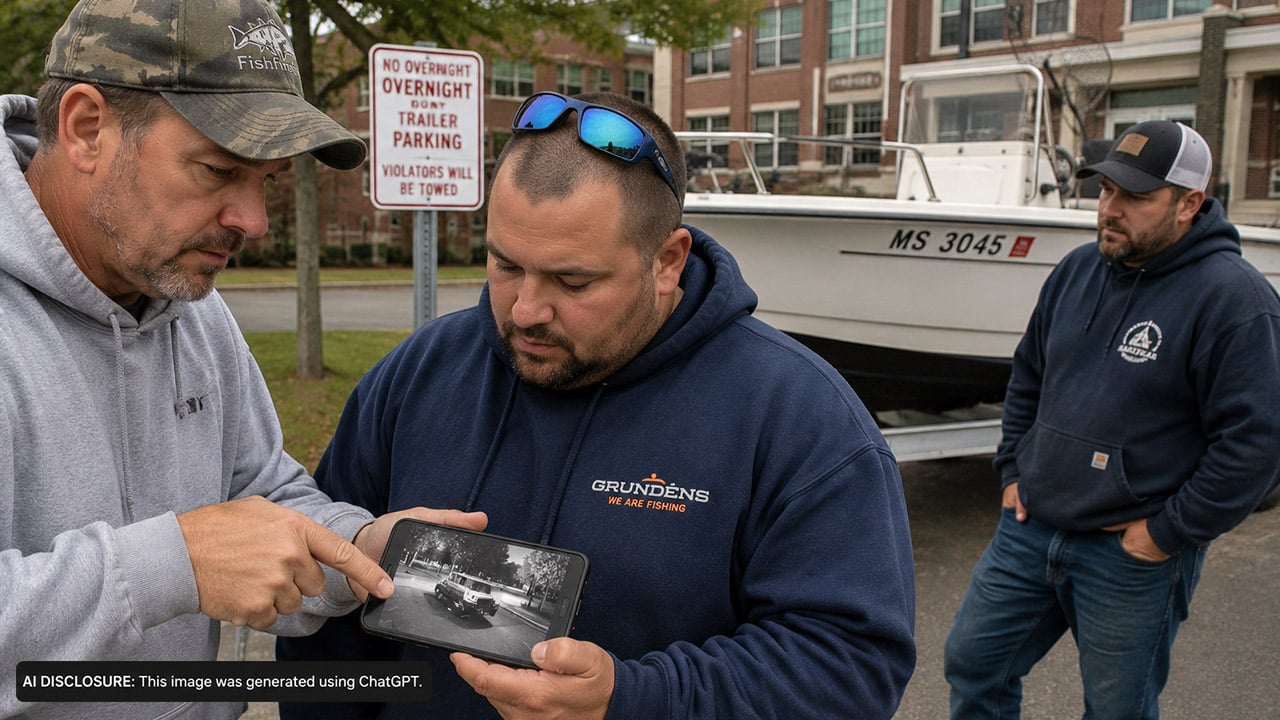
But when they returned after a week away, the jon boat had vanished. The first step wasn’t guesswork or knocking on doors—it was pulling up the camera footage to see exactly what happened.
Security footage pointed to a group of teens
On video, the poster said they saw four middle school or high school-aged kids carrying the boat away, with another following on a bike. That’s not a misunderstanding or a “borrowed it and brought it back” situation. Moving a 12-foot aluminum boat takes effort and intention.
And from a practical outdoorsman standpoint, that’s the moment the tone changes. A stolen boat isn’t just missing property—it’s a safety issue. Kids hauling a boat toward a lake can easily turn into a rescue call, property damage, or worse if they shove off without knowing what they’re doing.
The owners didn’t confront anyone—they went looking for the boat
After seeing the footage, the two men got in a truck and started scouting along the lake in the direction the kids walked off. About an hour later, they found the boat sitting “in plain sight” in the backyard of a house.
From the street, they confirmed the registration number on the hull matched. That detail matters. It’s one thing to think you found your boat; it’s another to verify it without stepping onto someone else’s property or letting emotions take the wheel.
Police recovered the boat, but damage was already suspected
Instead of trying to take it back themselves, the men called police. Nobody was home at the house where the boat sat, and officers seized the boat and brought it to the station while they worked on contacting a parent and sorting out what happened.
The poster said police told him he should be able to pick it up the next day. But the bigger hit was the condition: the benches and cup holders were reportedly stripped, and there was concern the hull may be breached—meaning it might not be water-worthy anymore. Anyone who’s owned a small aluminum boat knows that once the hull is compromised, you’re either paying for repairs, attempting a patch you trust with your life, or shopping for another rig.
The real gut punch: small boats aren’t cheap to replace
This wasn’t a fancy bass boat with a payment book, but it also wasn’t a $200 beater. The poster said boats like his run roughly $2,500 to $5,000. That’s real money for most working families, especially when the whole point of a simple jon boat is affordability and reliability.
He also mentioned bait losses and wanted to know what actions were available to make the kids or their parents responsible for damages. That’s a common frustration in the outdoors world: the thief gets a thrill and walks away, while the owner is stuck with the bill, the hassle, and the lost time on the water.
And beyond the dollars, there’s the practical cost. A damaged jon boat doesn’t just cancel a weekend—it can wipe out a whole season if you don’t have the cash to replace it or the time to chase repairs.
What most people focus on in situations like this
Even without a long back-and-forth in the source material, you can see the pressure points any experienced outdoorsman recognizes: document everything, avoid confrontation, and let the paperwork do its job. The poster did several things right—checked footage first, verified the registration number from the street, and got law enforcement involved instead of trying to “self-recover” a boat from someone’s yard.
If you’re the one who ends up in this spot, the practical play is usually the same: keep copies of the footage, take photos of the boat once it’s returned (especially any missing parts and damage), save receipts or estimates for comparable boats and replacement components, and work directly through the proper channels handling the report.
The other thing outdoors folks tend to stress is prevention after the fact. Cameras are great, but cameras don’t physically stop theft. A small boat stored near a road or neighborhood—no matter how “secluded”—is still a temptation if it isn’t secured in a way that makes theft hard and loud.
In this case, the cameras helped solve the “who” and the “how.” Unfortunately, cameras don’t undo a breached hull.
The hard lesson is that simple gear is often the easiest to steal. A 12-foot jon boat doesn’t need a key, doesn’t need a trailer, and doesn’t need much planning—just a few sets of hands and a direction to walk. For these two men, the footage and quick thinking helped get the boat back, but whether it’s still a usable fishing rig is the part that will sting the longest.
Like The Avid Outdoorsman’s content? Be sure to follow us.
Here’s more from us: