Photo credit: The Avid Outdoorsman
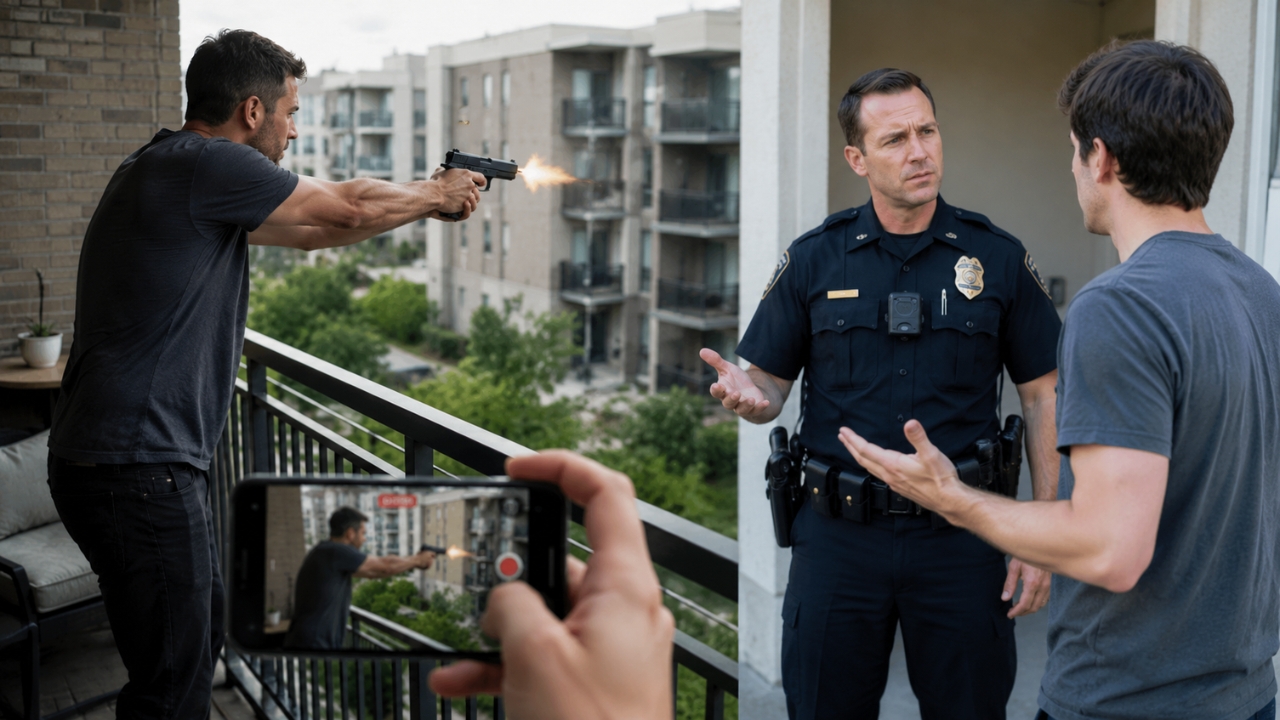
It started the way a lot of apartment problems start these days: with a phone held up in a window and a neighbor trying to document something that didn’t feel right. A tenant in a multi-unit complex said they heard a sharp crack late in the evening, stepped onto their own balcony, and saw the person across the courtyard holding a handgun over the railing.
The tenant hit record. In the clip, the neighbor appears to raise the pistol and fire outward from the balcony. You can’t see what’s beyond the building, but you can see muzzle flash and hear the report bounce off the concrete. The tenant called police expecting a quick response. What they got instead was a lesson in how hard it can be to get action, even when you’ve got video.
One shot changes everything in a tight neighborhood
If you’ve spent any time around rural property, you already know the difference between “shooting” and “shooting safely.” Out in the country, a good backstop and a known direction make all the difference. In an apartment complex, you’ve got none of that—just shared walls, parking lots, windows, and people you don’t know walking dogs and taking out trash.
The tenant described that uneasy feeling that comes when you can’t tell if it was a negligent discharge, someone celebrating, or someone trying to intimidate. That’s what made them film. Not to start a fight, but because when the responding officer asks, “What exactly did you see?” a shaky memory doesn’t always carry much weight.
Police showed up, but the video didn’t seal the deal
Officers reportedly came through the complex, spoke with the reporting tenant, and asked to see the footage. The tenant handed over the phone, expecting the next step would be knocking on the shooter’s door and taking the firearm. Instead, the tenant said they were told the clip by itself wasn’t enough to take enforcement action right then.
That frustrates people, but it’s not hard to see why it happens. A video can show a person holding something that looks like a handgun and a flash that looks like a shot, but it often doesn’t prove location, direction of fire, whether it was a blank, whether the object was a replica, or even when the clip was recorded. Add in low light, distance, and grainy audio, and you’ve got questions an officer has to answer before going hands-on.
In a perfect world, a reckless shot from a balcony is treated like an emergency every time. In the real world, cops are walking into a situation where a wrong move can turn into a physical confrontation in a hallway full of neighbors. They want probable cause that’s strong enough to stand up later, not just enough to “check the box” in the moment.
The part gun owners understand: you need a backstop, not vibes
This is where responsible gun folks tend to get blunt. Firing off a balcony isn’t “target practice.” It’s a roll of the dice. Even a small handgun round that doesn’t hit something solid can travel farther than most people think, and a ricochet off pavement or metal turns into pure randomness.
Hunters and range shooters are used to rules that don’t budge: know your target and what’s beyond it, keep your muzzle in a safe direction, and don’t touch off rounds unless you can control the outcome. An apartment balcony gives you almost no control over “what’s beyond it.” That’s why many states and cities treat discharge inside municipal limits as a serious offense, and why leases almost always prohibit it.
From a practical standpoint, it also invites the worst kind of misunderstanding. Neighbors don’t know if it’s a celebration, a threat, a domestic situation, or someone about to hurt themselves. One shot can trigger panic, armed responses, and mistakes.
What the tenant could do next (without turning it into a feud)
When officers say a single piece of video won’t carry the whole thing, the next move is usually documentation and pressure in the right places—not a face-to-face confrontation. If you’re the reporting tenant, you’re trying to create a clean paper trail that shows a pattern and gives decision-makers something solid to act on.
That typically means saving the original file (not just a texted copy), writing down the exact time, noting the apartment number, and capturing anything else that helps: spent casings found below, impact marks, direction the muzzle was pointed, and any other witnesses willing to provide contact info. It also means calling again if it happens again. A second incident with a matching time stamp and another witness tends to tighten things up fast.
On the non-police side, the property manager has leverage that doesn’t require a criminal charge. Most leases have language about illegal activity, disturbing the peace, and unsafe conduct. Even if law enforcement can’t act immediately, a management company can issue a notice, start an eviction process, or bring in added security—especially when you provide a clear record of the event.
And for folks thinking about “handling it yourself,” don’t. A hallway confrontation with someone you believe is reckless with a gun is how people get hurt. Let the system grind, and give it good information.
Commenters argued about two things: proof and priorities
When situations like this get discussed, the same two camps show up. One side says, “If it’s on video, that should be enough.” The other side says, “Video isn’t always what it looks like,” and points to replicas, airsoft guns, blanks, and edited clips. Both sides have a point, but neither changes the immediate reality for the person who heard a shot in a crowded complex.
A lot of folks also focused on response priorities. When a call comes in as “shots fired,” the public expects an urgent response and decisive action. Officers, on the other hand, are balancing the call against what they can safely verify and what they can legally justify in the moment. That gap between expectations and procedure is where trust gets strained.
Some outdoors-minded commenters steered the talk toward practical solutions: cameras facing common areas, better lighting, and encouraging neighbors to report in real time so dispatch can build a clearer picture. Others brought up an uncomfortable truth—if a person is willing to shoot from a balcony, they may not be the kind of person a neighbor should tangle with directly.
The hard lesson: “Not enough to act” doesn’t mean “no problem”
The tenant’s biggest takeaway was that filming something doesn’t automatically produce consequences. Video helps, but it’s often just one piece. Police still look for witness statements, physical evidence, and clear identification—especially in situations where entering a residence or seizing a firearm requires more than suspicion.
For the rest of us, it’s another reminder that gun safety isn’t just about the gun owner. In tight living quarters, one person’s bad decision becomes everybody’s problem. If you’re stuck living near someone who treats a balcony like a firing line, your best tools aren’t bravado—they’re documentation, persistence, and letting law enforcement and property management do their jobs with as much usable information as you can give them.