Photo credit: The Avid Outdoorsman
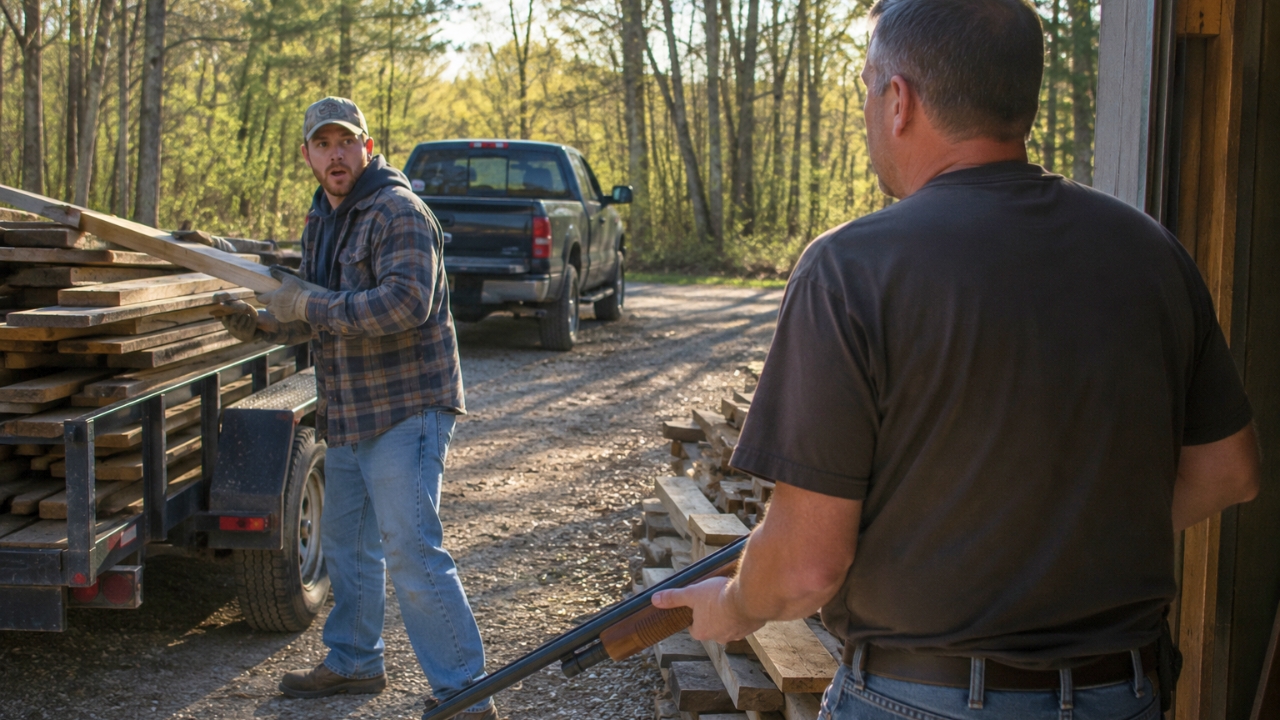
A homeowner said a man came onto his property and started taking lumber, but the situation got more complicated after the homeowner walked outside with a shotgun.
According to the Reddit post, the homeowner believed someone was trespassing and stealing wood from his property. He confronted the person while armed, then later wondered whether he had crossed a legal line by having the shotgun with him.
The twist was that the alleged trespasser apparently called police on the homeowner.
That is the kind of detail that makes these property disputes messy fast. A landowner may feel like he is the victim because someone is stealing from him. But the moment a firearm enters the scene, the legal focus can shift quickly.
The homeowner explained the situation in a Reddit thread and asked whether he was legally allowed to brandish a shotgun at a trespasser: https://www.reddit.com/r/legaladvice/comments/108mmmm/was_i_legally_allowed_to_brandish_my_shotgun_to_a/
The homeowner believed the man was stealing
The poster’s version of events started with property being taken.
He said someone was on his land and taking lumber that belonged to him. That is not the same as a neighbor accidentally stepping over a boundary line or a kid wandering through the woods.
If someone is carrying off wood from private property, the homeowner has a real reason to be upset.
But even when a landowner is right about the theft, the response still matters. A person stealing lumber does not automatically give the homeowner permission to handle the situation any way he wants.
That was the uncomfortable part of the thread.
The shotgun changed the whole story
The homeowner came out with a shotgun.
From his perspective, that may have felt reasonable. He was on his own property, dealing with a stranger he believed was stealing from him. A lot of people in rural areas would understand why he did not want to confront an unknown trespasser empty-handed.
But commenters were quick to point out that having a gun during a confrontation can be viewed very differently depending on how it was carried, whether it was pointed, what was said, and whether the trespasser was threatening anyone.
There is a big difference between a homeowner carrying a long gun at his side and someone using it to threaten a person over property.
That distinction mattered.
Commenters warned him about brandishing
The word “brandishing” did a lot of work in the thread.
If a firearm is displayed in a way meant to intimidate someone, that can become a legal problem, even if the other person was trespassing. Commenters warned the homeowner that using a gun to protect property can be dangerous legally and physically.
The key issue was whether the homeowner was facing a threat to his safety or simply trying to stop theft.
Most states draw a hard line between defending yourself from danger and using deadly-force threats to protect property. If the trespasser was not attacking, breaking into an occupied home, or threatening anyone, the shotgun could make the homeowner look like the aggressor.
That was the warning commenters kept coming back to.
The alleged thief calling police made things worse
The most frustrating part for the homeowner was that the trespasser apparently called police.
That can feel backwards. The person accused of stealing from the property owner called authorities on the person who owned the property.
But that is exactly why commenters told the homeowner to be careful.
When police arrive, they do not always know who is right at first. They see a dispute, one person accusing another of theft, and one person with a gun. Depending on the facts, the person with the gun may draw a lot of attention.
That does not mean the trespasser was right. It means the firearm made the situation easier to spin against the homeowner.
The better move was to call police first
Several commenters told the homeowner that he should have called law enforcement instead of confronting the person with a gun.
That advice may feel unsatisfying when someone is stealing from your land in real time. But it is often the safer path.
A police report creates a record. If the person is still there, officers can deal with the trespass and theft. If the person leaves, the homeowner can provide photos, video, vehicle information, and a description.
The homeowner can still tell the person to leave from a safe distance if necessary, but chasing a theft suspect while armed can turn a property crime into a much more serious incident.
Evidence would have helped more than the shotgun
Commenters focused on documentation because it would have helped the homeowner’s side.
Photos of the person taking lumber, video footage, license plate numbers, tire tracks, messages, prior warnings, or proof that the lumber belonged to the homeowner would all be useful.
A camera pointed at the lumber pile might have been more valuable than walking outside with a gun.
That does not mean the homeowner had to ignore the theft. It means he needed proof that would hold up after the trespasser denied it or claimed he had permission.
A firearm may scare someone away in the moment, but evidence is what helps later.
Property disputes can flip fast
This story is a good example of how quickly a landowner can go from “victim” to “person being investigated.”
The homeowner may have been completely right that someone was stealing lumber. But if he handled the confrontation in a way police viewed as threatening, the theft complaint could get overshadowed.
That is what makes these situations so frustrating.
A person can be wronged and still make a mistake in response. Commenters were not saying the trespasser had a right to steal. They were saying the homeowner needed to avoid giving the trespasser a stronger complaint than the one the homeowner started with.
The safest approach is usually boring
The best advice was not dramatic.
Post the property. Secure the lumber if possible. Use cameras. Call police when someone trespasses or steals. Keep a record of incidents. Avoid direct confrontations with strangers, especially while armed.
If the homeowner truly believes he is in danger, that is a different situation. But if the issue is stolen lumber, the law may not look kindly on using a shotgun as the solution.
That is the hard lesson from the thread.
Owning the property does not mean every response is legally safe. And when a trespasser calls police after seeing a gun, the homeowner needs to be able to explain that he acted carefully, not out of anger.
The theft still mattered
None of this means the alleged trespasser gets a pass.
If someone walked onto private property and stole lumber, that should be reported. The homeowner had every reason to want the person identified, removed, and held responsible.
But the way to win that situation is with documentation and reports, not a confrontation that gives the other side a brandishing complaint.
For landowners, that is the frustrating balance. You should not have to tolerate people stealing from you. But once a firearm is involved, the whole event becomes more serious, and the safest legal move is often the least satisfying one.
Like The Avid Outdoorsman’s content? Subscribe to our newsletter so you never miss an article.
Here’s more from us: