Photo credit: AI-generated image created using ChatGPT. Illustrative only.
A lot of guys think they’ve got a clean slate after a decade goes by. That was the mindset of one California outdoorsman who caught a misdemeanor domestic violence conviction back in 1999, then figured the gun restriction would eventually age out like other state-level prohibitions.
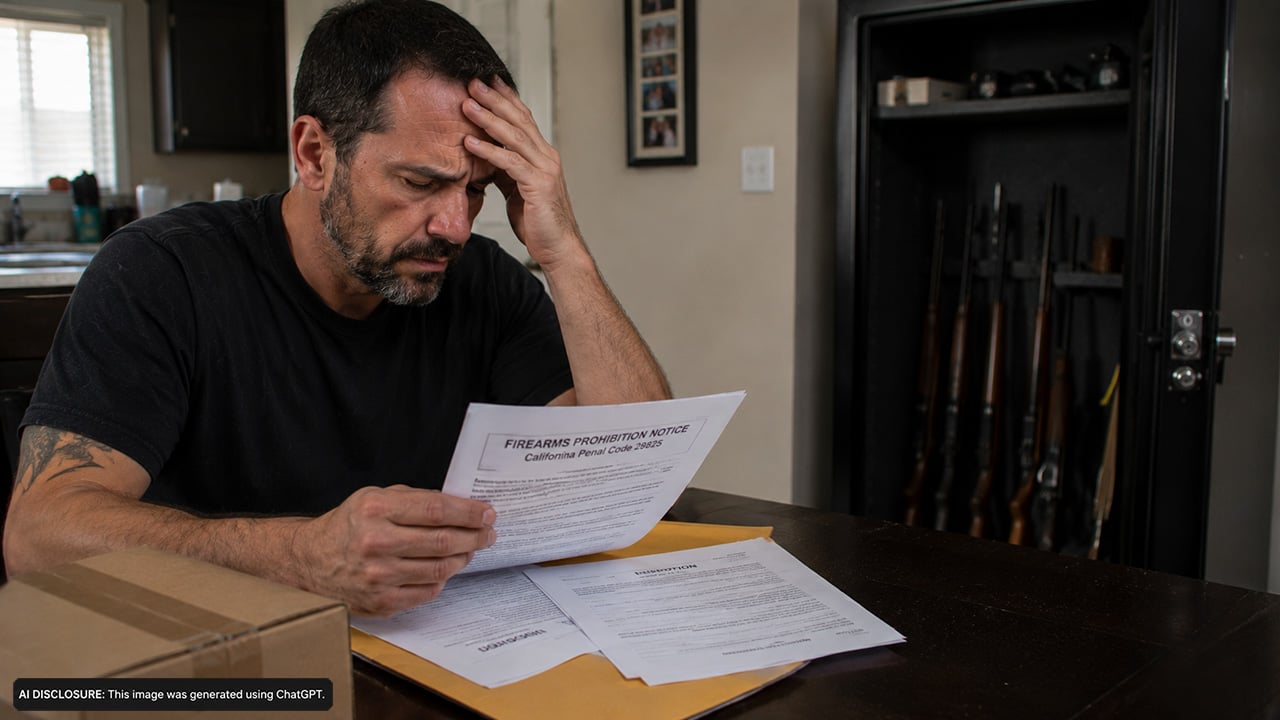
Instead, when he tried to buy a firearm years later, the state system didn’t treat it like a closed chapter. His paperwork came back “undetermined” twice, then denied on a later attempt—an experience he laid out in the discussion while asking if there’s any realistic path to restore his gun rights so he can hunt with friends and keep a firearm at home for protection.
A teenage mistake that followed him into middle age
According to his account, the conviction was for California Penal Code 243(e), a misdemeanor domestic battery, from an incident involving his high school girlfriend when he was 18. He describes it plainly: young, emotional, and reacting badly to being cheated on. No marriage, no kids, and—importantly in his mind—no shared household.
Since then, he says his record has been clean. Now pushing 40, he’s in the place many hunters eventually get to: wanting to join buddies for hunts, and wanting a lawful option for protecting his family at home. The problem is that the legal system doesn’t always care how long ago it was if the underlying category still triggers a prohibition.
When “10 years” turns into “you can’t pass a background check”
He went into a gun shop in 2021 thinking he was dealing with a 10-year ban. That’s a common assumption because California does have time-limited firearm prohibitions for certain misdemeanor convictions.
But his real-world result didn’t look time-limited at all. He tried buying through a dealer, and the DROS background check came back “undetermined” twice. On the third try, he believes it came back denied. In practical terms, that’s the moment a lot of folks realize the state and federal layers don’t always line up with what a buddy at camp told them, or what they vaguely remember from court decades ago.
The “dating partner” detail he’s hanging his hope on
The key detail he keeps circling back to is the relationship: they were only dating. They didn’t live together, weren’t married, and didn’t have children. After the case, they went their separate ways.
His question is whether that matters for restoring rights in both California and federally—because some prohibitions are tied to how “domestic” the relationship is defined. That’s not just legal hair-splitting. Out in the real world, it can be the difference between a guy being able to buy a deer rifle like everyone else, or being treated like he’s permanently barred no matter how steady his life has been since the late ’90s.
Why hunters and gun owners get blindsided by DV-related prohibitions
This is where the outdoors angle matters. A lot of gun law talk stays theoretical until it collides with a hunting trip or a home-defense decision. If you’re planning to borrow a buddy’s rifle for a weekend hunt, or you’re thinking about buying your first shotgun for the house, you need to know what “prohibited person” actually means in your state—and whether federal law piles on top.
Domestic violence convictions are one of the most unforgiving categories in firearms law. Time passed, personal growth, steady work, and “I haven’t been in trouble since” don’t automatically translate into eligibility. If the prohibition applies, it applies—right up until some legal process changes the status. And the first clue is often exactly what this guy saw: the background check doesn’t come back clean.
What people tend to focus on in situations like this
Even without a pile of back-and-forth comments included in the source material, the themes are predictable because most of us have watched a buddy navigate a messy paperwork situation at some point. People tend to focus on the specific code section of the conviction (243(e) here), how it’s categorized, and whether it fits the definitions that trigger state and federal restrictions.
They also tend to focus on the paper trail: what the actual court record says, what the disposition was, and whether there were any accompanying orders or terms that still attach to the case. When a guy says, “I read online I might have a chance,” the experienced voices usually steer him toward getting the exact records and talking to a qualified attorney who handles firearms rights issues—because a “maybe” found on a forum doesn’t pass a DROS check.
The practical options he’s really asking about
At the end of the day, he’s not asking for a loophole. He’s asking whether the law recognizes any difference between a teenage dating relationship and a spouse or live-in partner when it comes to firearms disability—and whether there’s any route to regain lawful ownership after more than two decades of staying out of trouble.
For outdoorsmen reading this, the takeaway is simple even if the legal path isn’t: don’t assume a time-limited state ban is the whole story, and don’t assume “misdemeanor” means “minor” when it comes to gun rights. If you’ve got an old DV-related conviction in your past and you’re thinking about getting back into hunting or buying a home-defense firearm, do the homework before you fill out forms at the counter. Getting “undetermined” or denied doesn’t just ruin your day—it can put you on a longer, more complicated road to sorting out your status the right way.
Like The Avid Outdoorsman’s content? Subscribe to our newsletter so you never miss an article.
Here’s more from us: