Photo credit: AI-generated image created using ChatGPT. Illustrative only.
A guy in Ohio thought he was doing everything by the book: staying in a nonprofit transitional housing program, keeping his head down, and maintaining a lawful firearm for self-defense. Then staff found out about it and, without any warning baked into the paperwork, he says they took his gun parts and even his 3D printer—and told him he could either accept it or lose his housing.
The details come from the original post, where the resident laid out what happened, what his “participant agreement” actually says, and why he believes the program crossed a line by confiscating property instead of handling it like a policy violation.
A contract line that sounds simple—until it isn’t
The resident says the only firearms-related language in the participant agreement is one sentence: “I will not bring illegal drugs or weapons into my place of residence.” He read that as “no illegal drugs” and “no illegal weapons,” not “no weapons at all.” That kind of wording matters, because a lot of housing programs do ban firearms outright—but they usually spell it out.
Staff, according to the post, took the opposite view: no weapons whatsoever. The resident pushed back on that interpretation by pointing out the program didn’t seem to care about other items he owned—pepper spray, a sword, and a dagger—so the enforcement looked inconsistent from the jump.
Confiscation instead of a conversation
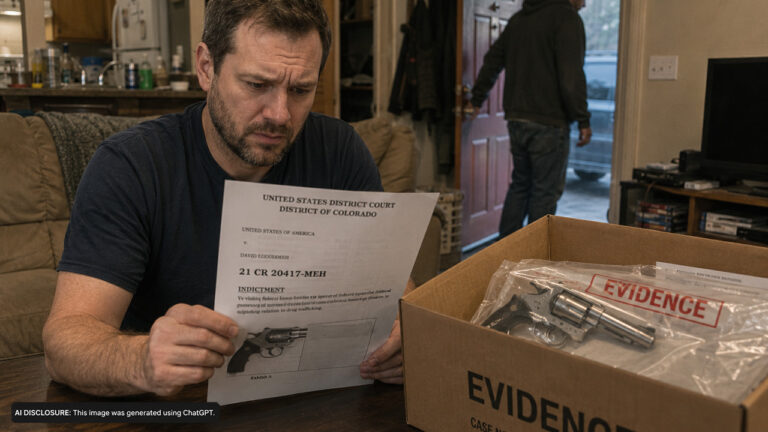
Once staff learned he had a firearm, the resident says they confiscated it. He notes the gun was a privately made firearm (PMF) and that he followed state and federal rules, and he emphasizes he’s not prohibited from owning firearms. He also adds an important detail: by the time staff took the firearm-related items, he had already destroyed the receiver because the print was slightly out of tolerance during assembly.
That turns the whole thing from “they made me remove a gun from the property” into “they physically took my property.” And that’s where a lot of outdoorsmen are going to get hung up, because there’s a big difference between “you can’t keep that here” and “we’re keeping it.” If a landlord tells you a tree stand can’t be on their fence line, that’s one thing. If they take your stand, that’s another.
Rules that kept changing as the pressure went up
The resident says staff first claimed the housing program bans all weapons. When he pointed out pepper spray was allowed, the definition shifted to “lethal weapons.” When he pointed out the sword and dagger, the definition shifted again—this time to “no firearms,” with staff allegedly arguing firearms are “designed only to kill.”
This is where the real-world problem shows up: when rules aren’t written clearly, they get rewritten on the fly, usually in the moment where you have the least leverage. Hunters and gun owners see versions of this all the time—workplace policies, lease agreements, campground rules—where “weapons” gets treated like a catch-all word, right up until someone asks what it actually covers.
They took the 3D printer too—and tied it to his housing
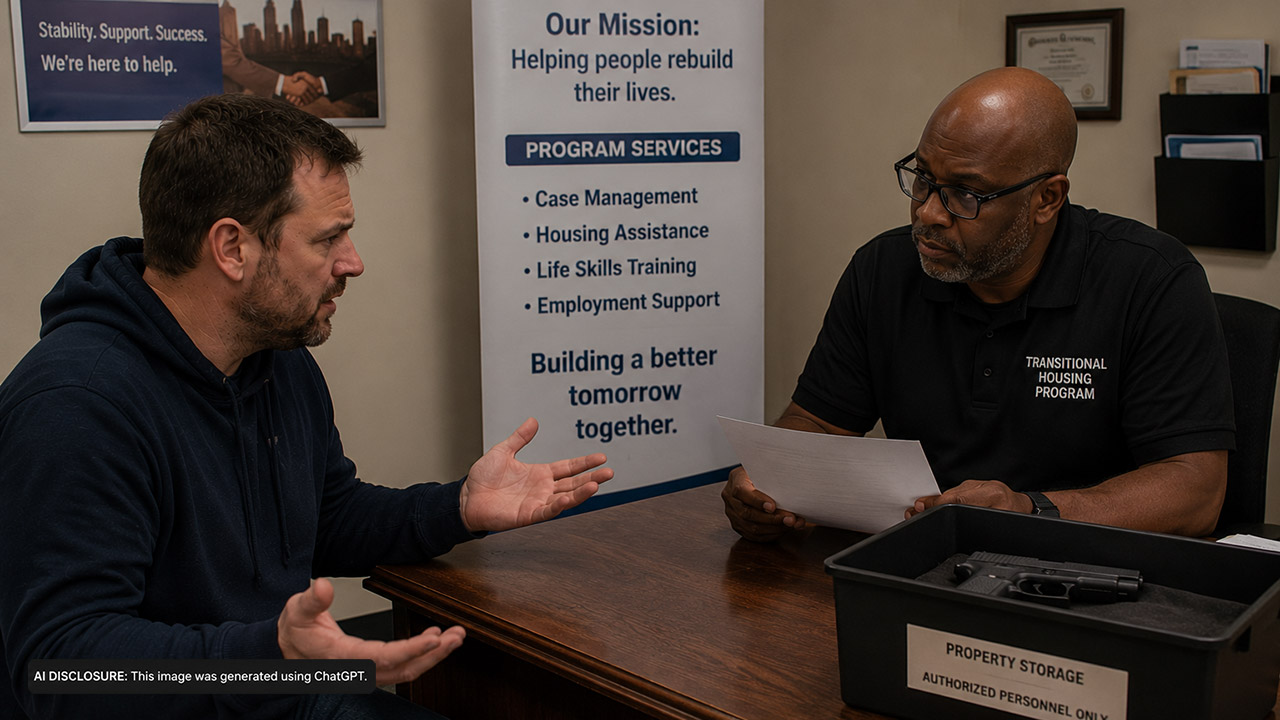
The resident says staff also confiscated his 3D printer, arguing he could use it to make another weapon. He initially refused, but he claims they told him he wouldn’t be allowed to stay in the program if he didn’t give it up. He says there were no rules in the agreement banning a 3D printer and that the program couldn’t “discharge” (their word for removing someone from the program) at will.
From a practical standpoint, this is where things go from an argument about one item to an argument about control. A lot of folks use 3D printers for perfectly normal stuff—tool organizers, fishing-related parts, fixtures, and household repairs. Treating the printer itself as contraband because it could be used for something prohibited is the same logic that would ban epoxy because you could bed a rifle stock, or ban a drill press because you could build something unsafe. That may be how the program sees risk management, but it’s a heavy hammer.
A “defend yourself” meeting that went nowhere
After all that, the resident says there was a meeting about alternate ways to protect himself. His summary was blunt: the advice boiled down to “just run away.” Anyone who’s lived in rough areas—or has family members who have—knows how unhelpful that is. Running away isn’t always possible, and it’s not a plan.
Then came a key point: when he asked for his property back, he says staff told him they’d return it, but he couldn’t live in the program if they did. That puts him in a spot a lot of folks would recognize: choose between your housing and your property rights.
The door sign that showed up after the fact
Two days after he sent a demand letter with a 14-day deadline, the resident says the program posted a standard “no firearms/deadly weapons” notice on the front door of the duplex. The wording, as he describes it, is the kind you see on schools, government buildings, hospitals, and certain businesses, citing Ohio Revised Code language about bringing deadly weapons or dangerous ordnance onto the premises unless authorized by law.
He took that as bad faith, mainly because it appeared after the incident and without any notice to him. And on a common-sense level, you can see why: posting a sign now doesn’t explain why staff felt justified taking property then. It can also feel like an attempt to backfill a policy that wasn’t clearly communicated up front.
Why the housing setup matters more than people think
The resident describes the program housing as a rented duplex with no staff living on-site. He says he has an assigned private room, keeps his belongings there, buys and prepares his own food, and has lived there for over a year. Staff are allowed access only in emergencies, and he meets with staff weekly for a case session. He believes that under the “totality of circumstances,” it functions like a tenancy—even if he doesn’t pay rent or utilities.
That distinction matters because the more your living arrangement looks like a normal landlord-tenant setup, the harder it is for an organization to act like it can simply enter, seize items, and set whatever terms it wants on the fly. Even for gun owners who never plan to live in program housing, it’s a good reminder: read the agreement like it’s a lease, because functionally, it might be.
The resident said he was trying to resolve it with negotiation and civil mediation, but he’s now weighing whether he’ll have to go to court. For outdoorsmen, the takeaway isn’t about picking fights—it’s about knowing what you signed, documenting everything, and not confusing “house rules” with authority to confiscate property. If an organization wants a no-firearms policy, it ought to be written plainly, enforced consistently, and handled like adults—before anybody starts taking things that don’t belong to them.
Like The Avid Outdoorsman’s content? Subscribe to our newsletter so you never miss an article.
Here’s more from us: