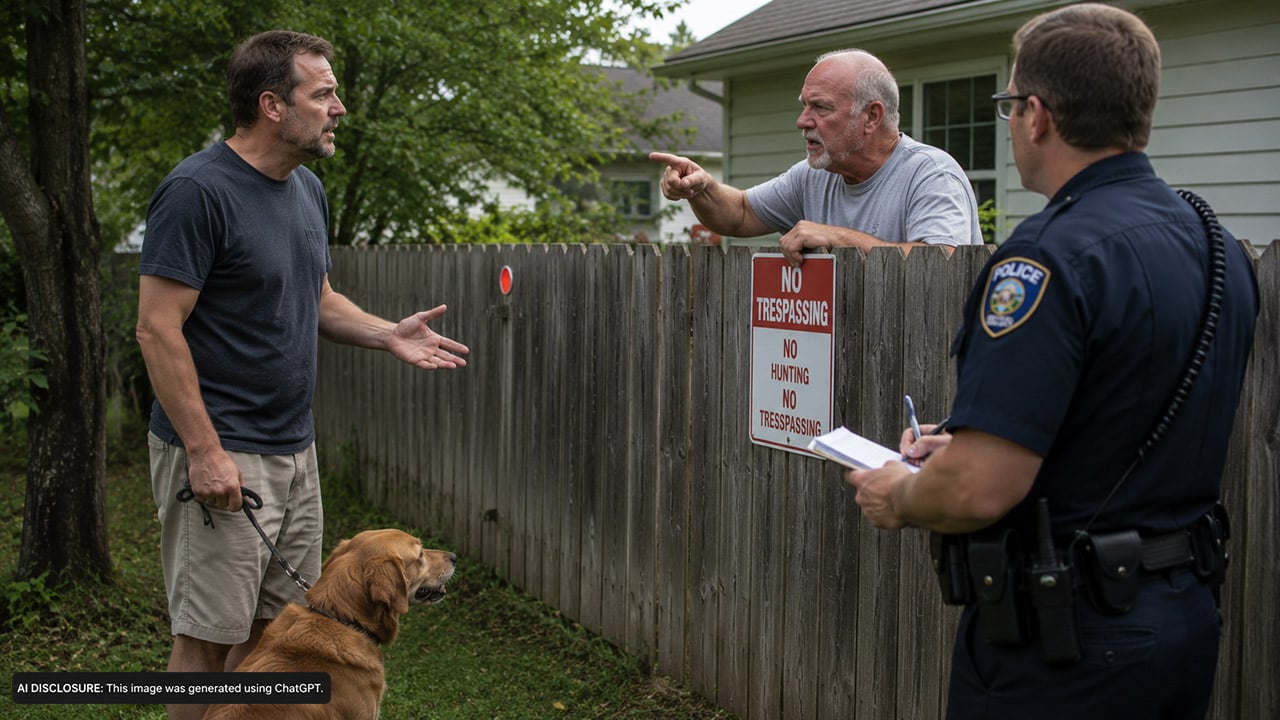
Photo credit: AI-generated image created using ChatGPT. Illustrative only.
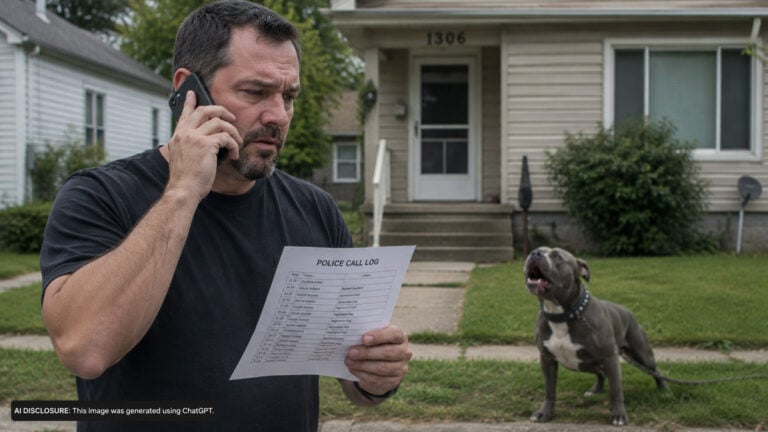
A family in Asheville, North Carolina says a tense neighborhood situation has gone from uncomfortable to flat-out scary. They’ve got a three-year-old Rottweiler mix named Groot that they describe as gentle and well-known around the neighborhood—even with kids coming over to play with him.
But in the original post, the dog’s owner explains that one neighbor is so afraid of Groot that she now walks past their house multiple times a day with a gun in her hand, openly threatening to shoot the dog if it ever gets loose. The part that really twists the knife is the fear that, under North Carolina law, a threat like that could actually be carried out legally in the right (or wrong) set of circumstances.
A dog behind an invisible fence, and a neighbor who doesn’t trust it
The owner says their front yard is set up with an invisible fence. Groot and three chihuahuas will sometimes run out into the yard when cars go by or when other dogs are walked down the road, but they’re staying within the boundary of the property—about 40 feet from the road.
That detail matters because an invisible fence doesn’t look like anything to a passerby. A person walking a dog sees a large dog moving fast toward the road and they don’t see a barrier, they just see a potential problem. Even if Groot stops every time, the neighbor’s fear isn’t based on a fence line she can verify.
The yelling incident kicked off the spiral
Things reportedly escalated a few months earlier when the neighbor walked by with her dog and started “yelling bloody murder” that Groot was going to kill her—while Groot wasn’t even outside. From there, the owner says she began threatening that if the dog ever got out of the invisible fence, she would use her husband’s gun. The husband, the poster adds, is a retired police officer.
That’s when this turned from ordinary “my neighbor doesn’t like my dog” friction into something that feels like a safety situation. It also puts the dog owner in a rough spot: you’re trying to keep the peace, but you’re also hearing a specific threat against your animal.
The family built a real fence, but the gun kept showing up
In response, the dog owner says they built a physical fence “to keep him in,” and they didn’t just put it on the same line. They moved it even farther back—about 100 feet from the road—creating more space between any dog activity and anyone walking down the street.
Even after that, the neighbor’s behavior didn’t cool off. The owner says she now walks past their house repeatedly with a handgun in her hand, and they’ve got a one-year-old baby in the home. A person pacing a neighborhood with a firearm in-hand is alarming anywhere, but it hits different when it’s tied to repeated threats and a nearby family.
Animal Control didn’t bite, but the owner is still worried
The neighbor reportedly called Animal Control and claimed the dog was “rabid and dangerous.” According to the post, when Animal Control contacted the family, the officer already knew the dog and reportedly laughed when he realized which dog was being described.
That kind of reaction might feel reassuring in the moment, but it doesn’t solve the real concern: this neighbor appears convinced the dog is a threat, and she’s openly carrying a gun while walking by. If she believes she’s in danger—right or wrong—bad decisions can get made fast.
Why the threat could be legal in North Carolina
North Carolina, like many states, generally allows a person to protect themselves if they reasonably believe they’re facing an imminent threat. When a dog is involved, that can turn into a messy, fact-specific argument: Was the dog actually loose? Was it charging? Was it within the owner’s control? Was it on the neighbor’s property or in the public right-of-way? Did the person have a clear path to avoid the encounter?
The dog owner’s fear is that if Groot ever slips a collar, bolts through a gate, or breaches the boundary for even a moment, the neighbor could claim she felt threatened and shoot. And depending on the exact circumstances, that justification may be difficult to disprove after the fact—especially if there’s no video, no witness, and the dog can’t tell its side of the story.
That’s the hard truth for dog owners: even a well-behaved dog can look dangerous when it’s moving fast, barking, or closing distance. Folks who spend time outdoors understand this. A loose dog in the wrong moment—near kids, near a road, near another dog—can trigger a fight or an injury in seconds. The law tends to look at what the shooter reasonably perceived, not what the owner knows about the dog’s personality.
What practical steps actually help a dog owner in this kind of standoff
The owner says they plan to call the sheriff’s office every time she walks past with the gun. That’s one tool, but the bigger theme here is documentation and prevention—because if something happens quickly, the “I swear my dog is friendly” argument won’t mean much without proof.
First, the physical fence was a smart move. A visible barrier is clearer to everyone: the neighbor, law enforcement, and any future judge or animal control officer. Second, cameras matter. If a dog shooting ever occurred, footage showing the dog stayed behind a fence, never left the yard, or never closed distance could be the difference between “lawful self-defense” and “unjustified.” The owner mentioned posting a video in comments, which suggests they’re already thinking in that direction.
Third, it’s worth treating the space near the road like a “no mistakes” zone. Many dog owners rely on invisible fences until the day a high-drive moment overrides training. Keeping gates locked, using double barriers, and not leaving dogs unattended in the front yard can feel excessive—until it isn’t. And if the neighbor truly walks by multiple times a day, limiting the dog’s access to that front area during those windows reduces opportunities for a bad encounter.
Finally, don’t forget the human safety side. A neighbor walking around with a firearm in-hand near homes and children may be legal in some contexts, but it’s still something law enforcement may want documented, especially if it’s paired with threats. Reporting patterns, not just single incidents, is often what gets attention.
In the outdoors, most folks understand the balance: you protect your own, you respect other people’s property, and you don’t go looking for trouble. In this situation, the dog owner has already taken the most important first step—creating a real, visible fence line—and the next best move is building a paper trail and video record while keeping interactions calm and non-confrontational. When emotions and firearms mix, the goal isn’t to “win” an argument on the street. It’s to make sure nothing happens that can’t be taken back.
Like The Avid Outdoorsman’s content? Subscribe to our newsletter so you never miss an article.
Here’s more from us: