Photo credit: Theavidoutdoorsman.com
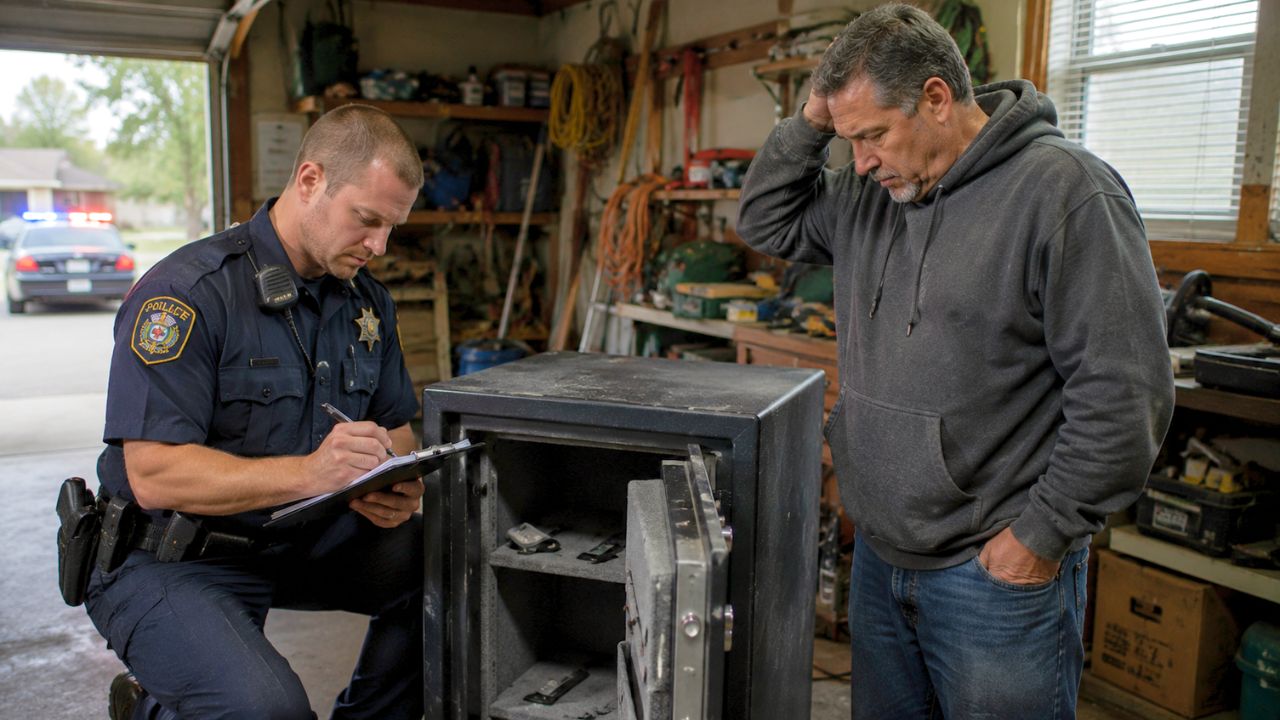
It’s the kind of phone call you don’t want to get on a workday: the house got hit, and the safe is gone. Not pried open, not cracked in the bedroom—gone. The homeowner did what most folks would do and called law enforcement, gave a description of the safe, and started building a list of what was inside.
A few days later, the safe turned up. That should’ve been the “finally” moment. Instead, it opened up a second headache—three firearms were missing, and the homeowner was told those guns weren’t even listed on the original stolen property report.
How a safe disappears without much noise
Most full-size gun safes aren’t getting carried out by one person. What usually happens in these cases is a small crew, a dolly, and a plan. They come in when they think nobody’s home, they go straight to the master bedroom or closet, and they don’t waste time digging through drawers if the safe is the jackpot.
It’s also why so many rural and small-town burglaries happen mid-morning to mid-afternoon—folks are at work, kids are at school, and the driveway isn’t watched. If the safe isn’t bolted down, two determined thieves can tip it, drag it, and load it faster than you’d think.
The recovery that didn’t feel like a win
The safe was eventually located after someone spotted a heavy metal box dumped off a back road on public land. That’s a common move: steal it, try to open it somewhere quiet, and if it won’t give, abandon it before they get caught with it.
When the homeowner got the call, expectations were simple—maybe the safe was damaged, maybe some contents were scattered, but at least the guns would be accounted for. Instead, the safe came back lighter. Three firearms were gone, along with some smaller valuables that are easy to pocket during a hurried smash-and-grab.
Where things went sideways with the paperwork
Here’s the part that gets frustrating for any gun owner: the firearms that were missing weren’t reflected on the initial report. Whether that happened because of a rushed call, a stressful moment, or a miscommunication at the desk, the result is the same—there’s now an official record that doesn’t match what the owner says was stolen.
And when law enforcement told the homeowner that none of the missing firearms were documented as stolen, it put the homeowner in a bind. On one hand, you’ve got a real safety issue—three guns out there in the wrong hands. On the other, you’ve got to prove those guns existed, belonged to you, and were in that safe when it went out the door.
In the real world, this is where small details matter: serial numbers, make/model, photos, purchase receipts, and even old range logs or hunting pictures where the firearm is visible. Without those, the system slows down fast.
Why missing guns in a report can become a big problem
A stolen firearm isn’t like a stolen chainsaw. If that gun turns up later at a traffic stop, a pawn shop, or a crime scene, the cleanest way to connect it back to the rightful owner is through a properly filed stolen gun entry tied to serial numbers. If the gun isn’t in the system as stolen, it can get complicated in a hurry.
It can also affect insurance. A lot of homeowners policies have limits on firearms unless you’ve scheduled them, and they’ll often want documentation that the items were reported promptly and accurately. Even if the homeowner isn’t trying to make an insurance claim, the difference between “stolen safe” and “stolen safe with three listed firearms” can change how the case is handled.
For hunters and shooters, there’s another angle: the possibility those guns get used unsafely. If you’ve got kids in the area, a school nearby, or neighbors who already don’t like gun owners, the stress level stays high until those firearms are recovered.
What people around town tend to focus on in cases like this
Whenever a story like this starts circulating—at the feed store, at the range, or on the local community page—the same themes come up. First is bolting the safe down. Folks will say it a hundred different ways, but the point is the same: if it’s not anchored into concrete or floor joists, it’s a big metal suitcase.
Second is cameras and lighting. Not everybody wants a full security system, but even a couple of well-placed cameras on entry points and a motion light over the driveway can turn an “easy house” into a “not worth it” house.
Third is documentation. A lot of gun owners keep a mental list of what they own, especially if it’s a handful of hunting rifles and a home-defense shotgun. But when you’re stressed, standing in a ransacked bedroom, trying to remember serial numbers, mental lists don’t cut it. The people who’ve been through it will tell you to keep a written inventory, photos, and serial numbers stored somewhere off-site or in a locked digital file.
And finally, some folks focus on the human side: when you call in a theft, slow down and be specific. If you don’t have serial numbers in front of you, tell the officer you’re going to follow up with a written list as soon as you can access your records. That simple step can prevent the exact mess this homeowner ended up dealing with.
The practical steps that usually help after the fact
Once the safe is recovered and you realize guns are missing, the best path is typically the boring one: document everything and follow the process. That means photographing the recovered safe, noting damage, listing every missing item, and providing serial numbers as soon as they’re available.
Most agencies can add supplemental information to a case report, but it’s better when the owner can back it up with records. If the homeowner bought those firearms through a local dealer, there may be purchase paperwork that helps. If they were inherited or traded long ago, old photos, appraisals, or even a gunsmith’s invoice can add credibility and detail.
It also helps to check pawn shops and local buy/sell networks the right way—by notifying law enforcement and letting them handle the contact. A stolen gun is not something you try to “go get back” yourself. That’s how good people end up in bad situations.
The hard truth is that a stolen safe recovery can feel like closure until you notice what’s missing. This one is a reminder that the report you make in the first hour matters, but so does what you do before anything ever happens: bolt the safe down, keep a clean inventory, and store your serial numbers where you can reach them even if your whole house gets turned upside down.
Like The Avid Outdoorsman’s content? Be sure to follow us.
Here’s more from us: