Photo credit: AI-generated image created using ChatGPT. Illustrative only
Most folks who live a little ways out of town know the feeling: somebody’s down on their luck, the weather’s turning, and you’ve got an extra couch or a spare room. That’s where one gun owner found himself last December, when he let a longtime friend with a felony record stay with him for a few days. What he got in return was the kind of lesson that sticks with you.
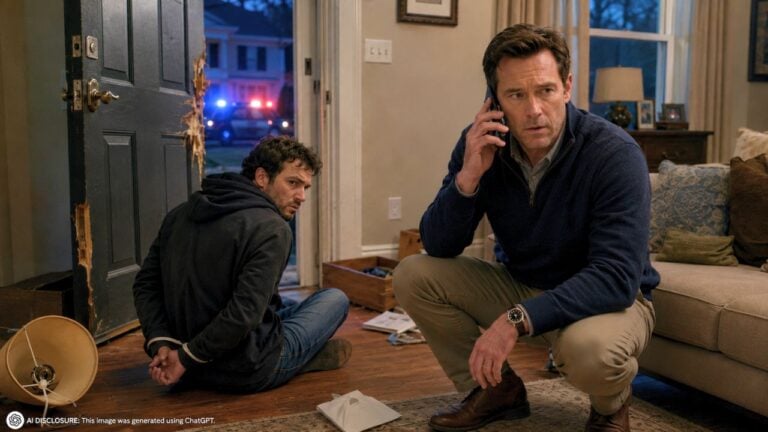
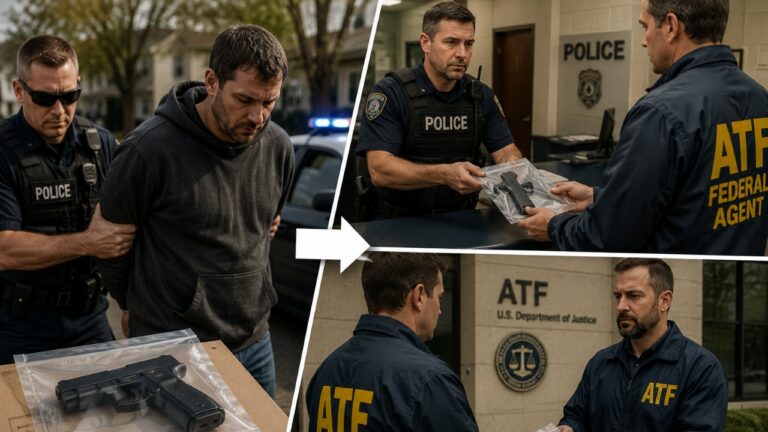
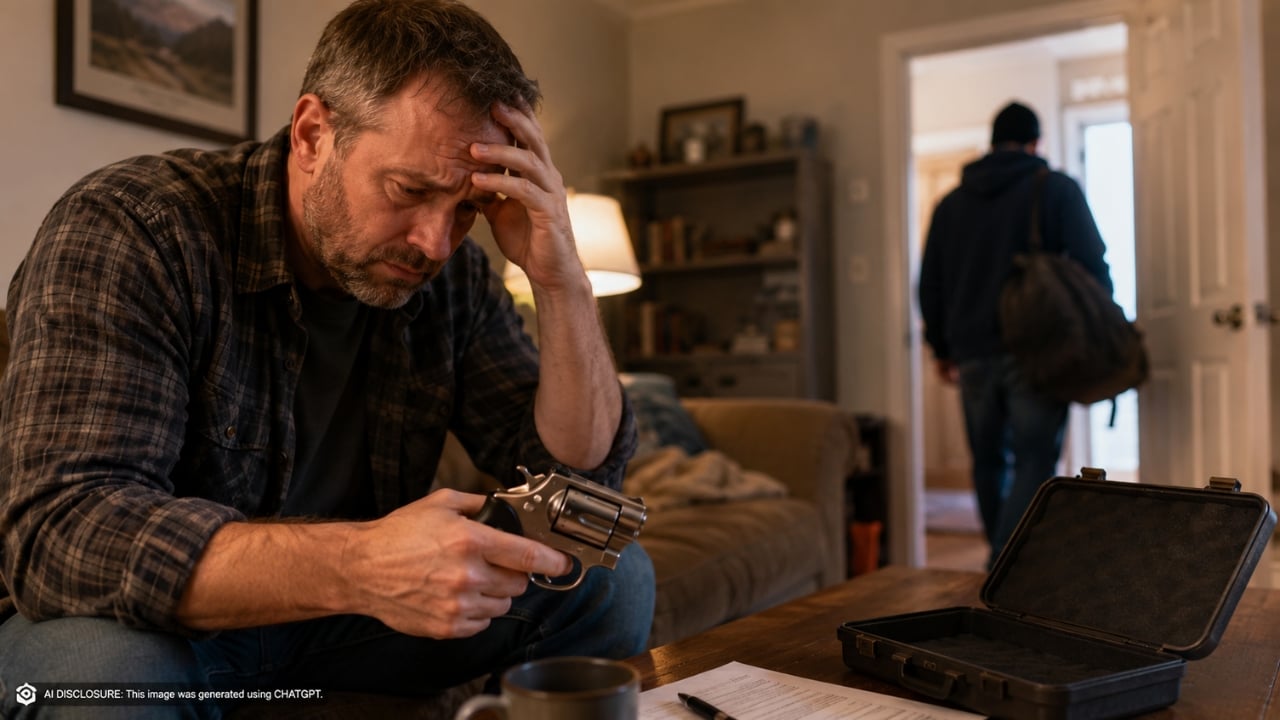
In the original post, the man said his friend had been squatting in an abandoned building, so he offered food, warmth, and a safe place to sleep. A few days later the friend vanished, and the homeowner realized a revolver was gone. He reported it stolen on Christmas morning. Later, he learned the revolver had allegedly been sold for meth, and the friend was now tangled up in a larger federal investigation.
A good deed turned into a stolen-gun nightmare
The man didn’t describe a long houseguest situation. This was a short window—December, a few days of shelter—and then the friend claimed he was going to stay with someone else. That’s when the reality started to set in: the revolver he owned wasn’t where it should’ve been.
Anybody who owns firearms knows that moment. You’re not just thinking about the value of the gun. You’re thinking about where it’ll end up, who’ll have it, and what kind of trouble it can bring back to your doorstep if you don’t act fast.
Reporting it stolen quickly was the smartest move he made
He said he filed the gun as stolen Christmas morning, which is exactly the kind of timing that matters. When a firearm walks off, the clock starts running—because sooner or later it may show up during a traffic stop, a drug arrest, or something worse. If your name is tied to the serial number and you never reported it, you’re going to have a hard conversation on your hands.
From a practical standpoint, reporting it isn’t about “getting your buddy in trouble.” It’s about creating a record that you recognized the theft and tried to stop the bleeding. If that revolver ends up in the middle of a bigger case, that paper trail is one of the few things that clearly separates “victim” from “involved.”
When a felon and a firearm cross paths, everyone gets nervous
The homeowner didn’t hide the fact that he knew the friend was a felon. He said the friend had been arrested for aggravated robbery years ago. And that’s the heart of his worry: if he knowingly housed a felon while he owned a gun, could he be arrested or charged even though the gun was stolen from him?
Gun folks tend to think in simple lines—don’t hand a gun to someone who can’t possess one, don’t leave guns unsecured around risky situations, and don’t invite problems into your home. The law can get more complicated, but the common-sense concern is straightforward: if someone prohibited from possessing firearms is under your roof, you need to think hard about access.
He wasn’t describing loaning the revolver or “letting him use it.” He described theft. That distinction matters in the real world, even if it still leaves him feeling like he could get dragged into the mess. And with the friend allegedly selling the revolver for meth and ending up wrapped into a larger investigation, it’s not hard to see why the homeowner’s stress level is high.
The case escalated from a theft to drug-fueled fallout
The details he shared paint a pretty rough picture: the revolver was allegedly traded off for meth, and now the friend is part of “a giant web of an investigation.” That’s a long way from “I’m helping a buddy get back on his feet.”
Drug cases don’t stay small for long, especially when stolen guns are part of the story. A firearm sold for drugs can bounce through multiple hands fast. It may cross county lines. It may get used in other crimes. That’s why, from a gun-owner standpoint, one missing revolver can turn into months of worry.
The homeowner also said the friend was “cooperating 100%” and trying to prove he got sober and is changing. Folks in the outdoors world generally respect redemption when it’s real. But cooperation doesn’t rewind the clock on a stolen firearm, and it doesn’t automatically shield the victim from being questioned hard about storage, access, and what happened inside that home.
The question gun owners should ask: “Could he get to it?”
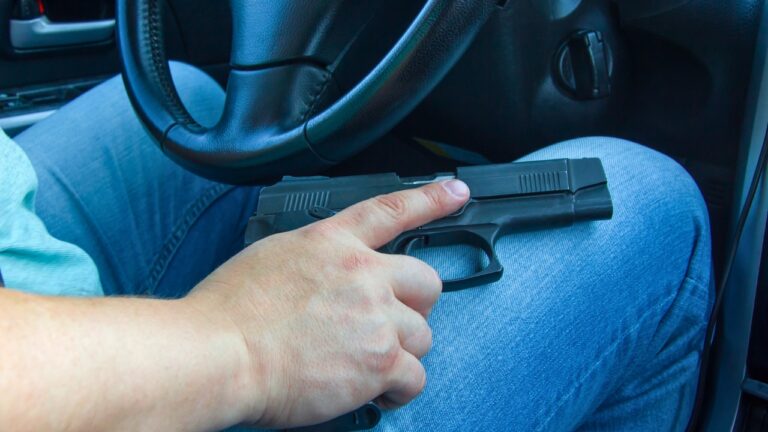
The biggest practical takeaway here isn’t about charity—it’s about control. If you’ve got a firearm in the house, especially a handgun that’s easy to carry off, you have to ask whether a guest can access it when you’re in the shower, asleep, or out checking the mail.
A lot of us grew up in households where granddad’s revolver lived in a drawer and nobody touched it. That works right up until it doesn’t. If you’re bringing in someone who’s unstable, desperate, using drugs, or has a record, the usual “we’re all good people here” routine is a gamble.
This is where boring gear matters: a real safe, a lockbox, a quick-access safe bolted down, and keeping track of keys and combos. None of that guarantees safety, but it makes theft harder, slows things down, and can help show you took reasonable steps to secure the gun.
What people tend to focus on in situations like this
When gun owners talk through scenarios like this, the same points come up again and again. First: document everything you did when you discovered the theft—dates, the report, and any communication that shows you didn’t approve of the gun being taken. Second: don’t try to “handle it quietly” if it’s a firearm. Quiet often turns into suspicious when the gun surfaces later.
Third—and this is the tough one—be careful about letting sympathy override judgment. You can help people without putting them in the same space as your valuables, your firearms, and your family. A meal, a ride to get services, a phone call to connect them with help, or even a night in a hotel can be compassion with boundaries.
Finally, folks tend to point out that if an investigation has grown into something federal, it’s smart to take your own situation seriously. That doesn’t mean panic. It means acting like an adult who understands how messy it can get when drugs, theft, and guns all overlap.
At the end of the day, this guy did what many of us would like to believe we’d do—help a friend in the cold. But once a firearm is stolen, the situation isn’t about good intentions anymore. It’s about what you can prove, what you reported, and whether you kept control of your guns like they might someday end up in someone else’s hands—because sometimes, they do.
Like The Avid Outdoorsman’s content? Be sure to follow us.
Here’s more from us: