Photo credit: AI-generated image created using ChatGPT. Illustrative only
Divorce can turn into a tug-of-war over trucks, bank accounts, and who gets the good cast-iron skillet. But when a handgun gets pulled into the middle of it—especially with a court-ordered firearms restriction in play—things go from messy to dangerous fast.
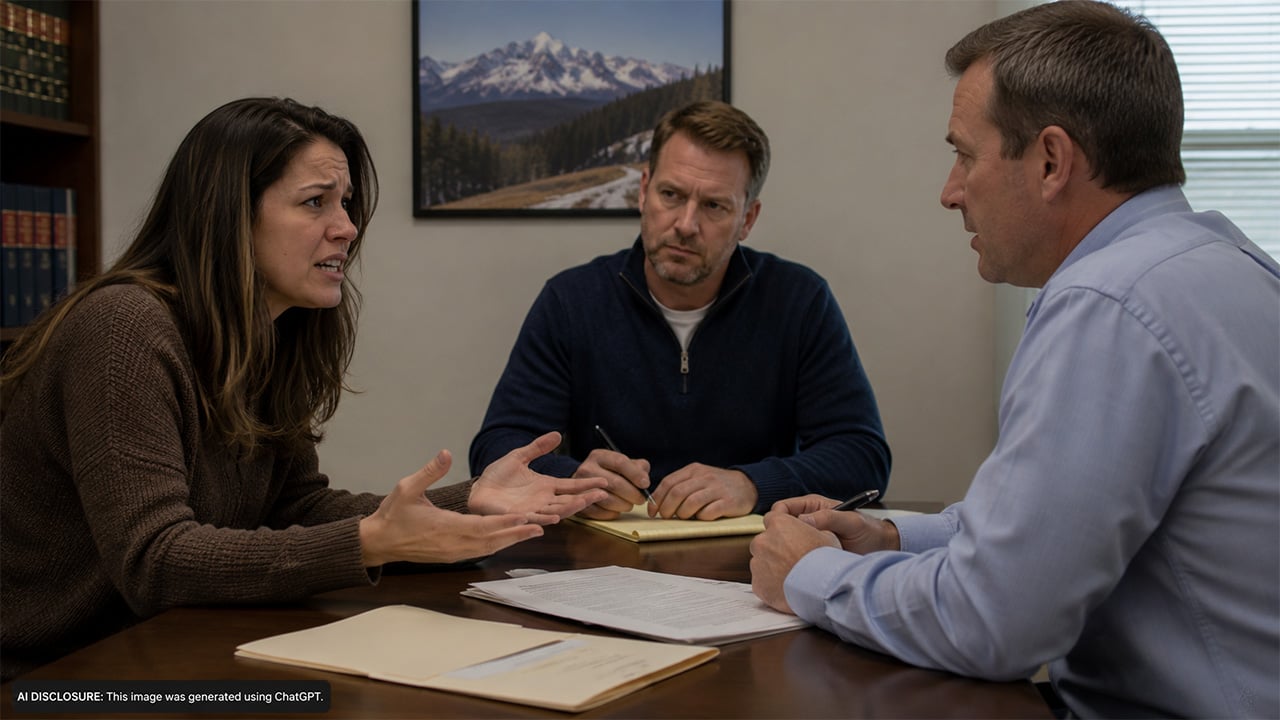
That’s the situation one Colorado man laid out in the original post: he says his ex-wife pleaded guilty to harassing and sending threatening messages to an ex-boyfriend, and part of that plea bars her from access to firearms for 12 months. Now, in the divorce process around Denver, he claims she’s requesting he surrender a handgun directly to her anyway.
A plea deal put a 12-month “no guns” boundary on the map
According to the account, the ex-wife pleaded guilty to harassment and threatening messages aimed at a different former partner—someone she’d been involved with during the marriage. As part of the plea, she’s “not allowed access to firearms for the next 12 months.” That detail matters because it changes how a normal property dispute should be handled.
Outdoorsmen already know the basics: firearms aren’t like furniture. If a court says someone can’t have access, you don’t “work around it” because a divorce spreadsheet says they want it. Access is access, whether it’s a rifle in the closet or a handgun sliding across the kitchen counter.
Then the divorce filings allegedly asked for a handgun to be turned over to her
The ex-husband says the divorce took a turn when court documents included her request that he surrender possession of a handgun to her—specifically to her, not to a neutral third party. He also told police she has had multiple firearms in the past and, in his view, is trying to regain access despite the 12-month restriction.
If you’ve ever been around a contentious split, you know how property claims get used as pressure. But with guns, the risk isn’t theoretical. A handgun is portable, concealable, and immediately usable. That’s why so many court orders treat possession and access as a bright red line.
Jurisdiction and paperwork became the wall nobody wanted to climb
One of the most frustrating parts of this story is how quickly it turned into a “not our department” shuffle. The man says he notified Lakewood Police Department, but they refused to investigate because they weren’t the agency that arrested her. The arresting agency, he says, was Lone Tree in another county.
On the other end, Lone Tree police were described as more sympathetic, but limited: they “couldn’t take actions unless their officer saw evidence,” and her residence is outside their jurisdiction. That’s the kind of bureaucratic gap that makes regular people feel like they’re standing in the middle of the road waving their arms while traffic keeps coming.
From a practical standpoint, it highlights something a lot of gun owners don’t think about until it’s too late: when situations cross city lines and counties, you can end up with multiple agencies each holding one piece of the authority—and none eager to take the full lead.
The other ex’s protection order raised the temperature
The post also mentions that the ex-wife’s other former partner—who obtained an order of protection against her—is worried too. He reportedly contacted both Lakewood and Lone Tree to share concerns about her attempts to obtain a firearm, and got a similar response from Lakewood.
That’s not gossip; it’s a pattern that should make any responsible gun owner sit up straighter. When someone has already landed in court over threats and harassment, and another person has a protection order, the idea of that person pushing to get a handgun isn’t just a “divorce issue.” It’s a safety issue with a date stamp on it.
Hunters and shooters tend to be calm, practical people, but we’re also trained—by experience—to take behavior seriously. You don’t ignore repeated warning signs in the backcountry, and you don’t ignore them in town either.
What the gun-owning spouse could realistically do next
The man’s core question was simple: how do you get police to actually take action? He’s stuck between a divorce process that’s treating a handgun like an asset and a criminal-justice side that appears to be stalled by boundaries on a map.
Without turning this into a legal how-to, there are a few grounded, common-sense moves that fit the reality gun owners live in. First, don’t voluntarily transfer a firearm to someone you believe is prohibited from access—especially not directly. Even if you’re exhausted and just want the divorce over, handing over a gun is the kind of decision that can’t be un-made.
Second, keep everything documented and clean. The post mentions “court documents” showing she requested the handgun. That kind of paper trail matters. In the real world, what gets action is often what’s clear, written, and easy to verify—especially when multiple agencies are involved.
Third, think in terms of the court that set the restriction and the court handling the divorce. A firearms restriction coming out of a plea typically isn’t just a friendly suggestion; it’s a court condition. Meanwhile, a divorce judge can also set boundaries around how firearms are stored, transferred, or held during proceedings. When law enforcement isn’t moving, courts can still issue orders that remove ambiguity and keep everyone safer.
And finally, don’t let pride or anger pull you into direct confrontation. This is where a lot of decent folks make a bad move. If you truly believe someone is trying to unlawfully regain access to firearms, the answer isn’t an argument in a driveway. It’s steady documentation, proper reporting, and letting the legal system do its job—however slow it feels.
The outdoorsman takeaway: treat firearms like the liability they can become
Most of us want to believe a gun is just a tool—and in the field, it is. But in a volatile domestic situation, a firearm can become the focal point of control, intimidation, or worse, even if it never leaves the holster.
This Colorado dispute is a reminder to keep your head on straight when personal life and gun ownership collide. Store firearms securely. Be deliberate about transfers. And if a court has already drawn a “no access” line for someone, don’t be the guy who helps them step over it just because a divorce filing demands it.
Like The Avid Outdoorsman’s content? Be sure to follow us.
Here’s more from us: