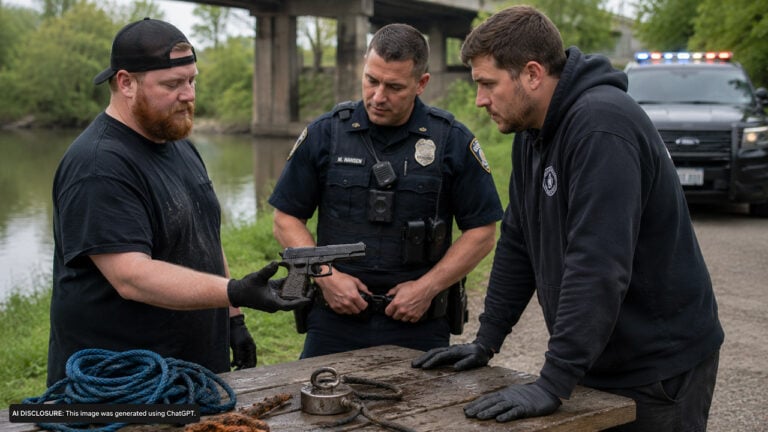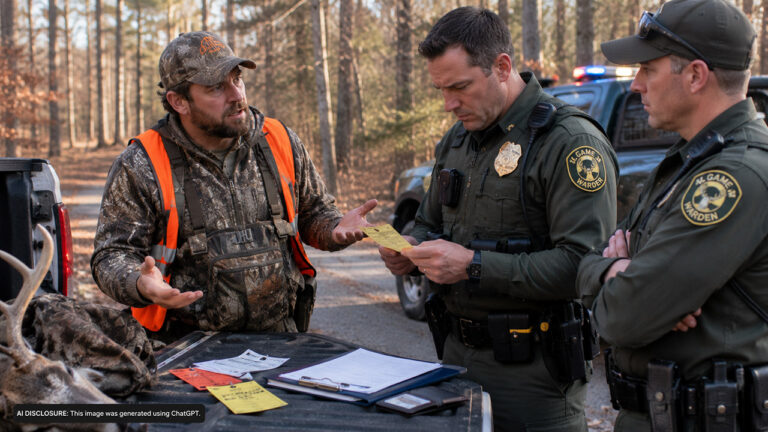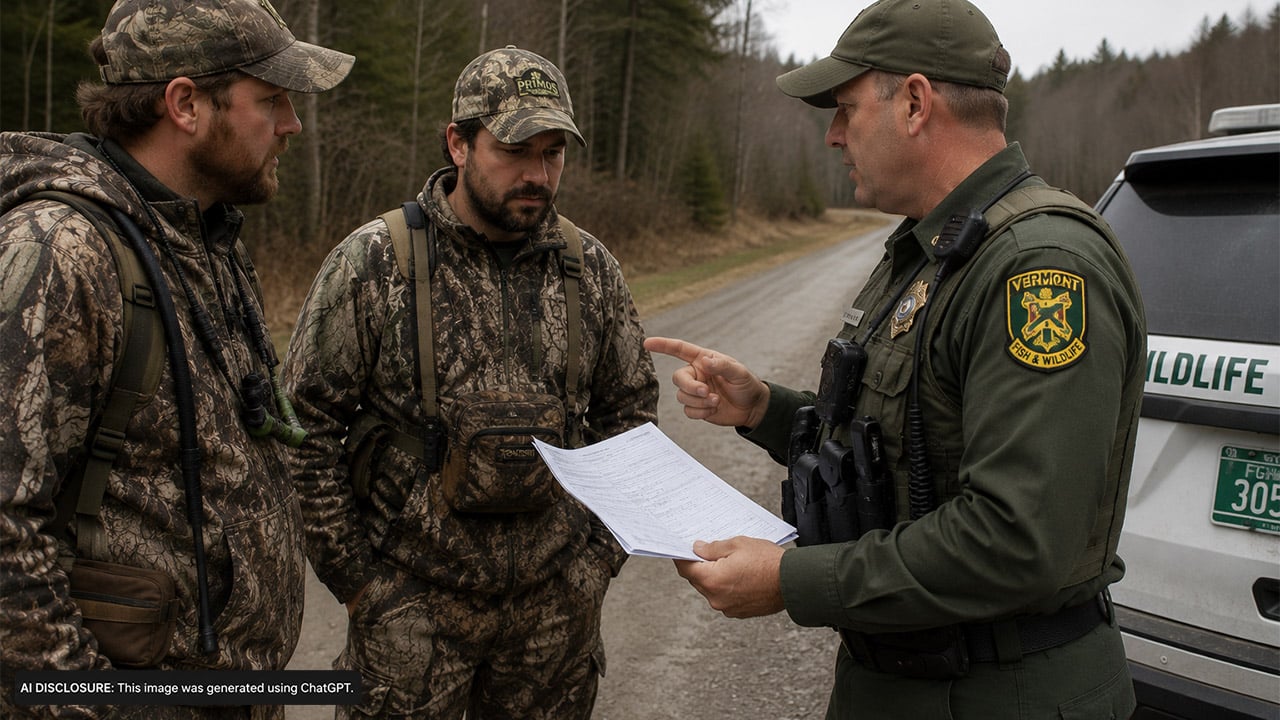
Photo credit: AI-generated image created using ChatGPT. Illustrative only
It doesn’t take much to turn a quick spring hunt into a serious headache. In Vermont, a pair of 20-year-olds went looking for turkeys near one hunter’s home, crossed a posted fence onto National Guard property, and ended up with unlawful trespass citations—and one extra charge for hunting without a Vermont license.
But the part that really got their attention came later: the officer who cited them reached back out before the scheduled court date and said the date had changed and he needed to meet them in person to issue a new citation. The details come from the original post, where a family member tried to figure out why a “re-cite” would be necessary and whether it created any leverage for the hunters.
How the turkey hunt went sideways fast
According to the account, the two hunters parked near the site, hopped a fence, and headed out with firearms. The friend reportedly told the brother he’d hunted that land “most of his life” without an issue, despite it being fenced and posted.
They spotted a National Guard officer while moving in, realized they’d been seen, and chose not to run. That decision matters. When you’re on the wrong side of a fence with a gun, a calm attitude and no evasive moves is about the only thing that keeps a bad situation from getting worse.
A warning was on the table—then the game warden factor showed up
The way it’s described, the first Guard officer seemed close to letting them off with a warning after hearing their explanation. Then, because it involved hunting, he called in a fish and game officer.
That changed the tone. The fish and game officer apparently didn’t buy the story that they “didn’t understand” they’d trespassed. He had them show how they could have missed the fence, and their explanation didn’t hold up—especially with snow on the ground and no tracks where they claimed they came through.
The charges: trespass for both, plus a license issue for one
Both hunters were cited for unlawful trespass under 13 V.S.A. § 3705. The brother also didn’t have a Vermont hunting license, so he was cited for that as well and paid that ticket.
This is where a lot of hunters get a hard lesson: even if you’re legal back home, crossing state lines changes the game. Licensing, seasons, and even what land is open to hunting can be totally different. And when you add “posted federal or state-controlled property” to the mix, you’re not in a simple “oops, wrong field” situation anymore.
The court date confusion and the request for a second citation
The hunters were initially given a court date—December 18, according to the story. They spoke with several lawyers and were told diversion or a fine was possible given their age and the nature of the offense, and they planned to show up and take responsibility.
Then the citing officer contacted them and said the court date wasn’t going to be on the 18th and that he would need to meet them to re-issue the citation with a new date. When they called the courthouse themselves, they were told there was no date set for the 18th in the first place. The court also told them the officer could still seek a warrant if they failed to comply with the summons.
To make it even stranger, the officer talked about meeting in a parking lot or other public places instead of a station or office. That set off alarm bells for the family: moving a date is one thing, but meeting up to get re-cited feels like a paperwork problem—or something they shouldn’t help fix.
Why an officer might need to “re-cite” someone
From a boots-on-the-ground perspective, the most common reason you hear about a do-over is simple: something got messed up. Wrong court, wrong date, wrong statute, wrong defendant information, a form that wasn’t filed, or a citation that didn’t get entered correctly. If the original paperwork doesn’t line up with what the court needs to process the case, the state may need corrected documents served properly.
That doesn’t automatically mean the case disappears, and it doesn’t mean the hunters should ignore it. The courthouse warning about a warrant is the kind of thing you take seriously, even if you feel like the system fumbled the ball early.
The other practical point: Vermont—and plenty of other states—treat certain citations as a summons to appear. If the court never actually received or docketed the original paperwork, the “date” written on the ticket might not mean much until it’s officially on the calendar. That’s frustrating, but it’s not unheard of in the real world where paperwork still has to move through humans.
The outdoor-life lesson: don’t let a sketchy meetup create a second problem
Even if the officer’s intentions are totally legitimate, meeting “in a parking lot” for official paperwork is going to make any reasonable person uneasy. If you’re going to be re-served, it’s fair to want it done in a clean, documentable way—at an office, through certified service, or at least with clear instructions tied to the court.
The hunters in the story weren’t trying to dodge responsibility. They were worried about accidentally helping patch a mistake that could have benefited them—or walking into a situation where they say the wrong thing, sign the wrong thing, or miss something that matters later.
Outdoorsmen run into this kind of thing more than folks think. Trespass cases often have two tracks: the property-side issue (being somewhere you shouldn’t) and the hunting-side issue (licenses, seasons, weapons, methods). When more than one agency is involved, confusion and duplicated paperwork can happen. That doesn’t make it fun, but it does make it believable.
If there’s a practical takeaway here, it’s this: don’t try to “handle it casually” once a court date and a criminal trespass statute are involved. If you’re uncertain why you’re being asked to meet, verifying through the court and getting legal advice is money well spent—especially when the alternative could be missing a required appearance and getting a warrant over something that started as a fence hop.
In the end, this wasn’t just about turkey hunting. It was about posted boundaries, licensing, and how fast a morning in the woods can turn into a criminal matter—plus a reminder that when the paperwork gets weird, you slow down, verify everything, and keep your next step as clean as your first one should’ve been.
Like The Avid Outdoorsman’s content? Be sure to follow us.
Here’s more from us: