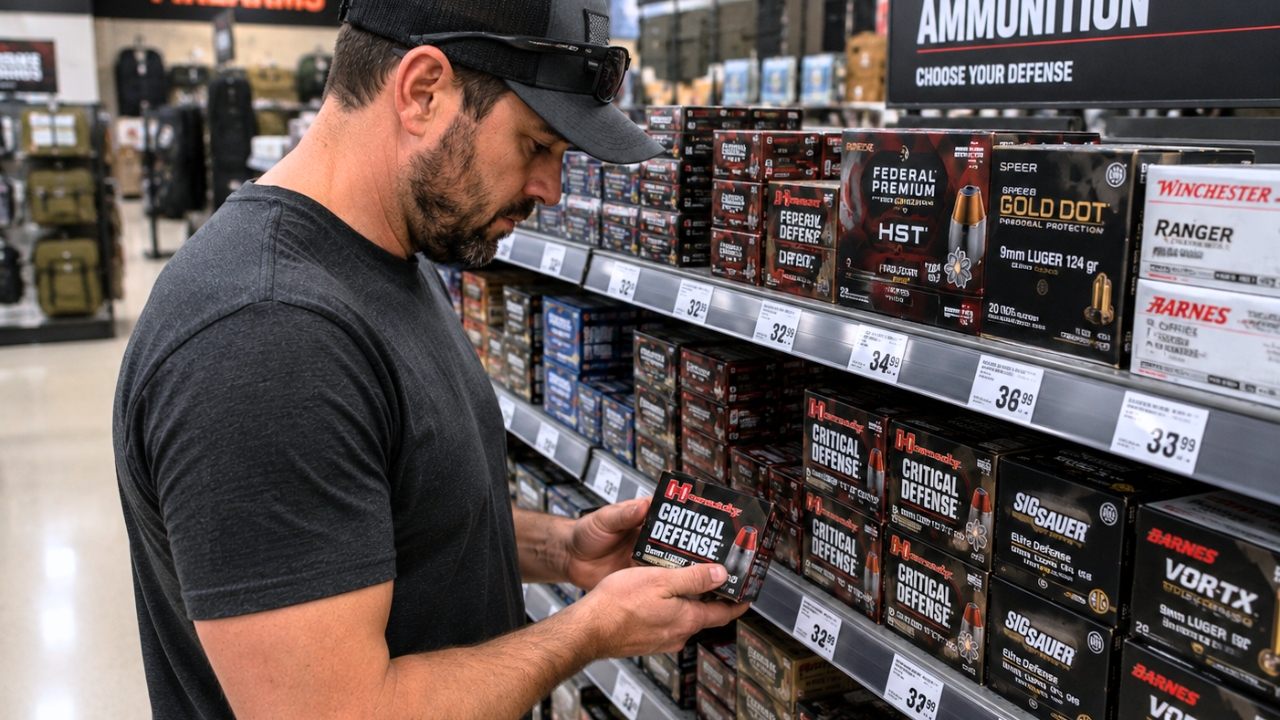
Photo credit: The Avid Outdoorsman
The carrier was not looking for a debate at first.
He was looking for ammo that worked.
That is usually how these posts start. A gun owner has a carry pistol, a defensive load that seems reasonable, and enough range time to notice something is off. The problem does not have to happen every round to matter. Sometimes it is the pattern that makes the decision for you.
In a Reddit post, the carrier said Hornady Critical Defense was giving him issues, especially on the last round. That pushed him to ask for alternatives, because once a defensive load starts failing in a repeatable way, it stops feeling like something you can trust.
A last-round failure is irritating because it points the shooter toward a few possible culprits.
It could be the ammo. It could be the magazine. It could be the way that specific pistol feeds the final round under less spring pressure. It could be the bullet shape catching at just the wrong angle. It could be a mag spring that is weak, a follower that tilts, or a hollow point profile that the gun simply does not like.
But whatever the cause, the result is the same.
The gun is not feeding the round that may matter.
A lot of people focus on the first round in a defensive pistol. Will it chamber? Did it load cleanly? Is the top round damaged from repeated chambering? That all matters. But the last round matters too. If a pistol is going to fail when the magazine gets down to the bottom, that is not something to ignore just because most defensive situations are short.
You do not carry a gun hoping you only need the rounds that feed cleanly.
Hornady Critical Defense is a popular choice, especially for compact carry guns. It has the red polymer insert, a recognizable name, and plenty of people who have carried it without problems. But popularity does not guarantee compatibility. A load can be perfectly fine in one gun and annoying in another. Bullet profile, overall length, case shape, magazine geometry, feed ramp, and spring pressure all work together.
If one piece does not agree, the gun tells you.
That is what happened here.
The carrier started looking for alternatives, which is the right direction when repeated failures show up. Defensive ammo is not a brand loyalty contest. It does not matter how good a load looks in gel tests or how often people recommend it online. If your gun chokes on it, it is not your carry load.
That does not mean the ammo is bad for everyone.
It means it is bad for that setup.
The practical next step is testing. Try a different defensive round with a different profile. Federal HST, Speer Gold Dot, Winchester Ranger, SIG V-Crown, Barnes, or another proven load may feed better. But the key is not simply buying a new box and trusting the label. The new load has to be shot through the actual pistol, with the actual carry magazines, including full mags, partial mags, and those last-round cycles that caused trouble before.
If the failure was magazine-related, switching ammo may only hide the issue temporarily. That is why the magazine needs attention too. Mark the mag. Test a second mag. Replace springs if needed. Look at the follower. Watch whether the failure happens with every magazine or only one. If the last-round issue follows one mag, the ammo may not be the main problem at all.
But if it happens across magazines with the same ammo, the load becomes a stronger suspect.
This is where careful carriers separate frustration from diagnosis. A single failure can be a fluke. A repeated last-round failure is a pattern. Once you have a pattern, you need either a fix or a new setup.
Carrying it anyway is just hoping the pattern takes the day off.
The range is the best place to find this out. It feels wasteful to burn defensive ammo, especially when prices are ugly. But the point of buying carry ammo is not owning a box of impressive rounds. The point is having a pistol that feeds, fires, and cycles them. If the test costs a few boxes and saves you from carrying a bad combination, that money did its job.
The carrier’s question about alternatives made sense because confidence matters. Once you see the same load fail, every future magazine carries that memory. You may load it and wonder if the last round will hang again. That doubt is not helpful. A defensive setup needs to feel boring, not like a small mechanical gamble.
The fix might be a different ammo brand.
It might be a new magazine.
It might be both.
But until the pistol proves it can run the chosen load from the first round to the last, the search is not over.
Commenters mostly pushed him toward testing different loads and checking the magazines.
Several people said Hornady Critical Defense works well for many carriers, but no defensive ammo works perfectly in every gun. If that bullet profile hangs up in his pistol, he should not force it.
Others focused on the last-round pattern. A failure on the final round can point toward magazine spring pressure, follower angle, or a specific magazine problem. Commenters suggested marking magazines and seeing whether the issue repeats with all of them.
A lot of people recommended trying other proven defensive loads, but with the same warning: shoot them before carrying them. A new box does not become trustworthy until it runs in the actual gun.
Some also said not to overcomplicate the decision. If one load repeatedly fails and another runs clean, carry the one that works.
The main lesson was simple: the best carry ammo is the one your gun feeds reliably, including the last round.