Photo credit: Deborah Ferrin/Shutterstock.com
If you’ve spent any time around hunters, ranchers, or folks who do predator control, you’ve heard some version of the same story: an animal that should’ve been done still had plenty of fight left. That’s not “movie stuff.” It’s adrenaline, heavy bone, thick muscle, and an animal that’s wired to keep going until it can’t.
This isn’t a how-to. It’s a reality check: a wounded animal is one of the most dangerous situations in the woods, and the animals on this list have a reputation for staying in the fight longer than people expect. Respect them, follow the law, and don’t crowd anything that’s hurt.
Wild boar / feral hog

Hogs are famous for being hard to stop fast, and a big reason is how they’re built. A mature boar can have a thick “shield” over the shoulder area, heavy bone, and a low, driving style when it comes unglued. Add adrenaline, and you can get a situation where a hog keeps moving even after it’s been hit.
The danger is what happens next: hogs don’t always run away like deer. Sometimes they spin, hook into cover, and come back out low and fast. If you’ve ever tracked a hurt hog into brush, you learn quick why people take that seriously. Give them space, watch angles, and don’t treat it like a casual follow-up.
Cape buffalo

Cape buffalo have a global reputation for toughness and attitude, and a wounded buffalo is about as bad as it gets. They’re thick, heavy, and known for pushing back instead of bailing. A buffalo doesn’t need to be “angry” in a human way—if it decides you’re the threat, it solves that problem with a charge.
What makes them so dangerous isn’t just strength. It’s the mindset: they can take damage and still keep coming, and they don’t always give you the warning you think you’ll get. This is one of those animals where the correct approach is respect, distance, and not getting complacent because you’ve “done it before.”
Grizzly / brown bear

Bears are built for violence when they need it, and a wounded grizzly can stay extremely dangerous even after taking a hit. Defensive reactions can be fast, and the “I thought it would run” assumption gets people hurt. A bear that’s hurt may charge, circle back, or come in hard out of cover.
This is also where judgment matters. If a bear is hit and doesn’t immediately leave the country, the situation can get unpredictable fast. The smartest move is to avoid pushing into thick brush and bad visibility. A grizzly encounter is already high stakes; a wounded grizzly is a whole different category.
Black bear

Black bears usually want out, but wounded black bears can be a problem because they can switch from “escape mode” to “fight mode” quickly, especially at close range. People underestimate them because they’re smaller than a grizzly, then find out that “smaller bear” doesn’t mean “safe bear.”
A hurt black bear can climb, spin, and explode out of cover in a hurry. The danger isn’t just getting bitten—it’s that the whole situation can happen in tight terrain where you can’t see well or move clean. Don’t crowd the area, don’t rush follow-ups, and don’t assume silence means it’s over.
Moose

Moose are one of the most misunderstood animals in North America. They’re not predators, but they can be mean, and a wounded moose can be flat-out dangerous. They’re huge, they hit hard, and they don’t always “act wounded” the way people expect. Sometimes they just decide you’re the problem and come in.
The other issue is terrain. Moose live in brush, timber, willows, and nasty pockets where visibility is bad. That’s where people get too close and trigger a stomp or charge. A moose doesn’t need teeth to wreck you—one clean strike with a hoof can put you in the hospital.
Bison

Bison are tanks with a short fuse when pressured. A wounded bison isn’t a “wait and see” situation because they can still have plenty of drive, and they can cover ground quick. Their power is blunt, heavy, and direct—more like getting hit by equipment than getting hit by an animal.
People get hurt because bison don’t always act dramatic. They can look steady, then launch. And if you’re anywhere near a herd, you’ve also got the group dynamic to worry about. The right mindset is simple: respect distance, don’t stand in lanes, and don’t assume you can “read them” like cattle.
Elk

Elk are tough animals, and a wounded elk can still have a lot of go in it—especially a big bull in the rut. They’re heavy, strong, and they can turn aggressive if they feel trapped. Most of the time elk try to leave, but when they can’t, they may come at you with hooves or antlers.
The real danger is following one into tight timber or steep country where you can’t see well. A bull that’s hurt can bed, wait, then explode up at bad distance. Respect the fact that elk are capable of defending themselves, and don’t treat them like a deer that’s automatically going to fold and disappear.
Alligator

Gators are tough in a way that surprises people because they’re built like armored machinery. A wounded gator can still thrash, lunge, and drag itself into water fast, and the bite risk doesn’t magically disappear just because it’s been hit. If you’re too close, you’re still inside the danger zone.
The other part is location. Around water, you don’t get many second chances because the animal can vanish into a place you can’t safely follow. A hurt gator is unpredictable, and people make dumb choices trying to “finish” something at the water’s edge. Don’t do that. Distance and caution matter.
Crocodile

Big crocodiles are even worse for the same reasons: armor, power, and a nasty ability to strike in a blink. A wounded crocodile can still lunge with shocking speed, and if it gets the bite, you’re instantly in a problem you can’t muscle your way out of.
The mistake people make is thinking an injured croc is “handled.” It’s not. It’s still a massive reptile with a bite built to hold and twist, and it may react from pure defense. If you’re in croc country, the correct plan is always “don’t get close,” not “I’ll deal with it if it happens.”
Hippopotamus

Hippos are famous for not backing down. They’re territorial, fast on short bursts, and they hit like a truck. A wounded hippo is especially dangerous because it may charge to clear space, and it’s strong enough to bowl through obstacles without slowing down.
A lot of people underestimate hippos because they look goofy sitting in water. That illusion ends fast when one decides to move. If a hippo is hurt and you’re anywhere near the bank, you’re playing with something that can close distance quickly and do catastrophic damage. Give them space—more than you think you need.
Rhinoceros

Rhinos are built for impact and they don’t always have a “flight response” like other big animals. A wounded rhino can charge out of confusion, fear, or pure defensive instinct. Their eyesight isn’t great, their reactions can be sudden, and once they commit, they’re basically a battering ram.
The danger is speed and momentum. People assume “that thing is huge, I’ll see it coming.” Maybe. But you don’t want your safety plan to be “maybe.” If you’re anywhere near a rhino situation, the only smart move is distance and not putting yourself in line with its path.
Wolverine

Wolverines are small compared to the big stuff on this list, but they’re notorious for staying in the fight. They’re tough, aggressive, and they don’t quit easily when cornered or hurt. They bite, they clamp, and they go for faces and hands—the exact places you don’t want injured in the backcountry.
A wounded wolverine is a problem because it won’t “act scared.” It may come at you with zero respect and keep coming. The smart move is not getting close and not letting dogs engage. People get bit trying to break up situations they didn’t think could get serious.
Honey badger

Honey badgers have a reputation that isn’t just internet hype. They’re aggressive, durable, and they fight like they don’t feel pain the way most animals do. A honey badger that’s hurt can still come hard, and it tends to target soft parts—faces, hands, anything vulnerable.
They also don’t bluff much. They commit. That’s why predators often decide to leave them alone. The lesson here is pretty simple: don’t mess with them, don’t corner them, and don’t assume “small animal” means “easy animal.” Small animals with bad attitudes can still ruin you.
Badger

Badgers are another one people underestimate until they’re dealing with one. They’re compact, strong, and they turn into a spinning, biting machine when threatened. If a badger is hurt and you get too close, you’re asking to get tagged—fast.
Badger fights usually go wrong because someone tries to grab it, move it, or let a dog stay engaged. That’s where bites happen. Even if the animal is injured, it’s still capable of serious damage, and it’s not going to “understand” you’re trying to help. Give it space and handle it the safe way.
Mountain lion

Most mountain lions want to disappear, but a wounded cat can be unpredictable, and cats don’t fight like dogs or bears. They fight with speed, teeth, and control. If a lion is hurt and can’t escape, it may choose a sudden, close-range attack as its way out.
The other risk is visibility. Lions live in terrain where you don’t see them well—rocks, brush, timber edges. A wounded lion might not run far, and the last place you want to be is too close without knowing where it is. Respect the fact that big cats can still be dangerous even when they’re injured.
Rattlesnake

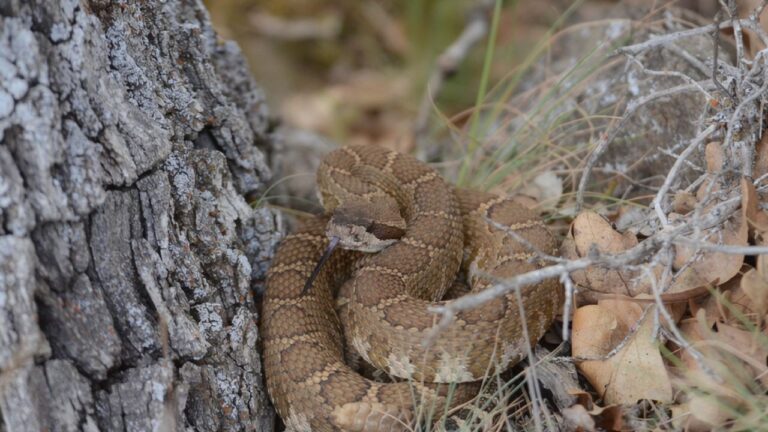
Snakes are the quiet reminder that “wounded” doesn’t mean “safe.” A rattlesnake that’s been hit can still bite, and the bite is what matters—not how “alive” it looks. People get nailed trying to pick one up, move it, or get cute for a photo after they think it’s finished.
This is one of the most common preventable injuries in the outdoors world. If you see a snake situation, keep distance and don’t handle it. Even a small snake can ruin your week, and a big one can do much worse. Treat it like it can still strike—because it can.
Like The Avid Outdoorsman’s content? Subscribe to our newsletter so you never miss an article.
Here’s more from us: