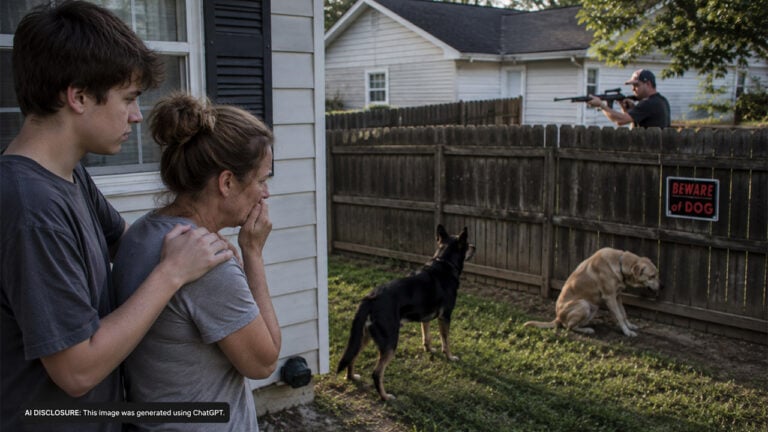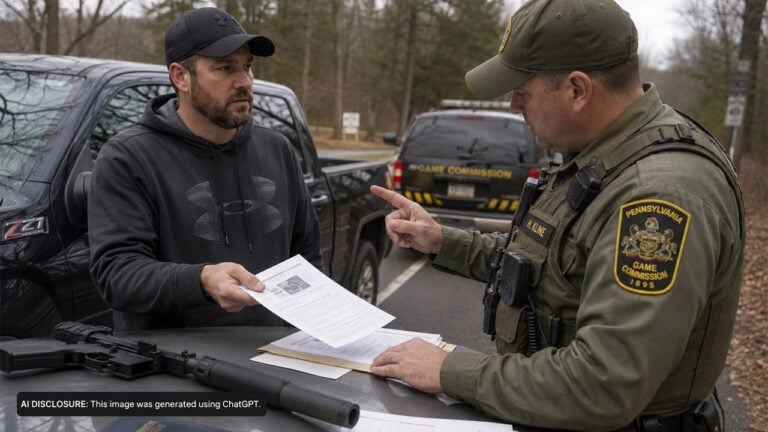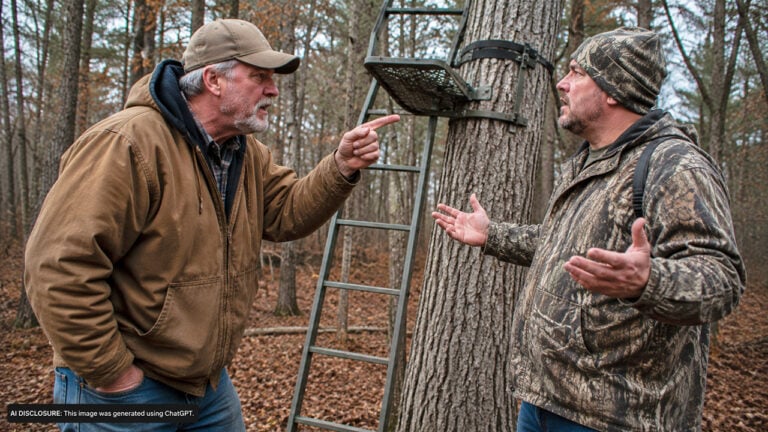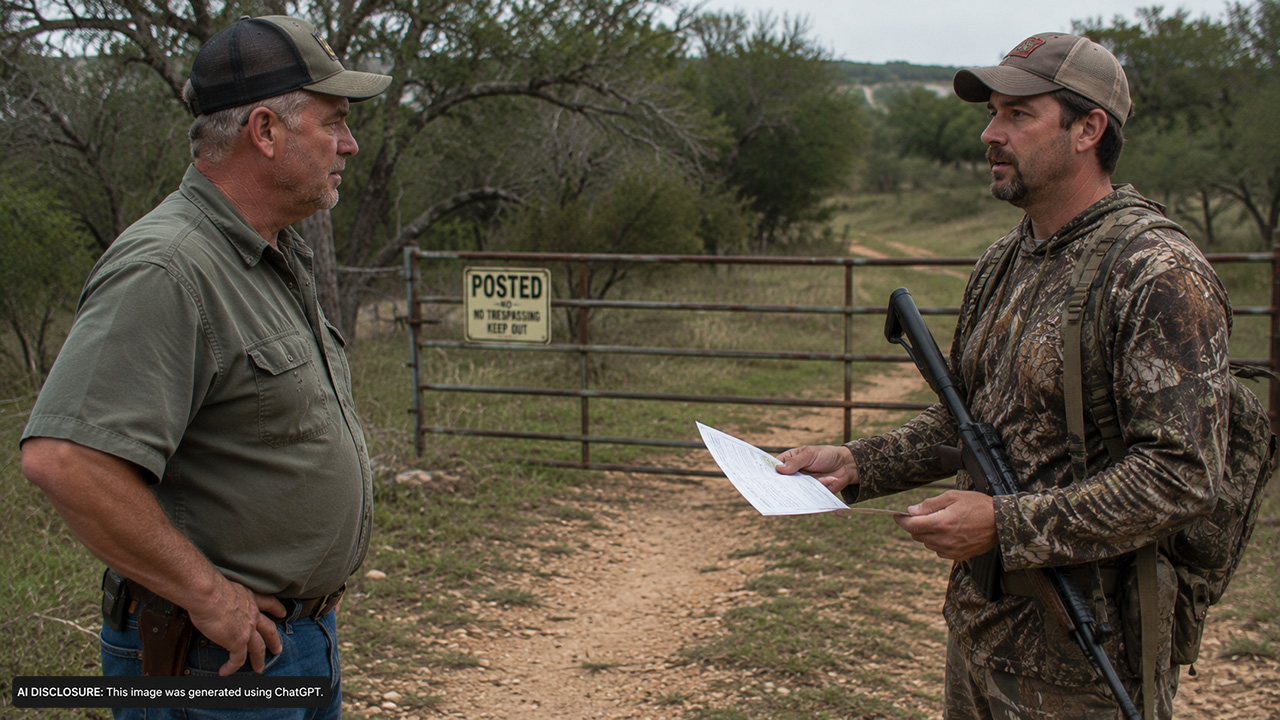
Photo credit: AI-generated image created using ChatGPT. Illustrative only
There’s a special kind of sick feeling that shows up when you’re doing what you think is right—legal, normal, by-the-book—and blue lights suddenly hit the shoreline. One Tennessee waterfowl hunt turned into exactly that kind of mess, and it’s a reminder that “I never stepped on land” doesn’t always mean you’re in the clear.
In the original post, a hunter said he and a buddy were goose hunting from a boat blind on a lake in Tennessee. They stayed in the boat the whole time. But they didn’t realize the ground under the water was private property—and that detail is what brought law enforcement to the bank.
A boat blind, a lake, and a line nobody could see
The way it was described, this wasn’t a case of climbing a fence or ignoring a bright “POSTED” sign. The hunters were out on the water, hunting from a boat blind, and they said they “never stepped out of the boat.” No shoreline setup. No walking across a field. Just a typical waterfowl hunt that plenty of folks assume is automatically public if you’re floating.
The catch was that the land under that part of the lake was privately owned. And, according to the hunter, there weren’t any posted signs or “no trespassing” warnings where they were hunting. That’s where these situations get tricky: property boundaries on water aren’t always obvious, and the rules about what’s “public” vs. “private” can be different from one state—or even one body of water—to the next.
When the cops started asking about the anchor
Things escalated when two cops showed up on the bank and started questioning them. One of the first questions was whether they had an anchor out. The hunters told the officers they did not.
Then came the detail that really mattered in the moment: an officer reportedly told them the boat motor was touching the lake bottom, and that meant they were trespassing. That’s a hard pill to swallow for most hunters, because “touching bottom” sounds like something that can happen accidentally in shallow water—especially with shifting lake levels, mud flats, or a heavy load in the boat.
But it also shows how enforcement sometimes looks at “contact with the bottom” as more than just floating. In some places, that can be treated like you’re occupying the land itself, not just traveling over it.
The game warden arrives, and the citation follows
The cops called the game warden. When the warden showed up, the hunters said they were trespassed from the property and issued a $300 citation for “hunting without permission.” They also said they have court coming up.
That citation language matters. “Hunting without permission” is different than a simple warning about being too close to a boundary line or having a paperwork issue. It frames the situation as permission-based access to private property—something that can follow a hunter around in a way most folks don’t want, even if it came from honest confusion on the water.
And that’s where the real-world consequences hit. A waterfowl hunt ends, gear gets packed up, and now you’ve got a court date and a fine hanging over your head.
How this kind of “trespass” happens on water
If you’ve spent enough time hunting lakes and rivers, you already know the truth: water doesn’t respect property lines, and maps don’t always match what you see from the blind. A bay that looks wide open might be bordered by private parcels. A shallow flat might technically be somebody’s property even though it feels like “part of the lake.”
The detail about the motor touching bottom is the kind of thing that makes guys nervous because it can be unintentional. You drift. Wind pushes you. The lake drops a foot. Next thing you know, the prop or lower unit bumps mud. If an officer or landowner sees that as “being on” the property rather than “over” it, the whole day can flip fast.
The other issue is signage—or the lack of it. The hunter said there were no posted or “no trespassing” signs. On dry ground, a lot of folks rely on posted signs as the bright line. On water, you might never see a sign even if you’re in the wrong place, especially if the shoreline is thick, the corners aren’t marked, or the property owner doesn’t have anything obvious up.
What hunters tend to focus on in situations like this
When a story like this circulates among hunters, the conversation usually turns to a handful of practical points. First: how do you know where you are, for sure, when you’re on the water? Second: what counts as “trespassing” if you’re floating but occasionally grounding out? And third: what do you do in the moment when an officer says you’re wrong and you honestly didn’t know?
Even without a long comment thread included here, most experienced folks will tell you the same thing: stay polite, don’t argue on the bank, and handle the dispute later through the proper channels. A calm interaction can be the difference between a citation and a warning, and it keeps the situation from turning into something bigger than it needs to be.
Hunters also tend to get very serious about documentation after something like this. Not to “get away” with anything—but to protect themselves. That can mean saving screenshots of mapping apps, marking GPS points for the boat location, and writing down the basics while the memory is fresh: time, location, who you spoke to, and what was said about why you were being cited.
The best lessons are usually the ones you learn before opening day
The hard part about this kind of incident is that it doesn’t feel like the typical trespass scenario. These hunters weren’t walking a fence line. They were hunting from a boat blind and believed they were doing it right. Still, they ended up trespassed and cited.
The practical takeaway for waterfowl hunters is simple: treat water access the same way you treat dry-land access. Know the ownership, don’t assume “it’s a lake so it’s public,” and have a plan for shallow areas where grounding out can happen. If a spot is borderline, don’t hunt it—because “borderline” is where tickets get written.
For the guys in this story, the next stop is court. For the rest of us, it’s a reminder to check maps before the decoys go out, because the only thing worse than a slow goose morning is ending it with a citation in your pocket.
Like The Avid Outdoorsman’s content? Subscribe to our newsletter so you never miss an article.
Here’s more from us: