Photo credit: AI-generated image created using ChatGPT. Illustrative only
If you’ve ever walked your own timber and found someone else’s gear tucked back in the shadows, you know the feeling. It’s not just aggravating—it’s a safety issue, a property-rights issue, and sometimes a legal mess you didn’t ask for.
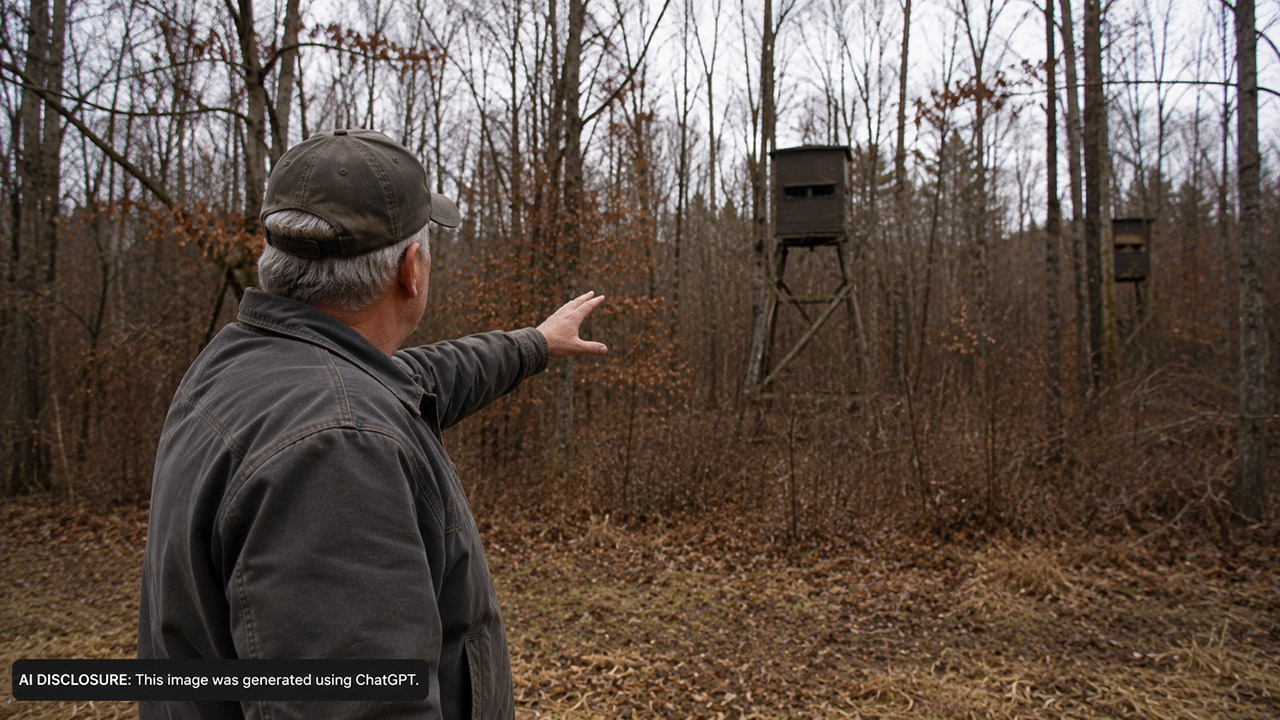
That’s exactly what a Wisconsin landowner ran into after finding multiple deer stands on his posted woodland—only this time, one of them wasn’t a cheap wooden platform nailed into a tree. It was a freestanding stand, and the moment he considered yanking it over with chains, he was warned that destroying it could put him in the wrong.
A posted property, and stands that kept showing up anyway
The landowner owns “a few hundred acres of woodland” in Wisconsin, and he’s not being casual about keeping it private. He described the property as fully posted, with signs and gates at road entrances, signs spaced roughly every 200 feet along three edges (with some variation), and a fence line with signs on the south side.
Despite that, he’s regularly finding deer stands on the property. In the past, he hasn’t worried much about what happens to the ones he takes down—especially the “cheap, handmade out of wood” stands that are nailed or bolted into trees. From his perspective, those are trespasser-built hazards, and he already understood he was allowed to remove and destroy them.
Why a freestanding stand changes the equation
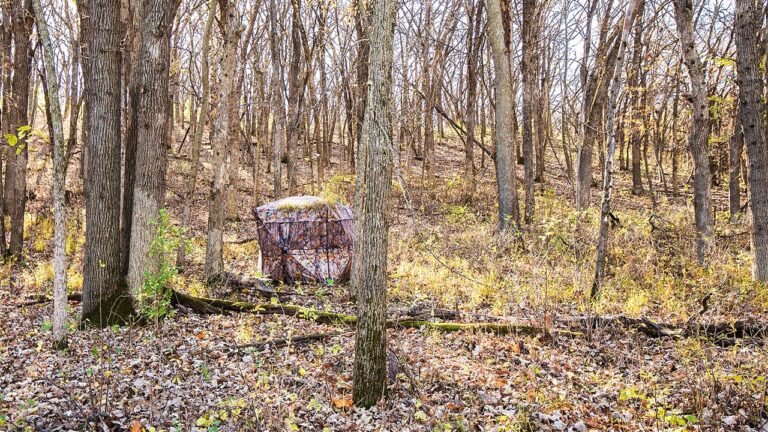
This season, he found a different kind of setup: a freestanding stand that wasn’t attached to a tree or anything else on the property. That difference matters, because it isn’t embedded in or fastened to the landowner’s timber the way those homemade stands were.
He was advised that because of the stand’s value—and because it’s basically personal property sitting on his land—he “may not be strictly legal” to just pull it down and wreck it. In other words, tearing up a pricey, portable stand could be viewed less like removing a nuisance and more like destroying someone else’s property, even if that someone had no business being there.
That’s where a lot of rural folks get caught off guard. We tend to think, “It’s on my ground, it’s mine to deal with.” Sometimes that’s true. But when you move from removing an item to intentionally destroying it, you can step into a different category of trouble.
He called authorities, but didn’t get a simple green light
To his credit, the landowner didn’t just take action and hope for the best. He said authorities were notified. There were fresh tire tracks leading to the road in an area they believe the trespassers used to enter, which is the kind of detail that can matter when you’re trying to show a pattern of access.
The response he got was limited. They told him they would add extra patrols in that area. They also posted a notice on the stand itself. But when he asked what would happen if he removed it, he didn’t get a straight answer beyond being told it was a “civil matter.”
That “civil matter” phrasing is common in property disputes, and it’s frustrating because it feels like someone is passing the buck. What it usually means is law enforcement isn’t going to stand there and referee whether you can dismantle it, store it, dispose of it, or destroy it. If the stand’s owner shows up later claiming damages, that could turn into a dispute between private parties.
The real-world risks go beyond annoyance
It’s easy to frame this as a simple trespass problem, but there are some practical concerns that should make any landowner slow down before doing something dramatic with a chain and a truck.
First is safety. A freestanding stand can be heavy, awkward, and under tension depending on how it’s set. Yanking it over can turn into a rolling, sliding mess with metal legs and platforms coming down unpredictably. If it gets tangled, kicks out, or snaps free, it can hurt you, damage your equipment, or slam into a tree and leave a bigger hazard than you started with.
Second is liability. Even if the stand owner is the one trespassing, destroying an expensive stand out of anger can create a paper trail you don’t want. If a dispute ends up in small claims court, “I found it and carefully removed it” usually sounds better than “I hooked chains to it until it fell.”
Third is evidence. If there’s any chance of identifying who put it there—through the make and model, markings, straps, or the way it’s placed—destroying it can wipe out useful details. The landowner already has some clues, like the tire tracks, and preserving the scene can sometimes help if a pattern of trespass develops.
What outdoorsmen focused on: remove it, document it, and don’t gift-wrap a lawsuit
In the discussion of the situation, the big idea was that freestanding gear can’t always be treated the same way as junk nailed into your trees. If you destroy something of real value, you may be the one explaining your choices later, even if you’re the property owner.
That’s why the safest path tends to look boring: document what you found, document that the property is posted, notify authorities like this landowner did, and choose a removal method that doesn’t look like retaliation. In many places, that means taking it down carefully, storing it, and creating a clear record that it was found on posted private land.
And that’s also why the notice posted on the stand matters. A posted notice can become a clean “you’ve been warned” marker, and it shows the landowner wasn’t trying to set a trap for whoever comes back—just trying to stop the trespass and get the equipment off his ground.
For anyone wanting the full context of what the landowner described—how the property is marked, what kinds of stands he’s found in the past, and what authorities told him—you can read the original post.
How this plays out for landowners in the woods
If you’re dealing with something similar, the hard truth is that “get it off my land” and “smash it” aren’t always the same thing legally, especially with portable, high-dollar gear. The landowner here already understood he could remove stands that were nailed and bolted into his trees. The freestanding stand created a new question: whether destroying it could come back on him as property damage.
The most practical approach is to treat it like you’re building a clean timeline. Take photos of the stand in place, the posted signs, and any access points like the fresh tracks he mentioned. Make a call, get it documented, and then remove it in a way that keeps you on the high road if the wrong person decides to get loud later.
Nobody likes being pushed around on their own property—especially hunters and landowners who work hard to keep timber posted and gates up. But when trespassers leave valuable gear behind, the best move is often the one that fixes the problem without handing them a “damages” argument on the way out.
Like The Avid Outdoorsman’s content? Subscribe to our newsletter so you never miss an article.
Here’s more from us: