Photo credit: The Avid Outdoorsman
The gun owner’s first problem was disappointment.
The second problem was much louder.
A new gun should be exciting. You take it to the range, run the first few boxes through it, learn the trigger, feel out the grip, and start building confidence. When the gun is something like an HK VP9, expectations are even higher. People do not buy one expecting a rough, frustrating first outing.
But his first range day did not go smoothly.
In a Reddit post, the owner described a bad day with a new HK VP9 that ended with a negligent discharge after he got home. That is the kind of story that starts with a gun not acting right and ends with the owner realizing the bigger failure was his own handling.
At the range, the VP9 apparently gave him trouble. A frustrating range trip can put a person in a bad headspace. You spend money on a gun, ammo, range time, maybe accessories, and instead of walking away confident, you leave annoyed and second-guessing everything. Was the gun defective? Was the ammo bad? Was it the shooter? Did it need cleaning? Did it need break-in? Was something assembled wrong?
That frustration can follow you home.
And that is dangerous.
When a person is irritated, distracted, tired, or replaying problems in his head, firearm handling needs to slow down, not speed up. But a lot of negligent discharges happen after the “main event” is over. After the range. After cleaning. After showing someone the gun. After dry-fire. After unloading and reloading. After the person thinks the gun is empty because he has already been handling it for a while.
That appears to be the lesson here.
A gun that has been to the range should be treated like a loaded gun until it has been deliberately cleared. Not vaguely checked. Not assumed. Not “I’m pretty sure I unloaded it.” Magazine out. Chamber checked. Magazine well checked. Visually and physically verified if needed. Then, if anything interrupts the process, start over.
The problem with frustration is that it makes people skip steps.
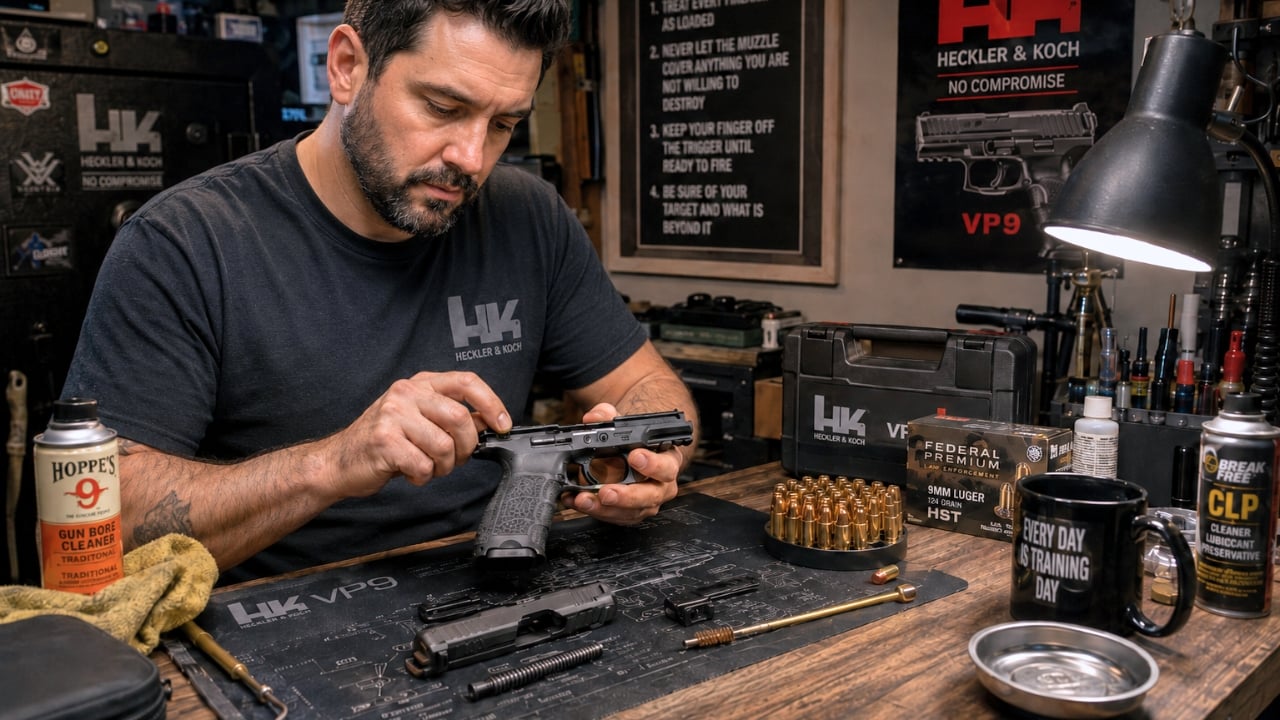
A new gun malfunctioning can make the owner start fiddling with it. Working the slide. Testing the trigger. Trying to reproduce the issue. Taking it apart. Putting it back together. Maybe dry-firing. Maybe checking reset. All of that can be done safely, but only if live ammo is out of the area and the gun is cleared every time the condition changes.
One live round left in the wrong place turns “figuring out what happened” into a negligent discharge.
The owner’s post framed it as his negligent discharge story, which matters. He was not pretending the gun fired on its own. He was not blaming the VP9 for what happened at home. He seemed to understand that the range problems and the discharge were separate lessons: one about diagnosing a firearm, the other about safety discipline.
That second lesson is the heavier one.
A gun malfunction at the range is annoying. A negligent discharge at home can injure someone, scare everyone nearby, damage property, involve police, and permanently change how a person handles firearms. Even if no one is hurt, the emotional jolt can be brutal. The sound indoors is violent. The silence afterward is worse. Then comes the immediate fear of where the round went.
That fear should change the routine forever.
Live ammo should not be on the bench during cleaning or dry-fire. A gun that has just come from the range should be unloaded in a deliberate process, not handled casually while still mentally irritated. If the owner wants to troubleshoot, the ammo goes somewhere else first. If he wants to dry-fire, the room gets cleared of live rounds. If he gets interrupted, tired, angry, or confused, the gun goes down until he can give it full attention.
There is no shame in stopping.
There is shame in rushing with a loaded gun because pride wants the problem solved right now.
The new VP9’s rough range day may have started the chain, but it did not cause the negligent discharge. That distinction matters. A malfunctioning gun can be frustrating, but the safety rules still work if the shooter follows them. Keep the muzzle in a safe direction. Keep your finger off the trigger until ready to fire. Treat every gun as loaded. Know the target and what is beyond it.
Those rules are not suspended because the owner is annoyed.
If anything, they matter more.
The story is useful because it shows how quickly one bad range day can become two separate problems. The first problem needed diagnosis. The second needed accountability. The gun may or may not have had an issue. The handling definitely did.
The owner probably wanted to figure out what was wrong with his new HK.
Instead, the bigger lesson was about what happens when frustration follows a loaded gun home.
Commenters mostly treated the negligent discharge as the serious part of the story.
Several people said a bad range day can make anyone frustrated, but frustration is exactly when gun handling needs to slow down. Trying to diagnose a problem while annoyed or distracted can lead to skipped safety steps.
Others focused on clearing procedures. Magazine out, chamber checked, magazine well checked, and live ammo removed from the area before dry-fire or troubleshooting. If the process gets interrupted, start over.
A lot of commenters were blunt about accountability. The gun may have malfunctioned at the range, but the discharge at home came from handling. Calling it negligent keeps the lesson clear.
Some also said new guns should be tested, cleaned, and diagnosed carefully, but never casually. If a firearm is giving you trouble, that is a reason to be more deliberate, not less.
The main lesson was simple: a frustrating range trip should not follow you into unsafe handling at home.