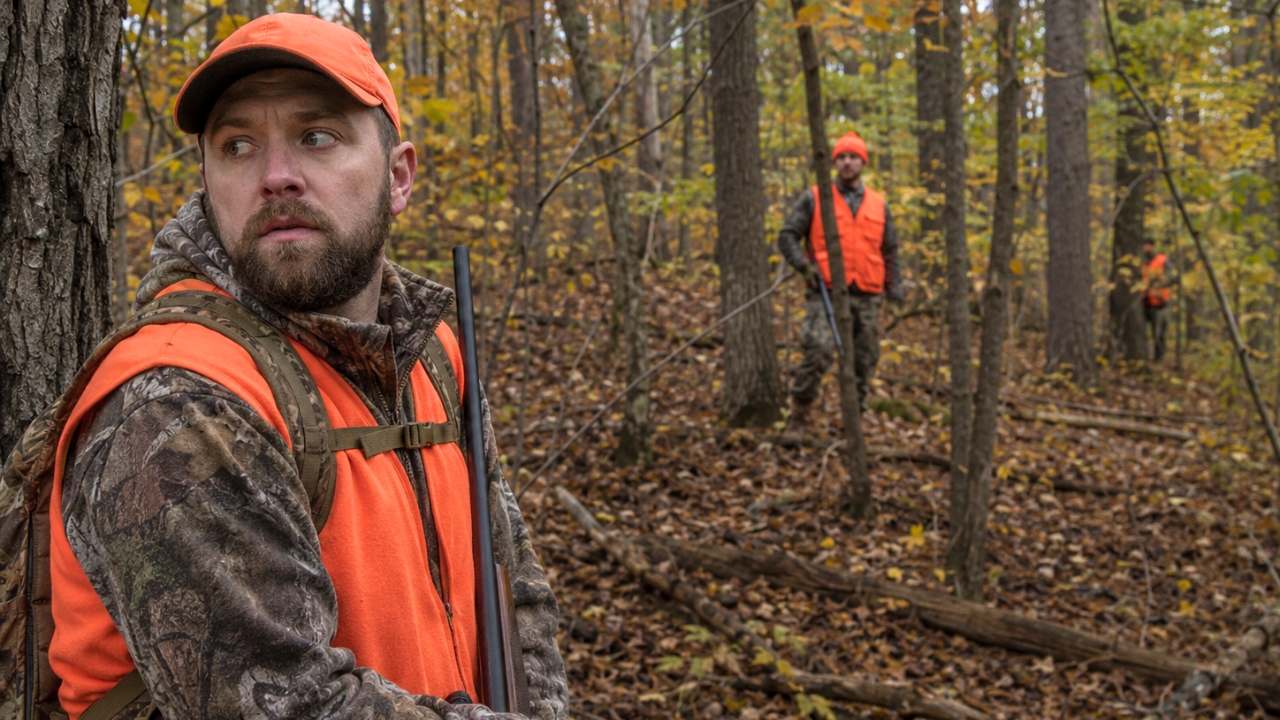
Photo credit: The Avid Outdoorsman
The hunter had heard all the usual scary stories.
Bears in the dark. Coyotes too close to camp. Strange sounds coming from a hollow. Something moving behind you when you are walking out after sunset. That is the kind of stuff people expect when they ask hunters about the scariest thing they have seen outdoors.
But in a Reddit thread, one hunter said the scariest thing he had run into was not an animal at all.
It was other hunters.
That answer may not sound as dramatic as a mountain lion or a bear charge, but anyone who has spent much time on public land knows exactly what he meant. Wildlife can be dangerous, sure. Weather can turn ugly. Getting hurt alone in the woods is always a risk. But nothing makes a hunt feel unstable faster than realizing the people around you may not be careful with guns.
Public land is a gift, but it comes with one huge catch: you do not get to pick who else shows up.
You can hike deep, wear orange, check maps, plan your setup, and do everything right. Then someone else can walk in late, cut across a field, shoot toward sound, climb into a tree without checking what is behind it, or fire at movement because he is too excited to slow down. You may never even see the person until something goes wrong.
That is the kind of danger that sits differently in your stomach.
A bear usually acts like a bear. A snake usually acts like a snake. A hog usually acts like a hog. But a careless person with a rifle can be completely unpredictable. He may be new. He may be tired. He may be drinking. He may be angry that someone else is in “his” spot. He may be so locked onto antlers that he forgets there are other human beings in the woods.
That is what makes public-land hunting feel sketchy when the wrong crowd is around.
The hunter’s point was not that every public-land hunter is reckless. Most are not. Plenty of them are careful, experienced, respectful, and probably more safety-conscious because they know the ground is shared. But it only takes one guy with bad judgment to make the whole place feel dangerous.
Every public-land hunter has seen some version of it. A truck rolls in late, doors slam, people talk loud at the trailhead, and then they wander into the woods with no real plan. Someone walks under your stand right at prime time because he never bothered to look up. Someone shoots too close to a road. Someone fires across a draw without knowing who may be on the other side. Someone uses a rifle scope to check movement because he did not bring binoculars.
And once you see enough of that, the animals stop feeling like the main concern.
The hunter’s answer landed because it was so practical. The scariest thing in the woods may be the guy you cannot account for. The one who parked after you. The one who does not know where you are sitting. The one who thinks orange is optional. The one who believes he can squeeze a shot through brush because he is “pretty sure” nothing is behind it.
Those are the people who make you climb down early.
That is especially true during gun season, when public land can feel crowded even when everyone is spread out. Shots echo. Sound bounces. It can be hard to tell if a rifle fired over the next ridge, across the road, or closer than you want to believe. You sit there listening, trying to decide whether the person shooting has a safe backstop or whether you are unknowingly in the wrong place at the wrong time.
That is not exactly a peaceful morning.
And the weird thing is, the danger is often invisible. If a bear is near your stand, you may see tracks, hear it, or at least understand the animal is in the area. With careless hunters, the risk may be a parking lot you did not check, a person who slipped in from another access, or a shot from someone you never knew was there.
That is why experienced public-land hunters become so picky. They study access points. They avoid obvious funnels during busy weekends. They walk farther than most people want to walk. They use lights and orange even when it feels annoying. They make themselves visible to humans before worrying about hiding from deer.
Because deer are not the only thing that matters.
The hunter’s answer may have been short, but it said what a lot of people think after enough seasons. The woods themselves can be spooky, but other people can make them dangerous. And when firearms are involved, “sketchy” is not a small thing.
Commenters understood the answer immediately.
A lot of hunters said public land can be great, but the human factor is what makes it stressful. You can scout deer, study wind, and plan access all you want, but you cannot control whether the next guy over is safe, sober, experienced, or paying attention.
Several commenters talked about near-misses, bad shots, and people walking into setups without warning. Some had heard rounds too close. Others had watched people shoot in unsafe directions or move through the woods with no idea where other hunters were. The common thread was that these were not freak animal encounters. They were preventable human mistakes.
Others said this is why they avoid opening weekends or heavily pressured parcels. They would rather hunt weekdays, hike deeper, or choose less obvious spots than sit near a crowd of strangers with rifles. It may mean fewer deer sightings, but it also means fewer people doing dumb things nearby.
A few hunters pointed out that wearing orange, using a light, and making yourself known can save your life, even if it hurts the hunt. If someone is moving toward your setup, it is better to speak up than hope he figures it out. No deer is worth letting a stranger with a gun wander right into your lap.
There was also some defense of public land, and it was fair. Public ground matters. It gives people a chance to hunt without owning land or paying for a lease. Most hunters using it are not reckless. But commenters still agreed that shared land requires more patience, more awareness, and a lot more trust in people you have never met.
The best advice was simple: assume you are not alone, even when the woods feel empty. Know where access points are. Be visible when it matters. Do not shoot unless you are dead sure of your target and what is beyond it. And if the people around you make the place feel unsafe, leave.
Sometimes the scariest thing in the woods is not what is hiding from you. It is the person who does not know you are there.