Photo credit: The Avid Outdoorsman
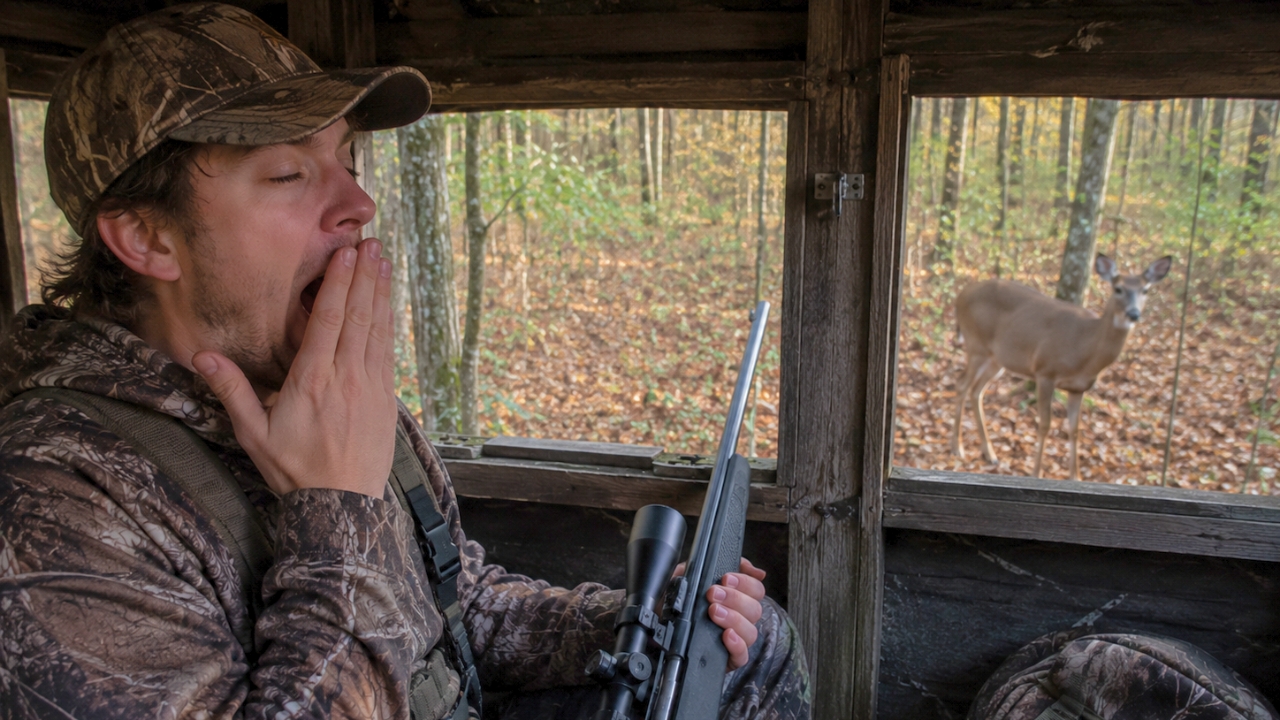
The hunter did not hear a deer first.
He heard himself.
That is never a good sign in a deer blind. The whole point is to disappear into the quiet, stay still, keep your movements small, and let the woods forget you are there. Snoring does not exactly help with that.
In a Reddit thread, hunters were talking about sleeping in a deer blind when one story took the idea from lazy to ridiculous. A hunter woke himself up snoring, realized he had gotten loud enough to blow his own cover, and then still managed to shoot a doe afterward.
That is the kind of hunting story that should not work.
But sometimes the woods does not follow the rules.
A snore in a blind is not a subtle sound. It is not the soft rustle of leaves or a squirrel bouncing through the brush. It is unmistakably human, and it is probably a lot louder in the still air than the person making it thinks. If you have ever been half-asleep and startled yourself with a snore, you know the feeling. Now imagine doing that while trying to hunt.
The hunter must have come awake with that instant wave of embarrassment and panic.
Did anything hear that?
The answer was probably yes.
A deer’s ears are built for exactly that kind of thing. They pick up snaps, steps, fabric movement, soft metal clicks, and unnatural sounds from distances that make hunters feel personally insulted. If a deer is close enough, a snore should be enough to make it lock up, stare toward the blind, or leave.
But somehow, the hunt was not over.
That is the funny part. Hunters spend all morning worrying about one zipper pull, one cough, one boot scrape, one thermos lid, and then a guy snores loudly enough to wake himself up and still ends up with a doe. It makes every overcareful hunter want to throw a rangefinder into the creek.
Of course, that does not mean snoring is a strategy.
It means deer are unpredictable, and blinds can hide more than people think. A good blind can help contain movement and maybe muffle some noise. If the wind is right and the deer cannot pinpoint the source, a strange sound may make her alert without sending her running immediately. Deer hear odd noises in the woods all the time: branches falling, squirrels fighting, turkeys scratching, raccoons splashing, livestock nearby, and people doing people things in rural areas.
Still, a human snore is pushing it.
The hunter’s ability to recover mattered. Waking up startled can make a person move too fast. He could have shifted hard, grabbed the gun loudly, bumped the blind wall, or made the situation worse. Instead, he apparently got himself together enough to take the shot when the chance came.
That says something.
There is a line between a funny mistake and a rushed, unsafe one. If you wake up groggy and an animal is nearby, you still have to slow down. Confirm the deer. Confirm the backstop. Confirm the shot angle. Get steady. Make sure you are actually awake enough to handle the gun safely. The fact that a deer is present does not erase the safety routine.
This hunter managed to come out of sleep and still finish the hunt.
The doe probably did not appreciate the soundtrack.
Sleeping in a blind is one of those things hunters joke about because a lot of them have done it. Some deny it. Some call it “resting their eyes.” Some claim they were listening with their eyes closed. But a warm blind, a slow morning, and an early alarm can take down even a serious hunter. Add a heater, comfortable chair, or long afternoon sit, and the blind starts feeling less like a hunting setup and more like a nap trap.
The difference is that most hunters wake up to nothing.
This one woke up to himself snoring, then still got a deer.
That is why the story works as camp material. It gives everyone something to argue about. Was the doe already used to noise? Was the blind good enough to hide him? Did the snore freeze her instead of spooking her? Was the hunter just lucky? The answer is probably yes to luck, at minimum.
But luck counts in hunting stories, as long as safety stays intact.
The real lesson is not that noise never matters. It does. A snore can absolutely ruin a hunt. So can coughing, talking, loud snacks, phone noise, or banging a gun against the blind window. The lesson is more honest than that: sometimes you mess up and the deer still gives you a chance. When that happens, do not waste it by panicking.
Wake up. Get still. Get safe. Make the shot only if it is right.
And maybe drink a little more coffee next time.
Commenters mostly treated the story like proof that deer hunting can make no sense at all.
Several hunters joked that they spend all morning trying not to make a sound, while this guy apparently snored himself awake and still got a doe. That kind of contradiction is exactly what makes hunting stories so aggravating and funny.
Others said sleeping in a blind is easier than people admit. Early mornings, slow movement, warm gear, and long sits can knock a hunter out fast, especially in an enclosed blind.
A few commenters pointed out that a blind can cover some mistakes, but it does not make noise irrelevant. A loud snore could absolutely spook deer under the wrong conditions.
Some also said the important part is waking up safely. If a hunter is groggy, he still needs to confirm the target, know what is behind it, and handle the firearm carefully before taking any shot.
The main takeaway was simple: the woods may forgive one embarrassing noise, but it is better not to count on a snore as part of the plan.