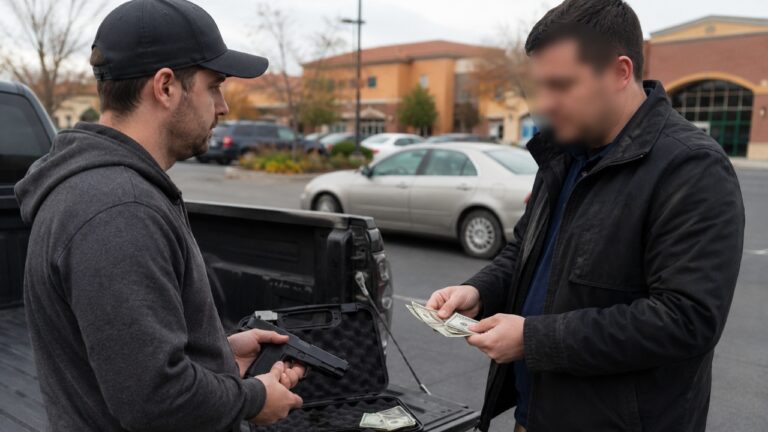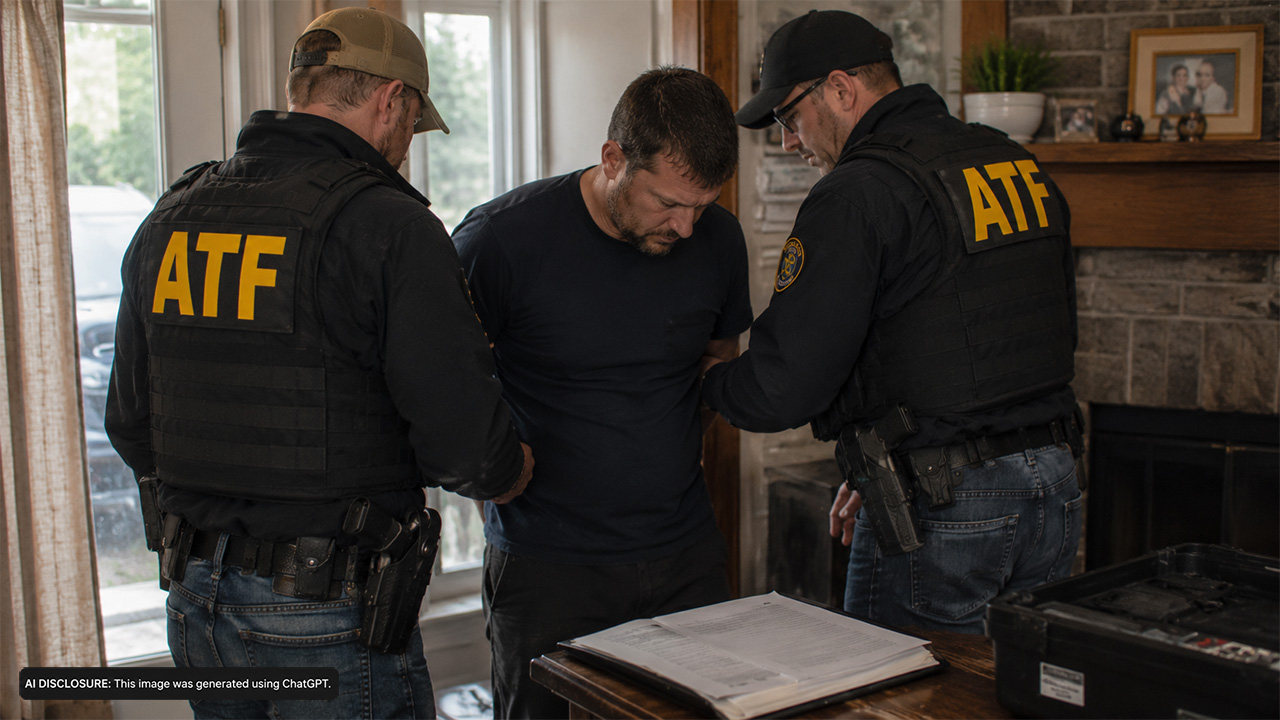
Photo credit: AI-generated image created using ChatGPT. Illustrative only
A lot of folks treat the gun counter like it’s a quick errand—pick what you want, fill out the form, and head to the range. But that paperwork is not a suggestion, and the feds don’t need much to turn a “simple purchase” into a serious problem.
In a situation described in the original post, a man allegedly lied on the federal firearm purchase form about his mental health history after having been involuntarily committed. The lie didn’t slide by, and now he’s facing federal trouble after the ATF flagged the discrepancy.
The background: an involuntary commitment doesn’t just “go away”
From the comments included with the source material, the key detail is that the man had previously been involuntarily committed. That matters because that history can make someone a prohibited person under federal law, meaning they cannot legally possess or purchase a firearm.
That’s not an internet technicality. In the real world, it means that when you sit down to complete the federal form at the gun shop, there are specific questions designed to catch exactly that kind of disqualifier. If you’ve got that history and you try anyway, you’re not just rolling the dice—you’re setting yourself up.
The lie: answering “no” to the mental health question
According to the source material, the man answered “no” to the question related to his mental health history. One commenter made a point that’s hard to argue with: this wasn’t a misunderstanding or a box checked by accident. The claim is that he knew he couldn’t get a gun because of the involuntary commitment, and he marked “no” anyway.
That’s where things go from “denied sale” to “federal case.” A denial is one thing. Making a false statement on that form is another, and it can put you square in the sights of federal enforcement.
It got worse: he also thought claiming it was for someone else helped
The source material also indicates the man believed it would be better if he answered that he was buying the gun for someone else. That’s a huge red flag in gun shops for a reason. Buying a gun on behalf of someone else can cross into straw purchase territory, and dealers are trained to pay attention to anything that sounds like it.
Even if a person thinks they’re being “honest” by saying it’s for somebody else, it doesn’t fix the underlying problem. If anything, it piles on another issue—one that tends to make clerks, managers, and investigators lean in harder.
How it catches up: “flagged” doesn’t mean random
The headline angle here is that the ATF flagged the form, and now the man is facing federal charges. The source material doesn’t lay out the full chain—whether it was an immediate denial, a delayed denial, a follow-up investigation, or something that surfaced later—but the takeaway is plain: these answers can be checked.
In the hunting and shooting world, there’s still a common belief that if you just get past the counter once, you’re in the clear. That’s not how it works. Records exist, and when something doesn’t line up, it can come back around—sometimes long after a guy has convinced himself the moment passed.
What outdoorsmen should take from this: honesty, paperwork, and safer choices
If you’re a gun owner, a hunter, or you keep a rifle around the farm, this is one of those stories that should tighten up your habits. The form isn’t “gun shop small talk.” It’s a federal document. Treat it like you’d treat a tag on a big-game hunt: you don’t guess, you don’t “close enough,” and you don’t scribble your way through it hoping nobody notices.
And if someone has a history that makes them prohibited, the practical answer isn’t to shop for loopholes. It’s to step back and address the real need—whether that’s talking with an attorney about rights restoration where it’s possible, leaning on other legal home-defense options that don’t put them in jeopardy, or making sure firearms in the household are secured so nobody is tempted to make a bad decision in a rough moment.
Commenters weren’t sympathetic: “This is why laws get tighter”
The reactions in the source material were blunt. One commenter said people who try to beat the system are exactly why gun laws get more strict. Another questioned why someone with “a psych background” would keep trying to get a firearm repeatedly, and suggested rethinking the friendships involved.
That tone mirrors what you hear around many rural communities and gun clubs: most responsible gun owners don’t want prohibited people trying to sneak through the process. Not because they’re eager for more rules, but because every high-profile mess turns into a reason for lawmakers to clamp down on everybody else—especially the folks who do it right.
This is one of those hard lessons that doesn’t just cost money and court dates. It can cost gun rights for life, even for people who would otherwise be lawful owners. If you’re standing at that counter, slow down, read every question, and answer like it matters—because it does.
Like The Avid Outdoorsman’s content? Subscribe to our newsletter so you never miss an article.
Here’s more from us: