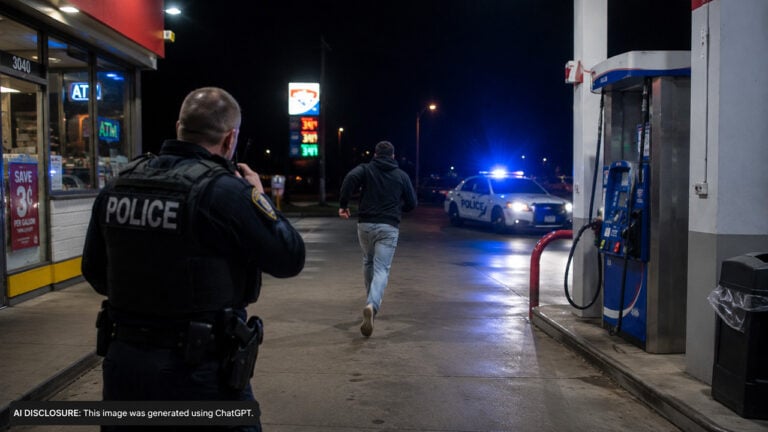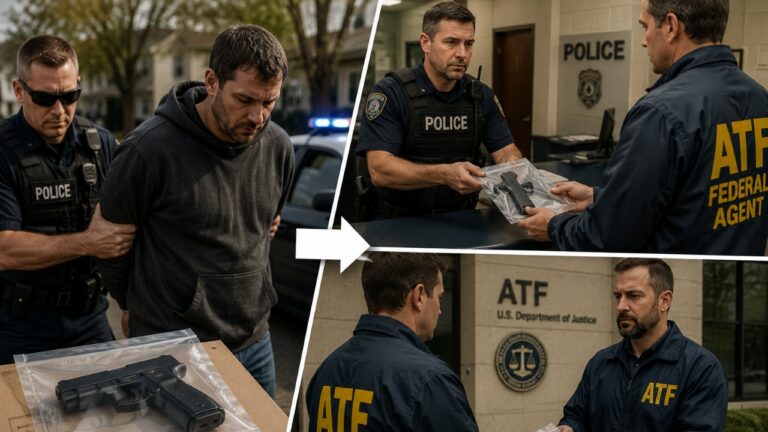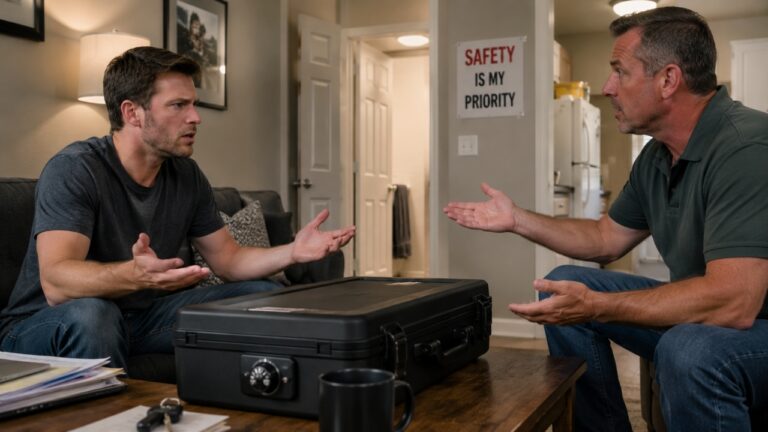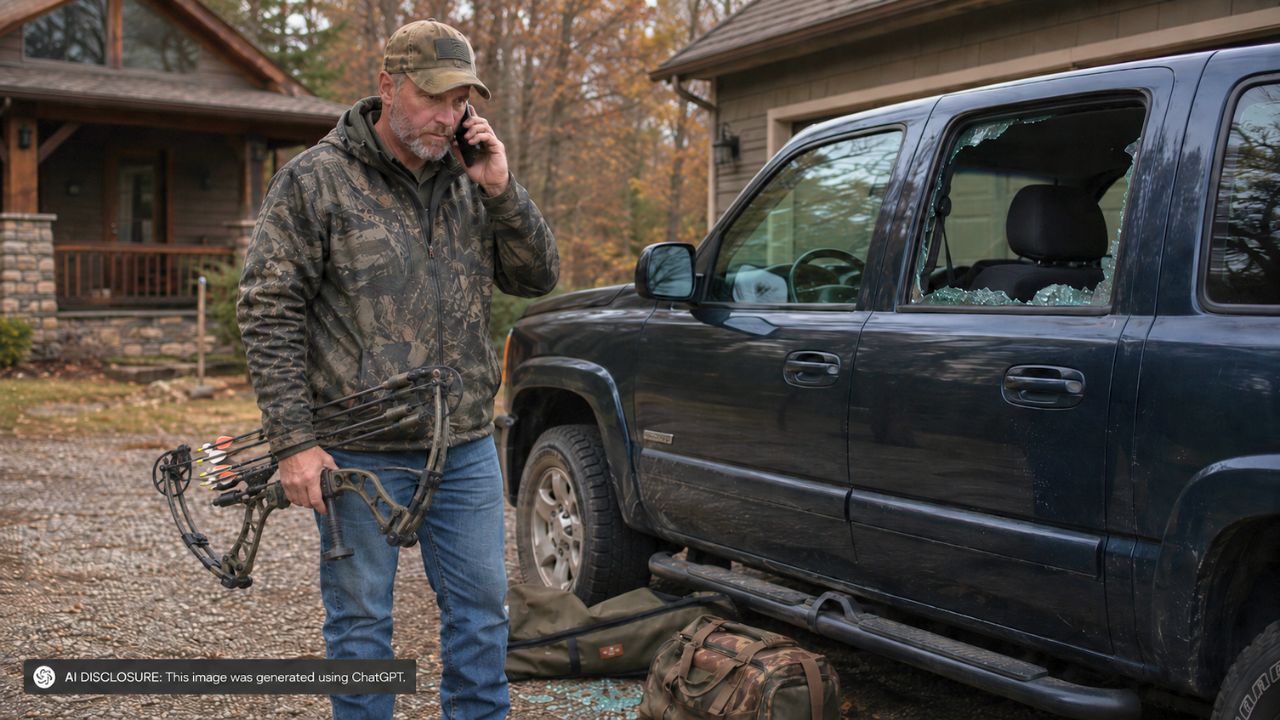
Photo credit: AI-generated image created using ChatGPT. Illustrative only
Most of us have had that sinking feeling after a long day outside—walk back to the truck, notice something isn’t right, and realize a piece of your life just got stolen. In this case it wasn’t a pair of binoculars or a saddle harness. It was a 9mm pistol the owner had since the early 2000s, a gift from his father, who has since passed away.
More than a year after the theft, the gun owner was still trying to get traction. He’d reported the stolen firearm the next day and told police he wanted to press charges. But time kept rolling, and he says nothing seemed to move—until the kind of twist every gun owner worries about: stolen guns don’t usually stay “stolen” forever. They eventually surface, sometimes in the worst possible places.
The theft wasn’t just about property—it was family history
According to the original post, the pistol was taken from the owner’s truck. He filed a report the following day and made it clear from the start that he wanted charges pursued.
That matters for two reasons. First, a stolen firearm is a public-safety problem, not just a personal one. Second, this particular handgun had real sentimental weight. The owner said his father gave it to him around 2003–04, and with his dad gone now, the gun wasn’t replaceable in the way a new pistol from the gun counter is “replaceable.”
Anybody who’s carried a hand-me-down rifle in deer season understands that part. The steel and polymer are one thing. The story that comes with it is another.
He did his own digging and brought investigators a map to the answer
After about a year with no resolution, the owner went back to check the status of the investigation. But he didn’t go empty-handed. He said he’d put together names of the individuals he believed stole the firearm, who bought it, and who it was sold to after that.
More than that, he claimed he had the make, model, and color of the vehicle where the gun was located, along with the exact location of the pistol inside that vehicle. In other words, he wasn’t asking police to start at square one. He was handing them what most people would consider a pretty direct lead.
From the outside looking in, you can understand the frustration. If you’ve ever had trail cameras stolen, you know the feeling: you can point to the guy, you can tell them the route he takes, you can show the timestamps, and it still feels like you’re pushing a boulder uphill to get the process moving.
The response he got felt like a stall, not a plan
The owner described meeting with the detective assigned to the case and not getting much back. He noted the detective “was looking at the ground a lot and shaking his head,” which didn’t exactly inspire confidence that a recovery was about to happen.
When the gun owner asked whether they could go get his stolen property—especially since he believed the suspect was at work at that moment—the detective’s first question was, “Did he know it was stolen?” The owner replied that the person knew “YES 100%.”
He asked again if they could go retrieve it. The detective’s answer was essentially that he would “do some digging around” and call him. The owner said that conversation was nearly three months ago, and when he went back to follow up twice, the detective was either in a meeting or already gone for the day.
There’s a hard truth here for gun owners: even when you do the right thing—report it immediately, document it, follow up—your case is still one file among many. That doesn’t make it feel any better when the stolen item is a firearm with your name attached to the original purchase trail.
When stolen guns resurface, it’s often because something worse happened
The nightmare scenario with a stolen gun isn’t just that you lose money or sentimental value. It’s that the gun shows up later in a traffic stop, a burglary, or a violent crime. That’s why the headline angle—investigators calling long after the theft because the firearm turned up far away at a serious incident—hits home with so many outdoorsmen.
The source account doesn’t spell out where the pistol went after it was stolen, and it doesn’t document an eventual call from investigators. What it does show is the exact kind of delay that can allow a stolen firearm to bounce from hand to hand. The owner even described a chain of possession he believed he’d identified—who stole it, who bought it, and who sold it again.
That’s the part worth sitting with. Once a gun is out in the wind, it can move faster than paperwork ever will. It can cross county lines or state lines, land in a console, a waistband, a pawn counter, or a glovebox under somebody else’s registration. And when it finally gets recovered, it’s often because someone got caught doing something else.
For the original owner, that can mean a phone call months or a year later that brings back all the anger—plus a new layer of stress: “Where has that gun been, and what has it been used for?”
What a gun owner can do when the case goes cold
The owner said he was given a number to contact and set up a meeting with the captain, but he hadn’t done it yet. That’s one practical next step when you feel like you’ve hit a wall—politely moving the issue up the chain, with your report number and documentation in hand.
Another reality is that even if you know—or strongly believe—you’ve located the gun, it’s not something you go retrieve yourself. That’s how good people get hurt or end up in handcuffs over a situation they didn’t create. A stolen gun sitting in a vehicle is still a gun, and you don’t know who’s attached to it or how they’ll react when challenged.
From a prevention standpoint, the story is also a blunt reminder about truck storage. A vehicle is not a safe. If you have to leave a firearm in a truck, use a real lockbox anchored to the vehicle, keep it out of sight, and don’t make your hunting rig a rolling advertisement for what might be inside. It won’t stop every thief, but it can slow them down enough to make them move on.
And if a firearm is stolen, reporting it quickly—like this owner did—is critical. It creates a record that helps protect you later if the gun is recovered in the middle of something ugly.
At the end of the day, the most frustrating part of this situation isn’t hard to understand. A man lost a family heirloom to a thief, did what he was supposed to do with law enforcement, and then felt like he was the only one still working the problem. That’s a tough place to be—especially when the item missing isn’t just “property,” but a firearm that can come back into your life at the worst possible time.
Like The Avid Outdoorsman’s content? Be sure to follow us.
Here’s more from us: