Photo credit: AI-generated image created using ChatGPT. Illustrative only
Most folks who carry every day have a simple rule: the gun stays on you. Not in a console, not in a glove box, and definitely not in a stranger’s hands. But one Georgia traveler says a hotel’s policies put him in a spot where his normal routine didn’t fit the situation—and that decision cost him a handgun.
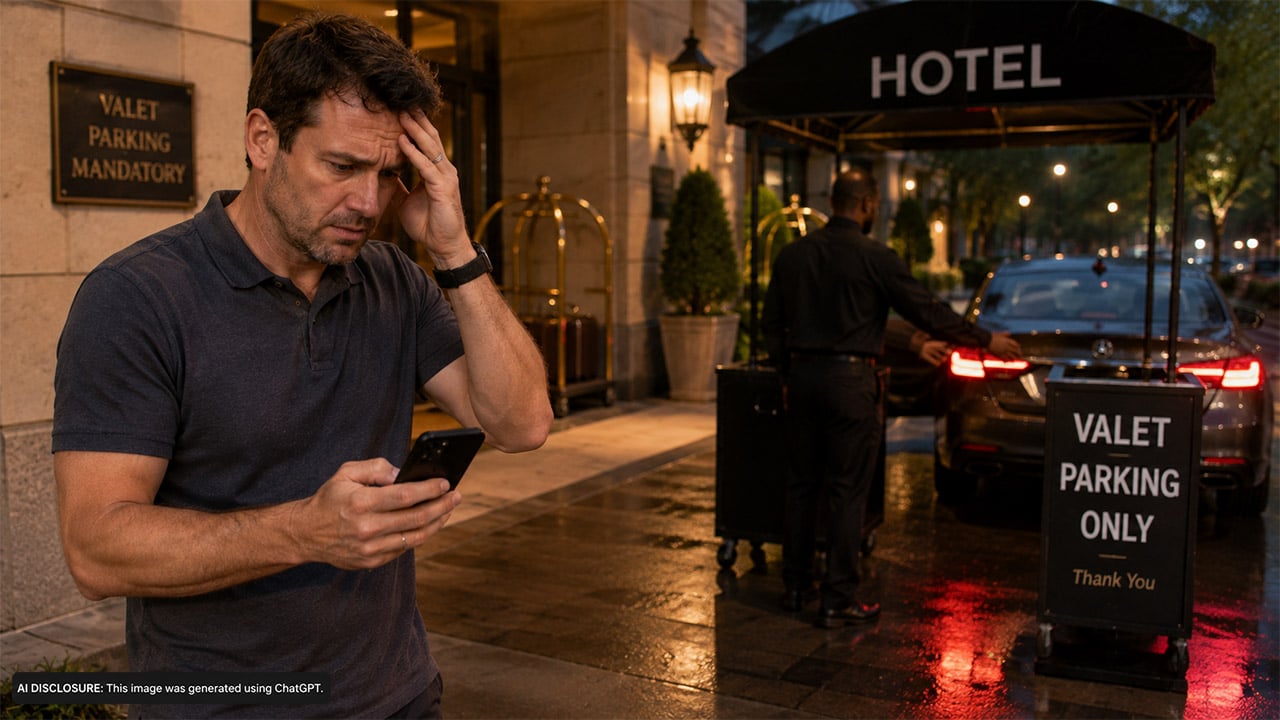
In the original post, the gun owner explains that he and his fiancée pulled up to a “4 star level” hotel in a large Georgia city for a one-night stay. They were told valet was required. Inside the lobby, a prominent “Firearms Prohibited” sign was displayed, and the check-in paperwork he signed also listed firearms as prohibited.
A forced parking choice and a familiar bad option
He holds a Georgia concealed carry permit and says his standard practice is to keep his firearm in his possession unless he’s at home or a trusted friend’s home where it can be secured in a safe or locked container. This time, the hotel signage and the paperwork pushed him to do something he already knew was a weak link: leave the gun in the vehicle.
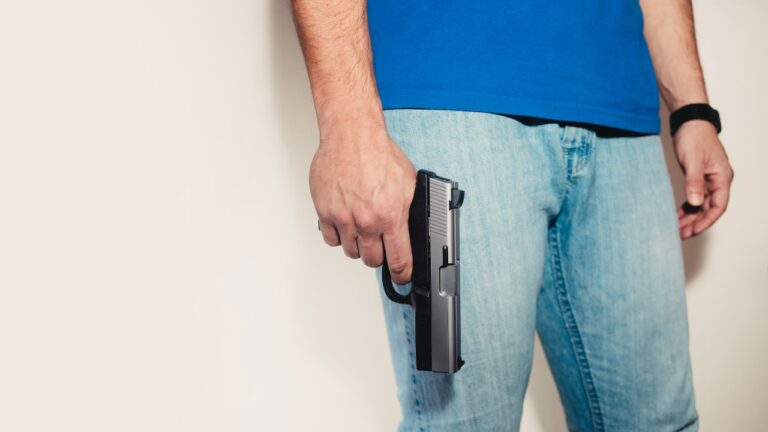
Because the hotel required valet and didn’t offer self-parking, he had the valet bring the car back around so he could stow the firearm in his fiancée’s locked glove box. He notes he didn’t believe anyone specifically saw him do it, and no one was particularly near the car at the time.
The next morning looked normal—until the gas stop
Checkout went smoothly. He describes the valet station as “cheery” and normal. No red flags, no awkward moment, no sign that anything had happened overnight.
About thirty minutes later, they stopped for gas. That’s when he went to re-holster the handgun and found the glove compartment “in disarray,” like someone had rummaged through it. The handgun was gone. They searched the entire vehicle to make sure it wasn’t misplaced, but came up empty.
Police report filed, but no easy path to recovery
He called the hotel and made a police report for the stolen firearm. The police placed the serial number on a stolen weapons list, but told him they couldn’t take further action unless the gun turned up later—meaning recovery would likely depend on a traffic stop, an evidence intake, a pawnshop hit, or some other unrelated event where the serial number gets run.
If you’ve ever had property stolen, you know that feeling: you do the right thing, you document it, you report it, and then the reality sets in. The wheels can’t turn until there’s something to grab onto—video, a witness, a suspect, or the firearm itself.
The hotel pointed to the valet company and shut the door
Not long after, the hotel called back. According to the post, hotel staff told him there was “nothing that they could do” because the valet was a third-party service and “are not affiliated with the hotel’s parent company.” That might be true on a corporate org chart, but from a guest’s perspective, the valet stand is right out front, it’s part of the arrival experience, and you’re being told you don’t have a choice.
What made the situation feel even more closed off: the manager refused to provide the names of the valets who handled the car. The gun owner then contacted the valet company and said he was waiting on a response.
Where outdoorsmen land on this: paperwork, insurance, and hard lessons
The questions he asked are the same ones any practical gun owner would ask after a mess like this. Does the hotel’s insurance cover the loss? Did the hotel assume a duty of care for the vehicle and its contents when the guest paid for valet service and wasn’t allowed to park himself? And if the hotel tries to point away, does the valet company carry responsibility since their employees had access to the vehicle?
He also wondered about the next steps: small claims court, contacting homeowners insurance, and what to do about an estimated $600–$700 loss once you add the handgun, upgrades, and a holster.
From an outdoorsman’s standpoint, there are a few hard truths wrapped up in those questions. First, valet lots are opportunity magnets. A vehicle sits with keys under someone else’s control, sometimes moved multiple times, sometimes parked in areas the guest never sees. If a bad actor is working that lane, a glove box is a quick target—especially if it’s common for travelers to stash valuables.
Second, “locked glove box” sounds secure, but it’s usually just privacy, not real security. Most glove box locks are flimsy, and in a lot of vehicles the latch can be popped or bypassed without much effort. Even if it’s a genuine lock, the weak point becomes access to the cabin, and valets obviously have that.
Third, insurance can be tricky. Homeowners policies sometimes cover theft away from the home, but coverage varies, deductibles apply, and firearms may have special limits unless the owner has a rider or scheduled property coverage. Auto insurance typically focuses on the vehicle, not personal property inside it, though again it depends on the policy. On the hotel/valet side, many places post disclaimers about liability, but a disclaimer doesn’t automatically end the conversation if negligence is involved.
The practical takeaway for people who carry and travel
This is the exact scenario that makes concealed carriers grind their teeth: you’re trying to comply with posted rules, you’re trying not to cause a scene, and you’re still responsible for what happens next. The gun owner in this case made a choice that a lot of reasonable folks would make under pressure—especially with a “Firearms Prohibited” sign and paperwork in front of you.
If there’s a lesson worth keeping, it’s that “no-gun” policies plus mandatory valet can create a predictable problem. When lawful carriers are forced to disarm, the gun doesn’t disappear—it often gets pushed into vehicles, where theft risk jumps fast. And once a firearm is stolen, it’s not just a financial loss. It’s a public-safety problem that follows that gun wherever it goes next.
For travelers who carry, the best time to think through hotel parking and storage is before you roll up to the front drive. Mandatory valet, posted prohibitions, and unfamiliar cities are a bad combination. This Georgia gun owner did what he could after the fact—police report, serial number entered, calls made—but the real damage was done in that short moment when the firearm had to be left behind.
Like The Avid Outdoorsman’s content? Be sure to follow us.
Here’s more from us: