Photo credit: AI-generated image created using ChatGPT. Illustrative only
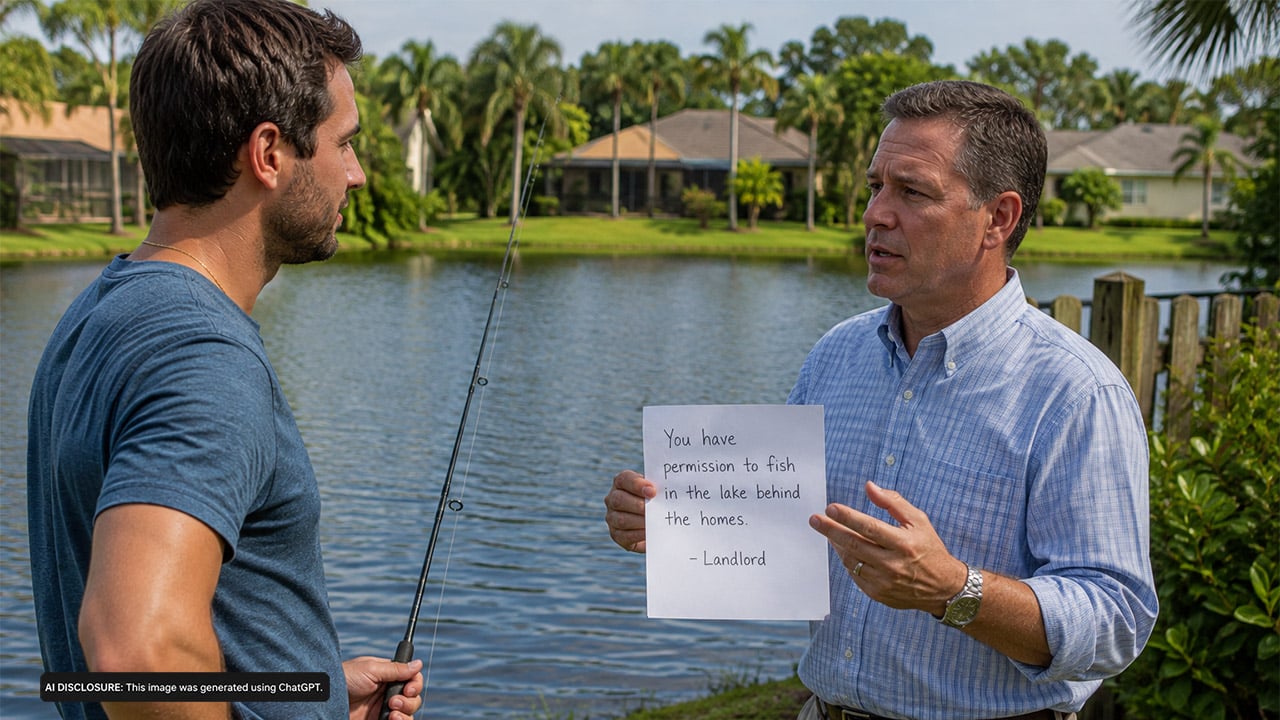
A Florida renter thought he’d found a pretty good setup: a condo with a big lake out back, the kind of place where you can take your boys outside, wet a line, and make an evening out of it. He did what most reasonable folks would do—asked the property owner first—and got a green light to fish the water behind the homes.
Then the neighbor stepped in, and things went sideways fast. In the original post, the renter describes how a simple “can we fish here?” turned into repeated police calls, accusations, and eventually a lawyer letter threatening a restraining order and a lawsuit.
A handshake understanding met a hard-stop neighbor
The renter says he was told by the property owner—he calls him “Lester”—that fishing in the shared lake was allowed. It mattered enough to him that it was part of why he chose the rental in the first place. That’s a familiar angle for outdoorsmen: access is everything, and permission is usually the whole ballgame.
After moving in with his wife and sons, he met the neighbors he calls “Michelle” and “Amanda.” The first contact wasn’t friendly—complaints about the moving truck blocking a window view—but it seemed to settle down after an apology the following day.
The first fishing trip brought cops to the backyard
A week later, he took his sons out back to fish. About an hour in, Michelle came out asking—hostile, in his telling—what they were doing. When he said they were fishing, she insisted it was illegal to fish that lake and escalated the confrontation in front of his kids.
He says he tried to call the property owner while she called police. A responding officer arrived, and the renter felt he couldn’t get much of a word in. The officer told them to pack it in and stop fishing.
That’s where a lot of folks get tripped up: “permission” and “legality” aren’t always the same thing. A landowner can grant access, but community rules, HOA covenants, posted restrictions, or even how the water is classified can change what’s actually allowed. The renter didn’t sound like he was trying to bend rules—he thought he had handled it properly by asking first—but the response from law enforcement clearly didn’t match what he’d been told.
The renter tried again, and the conflict became a pattern
After that first police contact, the renter says Lester told him to ignore Michelle and “fish to your heart’s content.” So he tried again with his sons. He reports that Michelle immediately came out screaming and insisted Lester didn’t make the rules—she did.
Police responded again. This time, Michelle allegedly claimed he was trying to provoke a fight. One officer spoke to her, another spoke to him and his sons, and in the end the renter says officers again instructed him not to fish there and to leave the neighbors alone.
At that point, most anglers would do exactly what he did: swallow hard and back off, even if it feels unfair. When the same neighbor keeps calling law enforcement, you can be “right” on paper and still lose the peace in real life—especially with kids standing there watching grownups argue across a property line.
It didn’t stay about fish—ducks and accusations raised the temperature
A few days later, another incident happened in the backyard, this time with the kids feeding bread to ducks. The renter went out to check on them and figured it was harmless. Michelle came out angry and told him it was animal abuse to feed ducks bread.
He admits he yelled back, fed up with the aggression, and says his sons were scared by the argument. Police were called again, and he says officers lectured the kids and left. Later, he looked it up and found out that bread actually is bad for ducks—so even though the confrontation was ugly, he recognized there was a real issue underneath it.
Here’s the hard lesson for anyone living tight to neighbors: once you’ve got a high-conflict person next door, nearly anything outdoors becomes “the issue.” Fishing becomes a problem. Kids being kids becomes a problem. And every call adds to a record—fair or not—where you start looking like the common denominator.
Trying to make peace triggered the legal threat
After the duck incident, the renter decided to go talk to Michelle and Amanda to apologize and try to smooth things over. He says before he could even knock, Amanda warned she was calling police. He told her he just wanted to talk and claims he wasn’t being hostile, then left.
An officer still ended up at his porch along with Amanda. The renter says she was crying, insisting she was terrified, and accused him of being a homophobe—something he says had never been part of any prior interaction. He denied it, and the officer warned him not to bother them again. He agreed and decided to keep distance.
The next day, he received a letter from an attorney representing Michelle. According to the renter, it threatened a restraining order against him and his family, plus a lawsuit for “emotional distress,” citing Michelle’s PTSD, depression, and social anxiety, and claiming missed work and medical treatment.
Whether a lawsuit like that goes anywhere is for courts and attorneys, but the practical reality is simple: once the lawyer letter shows up, the “just be neighborly” phase is over. From that point on, it’s about documentation, boundaries, and not giving the other side any more material to work with.
What outdoorsmen took from it: permission, proof, and staying off the X
Situations like this are why experienced land users get everything they can in writing and keep things boring. If you’re renting and you’re told you can fish a lake, it helps to have a clear text or email from the owner or property manager stating exactly where and what’s allowed. It doesn’t solve every dispute, but it can keep you from looking like you made it up later.
It’s also a reminder that police showing up doesn’t mean they’ve sorted out property rights, HOA rules, or water access law on the spot. Officers are often trying to stop a disturbance, and “don’t fish here again” is the fastest way to end the call, even if it doesn’t answer the underlying question.
And finally: once you’re told to avoid contact, avoid contact. Don’t walk over to “clear the air.” Don’t argue across the yard. Don’t go line-for-line with someone who’s already comfortable calling the cops. If there’s a legitimate access question—like whether the lake is common property, whether tenants have the same recreational rights as owners, or whether fishing is restricted—handle it through the owner, the association, or an attorney, not the fence line.
The saddest part of the whole thing is how ordinary it started: a father trying to fish with his boys in the backyard. But in close-quarters neighborhoods, one high-conflict relationship can turn a simple outdoor routine into a legal problem. When that happens, the best move usually isn’t to “win” the argument—it’s to stay calm, stay documented, and stay out of the neighbor’s spotlight.
Like The Avid Outdoorsman’s content? Be sure to follow us.
Here’s more from us: