Photo credit: The Avid Outdoorsman
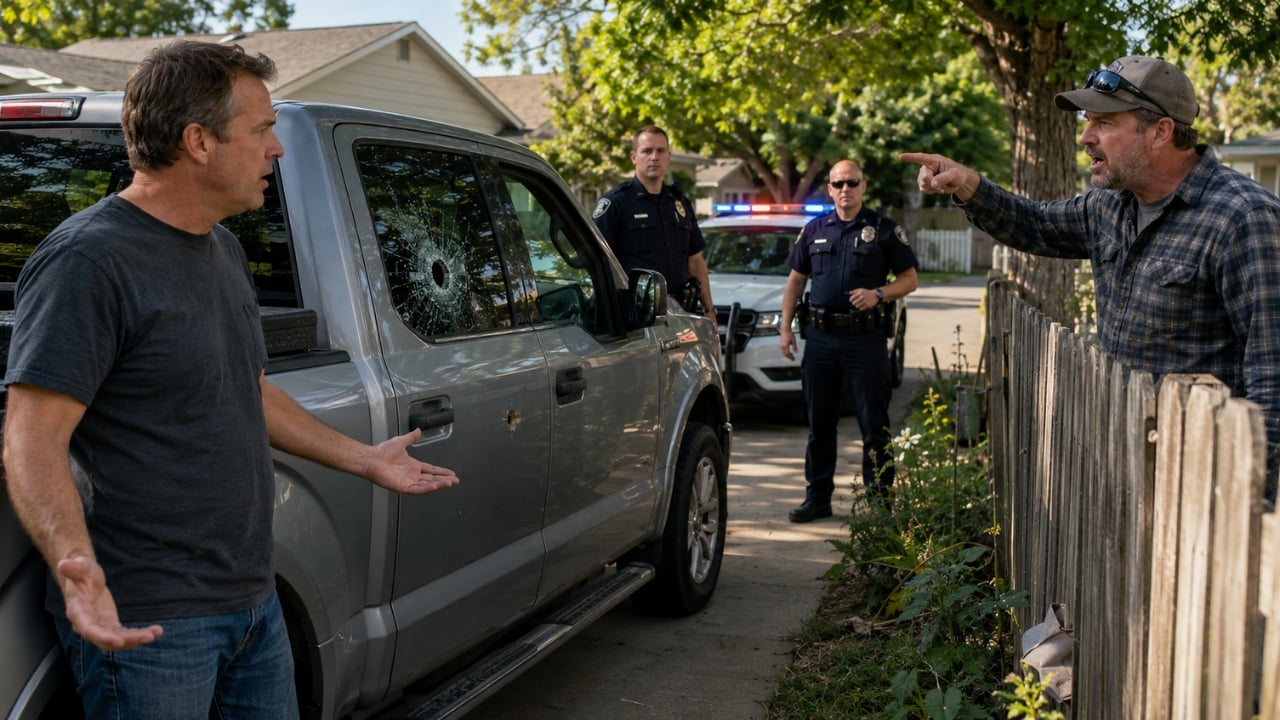
The first sign something was wrong wasn’t a loud crack in the night. It was the next morning, when a homeowner walked out to his driveway and noticed two clean holes in the side of his pickup—one through the bed, another low near the rear quarter panel. The metal around them had that fresh, peeled look you only see when something fast and hard punches through.
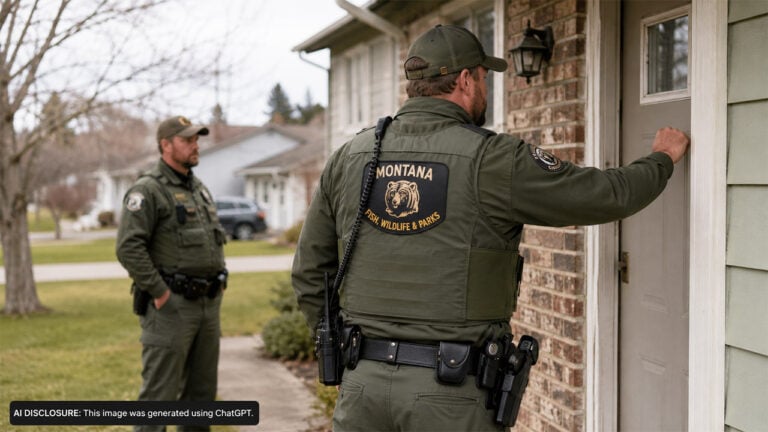
He did what most folks in the country say they’ll do in that moment: he called the law and filed a report. He wasn’t trying to start a feud, he said, he just wanted it documented. But within a day the situation flipped on him when the neighbor across the fence line filed a report of their own—claiming harassment, intimidation, and “reckless accusations.” The result was a stalemate where deputies wouldn’t choose a side, and two households ended up living with the same problem: bullets had gone somewhere they didn’t belong, and nobody was taking the blame.
The holes in the truck turned a normal day into a safety issue
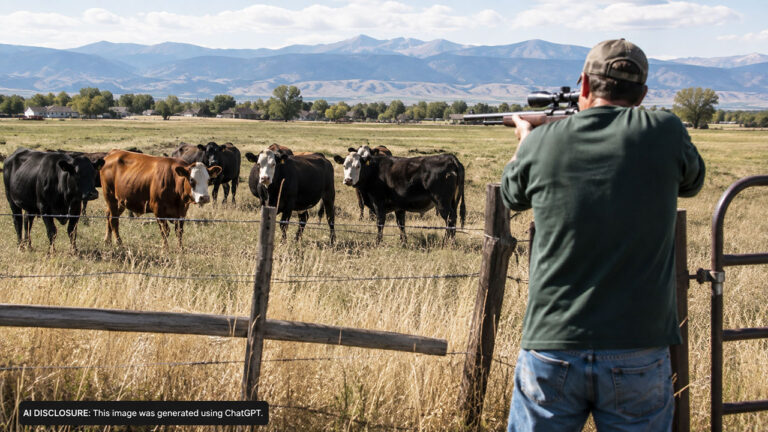
In rural neighborhoods, hearing gunfire isn’t automatically a crisis. Folks sight in before deer season, kids shoot .22s at tin cans, and somebody always has a steel plate ringing out back on a Saturday. But holes in a vehicle parked by a home are different. That’s not “country noise.” That’s a projectile crossing into where people live, walk, and work.
The homeowner took photos, marked the height of the impacts with tape, and checked for anything behind the truck that could have been hit—garage doors, the side of the house, the propane tank, the dog run. He didn’t find another strike, but the angle bothered him. The holes weren’t straight in from the road. They looked like they came from the direction of a neighboring property where shooting was common.
The first report was about documentation, not payback
Plenty of outdoorsmen have a healthy reluctance to involve law enforcement over “neighbor stuff.” But once a bullet hits your property, you’re past the point of friendly fence-line talk. The homeowner’s report focused on what was measurable: date and time he found the damage, photographs, and the rough direction of travel based on the entry angle and where the truck sat.
That kind of documentation matters for two reasons. First, it creates a paper trail if it happens again. Second, it gives insurance something to work with if repairs aren’t cheap. A bed panel and paint work add up fast, and it’s hard to swallow that bill because someone else didn’t set up a safe backstop.
Then the neighbor countered with a complaint of their own
According to people familiar with the back-and-forth, the neighbor didn’t deny shooting on their property in general. They denied involvement in the truck damage specifically, and they didn’t like being singled out. The counter-report described the homeowner as confrontational and accused him of trying to pin an incident on them without proof.
This is where these situations go sideways. Instead of one report about property damage and a safety concern, it becomes two competing narratives. Deputies aren’t judges, and when there isn’t a witness, a recovered bullet, or video, a lot of these calls end with the same result: “We took both statements.”
That might feel like a brush-off, but from the street level it’s often a sign that the case doesn’t have enough to move forward cleanly. Nobody wants to cite the wrong person, and nobody wants to escalate a feud with a badge when the evidence is thin.
Why it’s hard to prove where a round came from
Most folks think ballistics is like the movies—match a bullet to a gun and call it solved. In real life, you need the actual projectile or fragments, and you need them in good enough condition to compare. If a bullet passes clean through a truck bed and disappears into the dirt, there may be nothing to recover.
Even when something is found, you’re still dealing with practical problems. The shooter could have been a guest. The firearm could be common. The round could be from a .22, a 9mm, or a small centerfire—things that exist in a lot of gun safes. And in rural areas with multiple properties shooting at different times, the direction you “think” it came from can be wrong.
That doesn’t mean the homeowner imagined it. It means the burden of proving it is higher than people expect. If law enforcement can’t tie the damage to a specific act on a specific property at a specific time, they tend to treat it like a neighbor dispute with a safety warning attached.
What outdoorsmen kept coming back to: backstops, boundaries, and cameras
When local folks talked about it, the same points surfaced again and again. The first was backstops. If you’re shooting on private land, “safe direction” isn’t a feeling—it’s a berm, a hillside, or a purpose-built backstop that actually stops bullets. Flat ground, soft dirt, or a few pallets aren’t enough, especially with centerfire rifles.
The second was boundaries. Property lines get fuzzy in the woods, and a lot of folks shoot “toward the back” without realizing the terrain funnels rounds farther than they think. A slight uphill angle, a missed shot off steel, or a round that skips can carry trouble a long way. If there are homes within earshot, it’s worth walking the line and thinking like a worst-case scenario.
The third was cameras. Trail cameras aren’t just for deer anymore. A couple of well-placed units covering a driveway, a gate, or a common shooting lane can establish timing. And timing matters. If your truck was hit between 4 p.m. and 7 p.m. and one neighbor was shooting at 6:10 p.m., that’s not proof by itself—but it’s a lot stronger than a hunch.
The options left when police won’t take a side
When deputies won’t—or can’t—push it further, the homeowner is stuck with a short list of practical moves. One is to tighten documentation: photos, measurements, and notes every time shots are heard close by, especially if they line up with new damage. Another is to involve the insurer and let them handle the repair side while the report sits on file.
A quieter but often effective move is a neutral conversation through a third party—another neighbor, a community mediator, or even a deputy willing to do a “keep the peace” visit. Not a confrontation at the fence. Just a clear statement: rounds are ending up where they shouldn’t, and everyone needs to review their setup.
And if the shooting is frequent and truly unsafe, there are avenues beyond a he-said-he-said report. Local nuisance rules, reckless discharge complaints when supported by evidence, and civil remedies exist in many places. None of that is fast, and none of it is fun, but neither is living next to a firing line you don’t trust.
Out in the country, you can respect your neighbor’s right to shoot and still demand that bullets stay on their side of the line. The hard lesson in this one is that “everybody knows who did it” doesn’t count for much without proof. If you’re the one behind the trigger, build a real backstop and think beyond your own fence. If you’re the one finding holes in your truck, document everything and keep your head—because once both sides start filing reports, the only thing that grows fast is the bad blood.