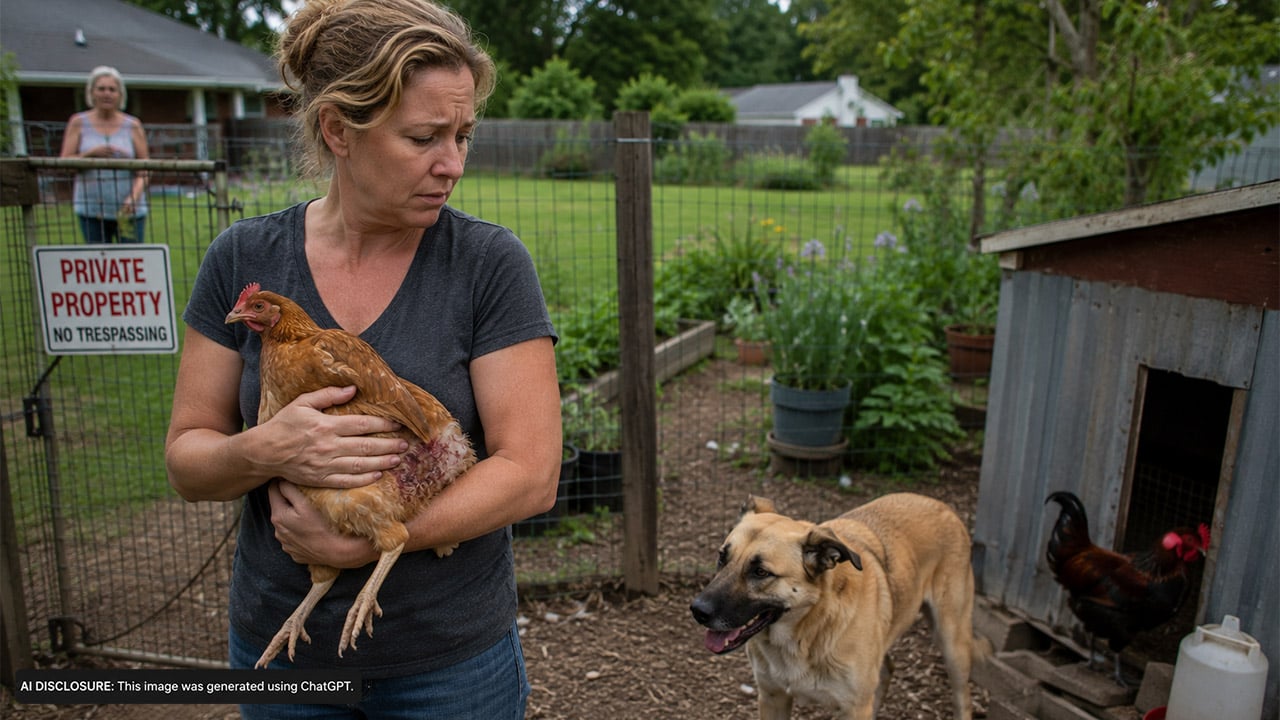
Photo credit: AI-generated image created using ChatGPT. Illustrative only
A loose dog doesn’t have to be “mean” to do real damage. One second it’s being walked down the road, the next it’s locked onto something small and feathered, and you’ve got a wreck on your hands before you can even think straight.
That’s basically what happened to one homeowner with backyard chickens, who laid out the details in the original post. The dog came off the road, crossed onto her property, cleared a short fence, and chased a chicken all the way up to the inside of her house. When she tried to break it up, she says she kicked the dog to make it leave, but not before it bit one of her birds “pretty hard.”
A dog on the road turned into a yard attack in seconds
According to the homeowner, the neighbor was walking his dog along the road in front of her place when the dog spotted chickens in the front yard. The yard had a roughly 40 cm fence, but that wasn’t much of an obstacle once the chase instinct kicked in.
What stands out is how far the incident went. This wasn’t a quick nip at a fence line. The dog ran the bird up and into the home itself, which tells you the chicken was terrified and the dog was fully committed. Anyone who’s raised birds knows how fast a calm afternoon can become a flapping, screaming mess.
The bite wasn’t just a scare—it meant a vet bill and a badly hurt bird
The homeowner said the dog bit one chicken “pretty hard” and that the bird was in really bad shape afterward. That’s the part most non-chicken folks don’t understand: a dog bite on a bird can be expensive fast, and the clock starts ticking right away.
Even if the chicken survives the initial trauma, puncture wounds and crushing injuries can turn into infections, and birds hide pain until they can’t. So when she mentions the vet bill likely being expensive, that’s not exaggeration—especially if she’s trying to do right by the animal instead of just writing it off as “farm loss.”
Then she connected it to last year’s missing chicken
The attack also brought back a suspicion she’d been carrying since the year before. She said one of her chickens disappeared while she wasn’t home for a couple of days, and she didn’t believe a fox was responsible. Her reasoning was straightforward: a fox that finds easy groceries tends to come back for more.
This time, she had eyes on it. She witnessed the neighbor’s dog chase and bite her chicken on her property, which made her think that missing bird may have been the same dog’s work. That kind of realization changes how you view the “friendly” dog next door, especially if you’ve got animals, kids, or both around the yard.
The neighbor denied it, but the homeowner said she saw enough
After the incident, the neighbors denied responsibility. The homeowner said they claimed they never let their dog off leash, even though she had just witnessed the dog run after her chickens.
This is where rural neighbor problems get sticky. People don’t want to admit their dog did something, because once they do, they’re worried about paying bills, getting cited, or having a label attached to their pet. But from a landowner’s perspective, denial doesn’t un-hurt the chicken, and it doesn’t pay a vet bill.
What most folks focus on in situations like this
When a dog comes onto your property and harms livestock or poultry, the practical side matters as much as the legal side. The homeowner asked if she could take action since it happened on her property, and that’s a common question for anyone keeping birds, rabbits, goats, or even barn cats.
Generally speaking, the things that matter most in a dispute like this are documentation and repeat behavior. Photos of injuries, vet records, dates and times, and any proof the dog was off leash or trespassing can make the difference between “he said, she said” and a clear claim. And when there’s a history—like a prior bird that vanished—people start thinking about preventing the next incident, not just settling up for this one.
Practical next steps for a backyard flock owner
First, handle the animal care side. A badly bitten chicken needs attention quickly, and a vet visit creates a paper trail that’s hard to argue with later. Keep receipts, take pictures before and after treatment, and write down what happened while it’s fresh.
Second, tighten up prevention. A 40 cm fence might keep a chicken from wandering, but it won’t stop a determined dog. Depending on the layout, that could mean a taller fence, a covered run, or moving the flock to a more secure area until the neighbor situation is settled. And if you’ve got other animals on the place, it’s worth thinking through how quickly a dog could get to them too.
Third, avoid the kind of heated yard confrontation that turns a dog problem into a people problem. The homeowner said she kicked the dog to make it go away, and when you’ve got a dog actively biting an animal, folks are going to react. But from here on out, the goal is calm, clear communication and a record of what’s happening, not an argument in the road.
Backyard chickens are simple, but they’re not “free.” Feed, fencing, time—and when something like this happens, real money. The hard truth is that one loose dog can wipe out months of effort in a minute, and once it happens once, it’s smart to assume it could happen again until there’s a solid fix in place.
Like The Avid Outdoorsman’s content? Be sure to follow us.
Here’s more from us: