Photo credit: Troutnut/Shutterstock.com
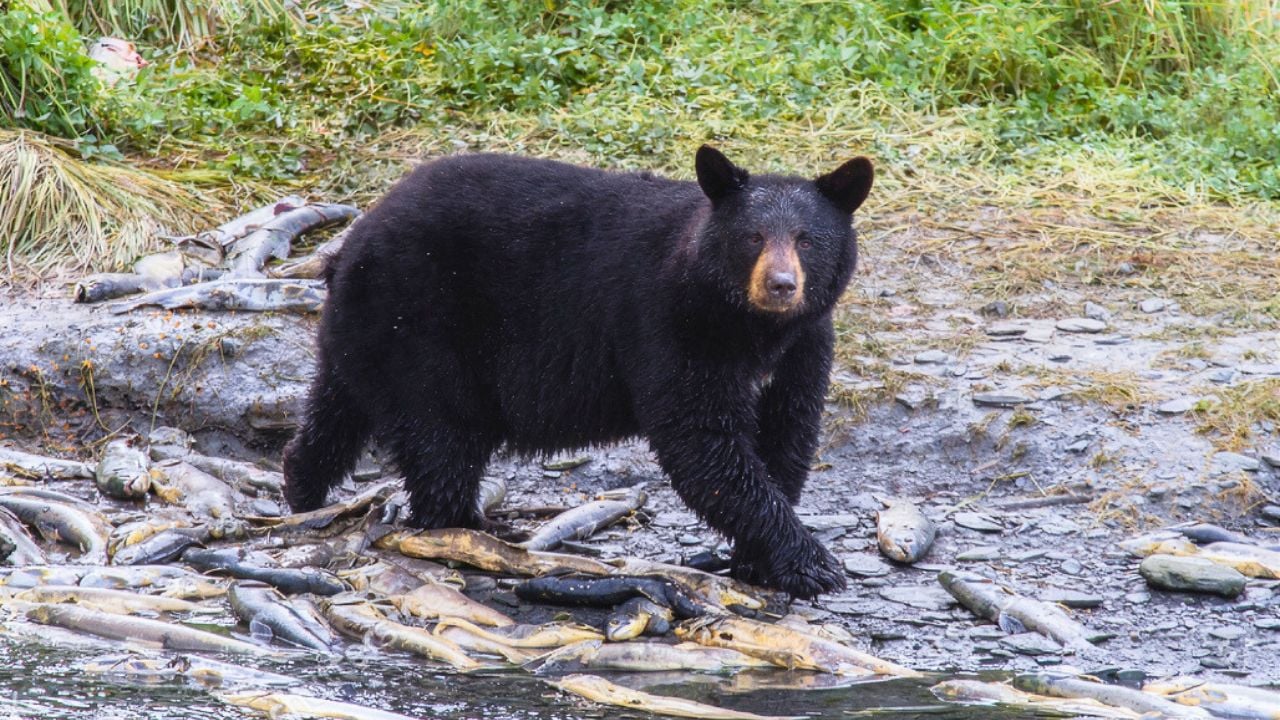
The mistake that gets people hurt is treating an approaching black bear like a movie scene instead of a behavior problem. People panic, run, crowd the bear trying to get a better look, or freeze up until the distance is already too small. U.S. Fish and Wildlife Service says not to run, and both the National Park Service and BearWise say that if a black bear approaches, you should stand your ground, make yourself look bigger, make noise, and get your bear spray ready. That is the basic reset people need. The wrong move is usually doing something fast and panicked that turns a tense encounter into a worse one.
Running is the mistake people keep making
Running sounds natural, but it is exactly what wildlife agencies warn against. U.S. Fish and Wildlife Service says if a bear notices you, do not run; face the bear, stand your ground, and back away slowly if you can. BearWise gives the same advice and says running may trigger a chase response. Great Smoky Mountains National Park also says never run or turn your back if a bear continues to follow you. That is where people get themselves in trouble. The second you act like prey, you can change the tone of the encounter in the worst possible way.
A lot of close calls get worse because the person had a chance to stay calm and create a better outcome, but instead they bolted, stumbled, or lost track of the bear while trying to escape too fast. That does not mean you casually stand there and do nothing. It means you do not hand the bear a moving target and a chaotic situation. Agencies consistently say to hold your ground, speak calmly or shout, appear larger, and prepare your deterrent instead of panicking into a sprint.
People wait too long to act like a human threat
Another bad mistake is acting small, quiet, and uncertain while the bear keeps closing distance. BearWise says that if a black bear approaches, you should stand your ground, raise your arms, yell, and let the bear know you are not something to push around. Great Smoky Mountains National Park says if the bear gets closer, shout and act aggressively to scare it off, and throw non-food items like rocks toward it if it persists. The point is not to provoke a fight. The point is to stop behaving like something unsure and edible.
People sometimes misread a standing bear, huffing, jaw-popping, or a bluff charge and assume it means the bear is definitely about to attack. BearWise notes that nervous black bears may huff, moan, stomp, or bluff charge, and that a bear standing up may simply be trying to get a better look. That matters because it means you cannot afford to respond with blind panic. You need enough composure to read the moment correctly, hold your ground, and keep pushing the encounter toward the bear backing off instead of you losing control.
Getting too close in the first place sets up the whole problem
A lot of bear encounters start going wrong long before the bear starts approaching. U.S. Fish and Wildlife Service says to stay at least 100 yards away from bears, and the National Park Service warns not to approach within 50 yards or any distance that disturbs them. Crowding a bear, hanging around for photos, or lingering near cubs or food sources can create exactly the kind of encounter people later describe as “the bear kept coming at me.” Sometimes the first mistake was never giving the bear enough room to avoid you.
That is especially true when food is involved. Agencies repeatedly warn not to feed bears and not to leave food, garbage, grills, or coolers accessible. Food-conditioned bears are a different kind of problem, and once a bear learns people equal calories, the margin for a clean, easy encounter shrinks fast. A bear that keeps approaching may not just be curious. It may already have learned the wrong lesson from humans before you ever got there.
Bear spray only helps if it is actually ready
Another mistake that gets glossed over is carrying bear spray like a decoration. BearWise says to get your bear spray out of the holster and into your hand if a black bear approaches. U.S. Fish and Wildlife Service also says to carry bear spray, know how to use it, and keep it accessible. That last part matters. A can buried in a pack or strapped somewhere awkward is not doing much good when a bear is closing the distance and your heart rate spikes.
People also wait too long because they do not want to “overreact.” That hesitation can be the real problem. The better approach is to ready the spray early, stay calm, and be prepared to use it if the bear keeps advancing. Great Smoky Mountains National Park says to use bear spray only if necessary and if the bear is within about 20 yards. That kind of guidance only helps if you have already gotten the spray into your hand before the moment gets critical.
The worst myth is playing dead with the wrong bear
This one still causes confusion, and it is a dangerous one. The National Park Service says plainly that if a black bear attacks, do not play dead. U.S. Fish and Wildlife Service says the same: try to escape to a secure place if possible, and if escape is not possible, fight back using any object you have. BearWise also says that if a black bear makes physical contact, fight back aggressively and never play dead. That guidance is specific to black bears, and it is exactly why lazy, one-size-fits-all bear advice can get people hurt.
That is also why species matters. Advice that gets repeated without that distinction can leave somebody doing the exact wrong thing in the exact wrong moment. If the encounter has escalated from an approach to an actual attack by a black bear, agencies consistently say the response changes: fight back hard, aim for the face and muzzle, and use whatever you can.
What to do instead when a black bear keeps coming
If a black bear keeps approaching, the better sequence is pretty straightforward. Stay calm. Do not run. Group up if you are with others. Stand your ground. Make yourself look bigger. Shout so the bear recognizes you as a person. Have your bear spray in hand. Back away only when the bear stops its approach. Those steps show up again and again in guidance from NPS, FWS, and BearWise because they give you the best chance to stop the encounter from tipping into something worse.
That is really the heart of it. The mistake that gets people hurt is usually some version of panic, passivity, or bad folklore. Running, turning your back, trying to sneak away too late, or trusting old myths can all stack the odds the wrong way. The safer move is to stay deliberate, act like a threat the bear should avoid, and be ready to use bear spray if the distance keeps shrinking. That is not dramatic advice, but it is the kind that holds up when things get serious.
Like The Avid Outdoorsman’s content? Subscribe to our newsletter so you never miss an article.
Here’s more from us: