Photo credit: Mark_Kostich/Shutterstock.com
A lot of snake mistakes happen in the exact places you least expect them: the edge of the shed, the flower bed you water every evening, the woodpile you grab from in the dark. Most yard snakes are harmless and helpful, so you get used to seeing a quick flash of scales and shrugging it off. That habit is where people get bit. The snakes that cause the most trouble are often the ones that blend in, move slowly, and don’t look “dramatic” at first glance.
If you spend time outdoors, you do not need to memorize every species in your state to stay safe. You need a short list of look-alikes that fool people over and over, plus a few habits that keep your hands and ankles out of the danger zone. The snakes below are commonly mistaken for routine yard visitors because of their color, size, or the places they like to hang around. Learn the patterns, respect the space, and you cut your risk fast.
Eastern copperhead (Agkistrodon contortrix)

An eastern copperhead is the classic “yard snake” that gets a pass because it looks like dead leaves and mulch. In many yards it blends so well you notice it only when it moves. People mistake it for a juvenile rat snake or a harmless brown snake, especially when the copperhead is small and tucked against landscape timbers. The hourglass-shaped bands are the key, narrow across the spine and wider down the sides.
Copperheads often stay still and count on camouflage, which is why you can step close before you know it. You protect yourself by watching where you place hands when you stack firewood, pull weeds, or reach under porch steps. Closed-toe boots and a little light at dusk matter more than people think, since copperheads hunt and travel in low light.
Broad-banded copperhead (Agkistrodon laticinctus)

Broad-banded copperheads in the south-central U.S. fool people because their pattern can look “clean” and almost decorative, like a harmless snake you see in a garden. The bands are wider and more defined than many folks expect, and the color can run from tan to pinkish-brown depending on soil and leaf litter. That clean banding gets mistaken for a nonvenomous water snake or a young bullsnake when seen fast.
This is a species that often lives near rocky cover and brush piles that look harmless in daylight. You stay safer by treating every rock stack, flowerbed border, and scrap lumber pile like it could be occupied. Move items with a rake or shovel first, then step in. Broad-banded copperheads also freeze instead of fleeing, so you cannot rely on movement to warn you.
Northern cottonmouth (Agkistrodon piscivorus)
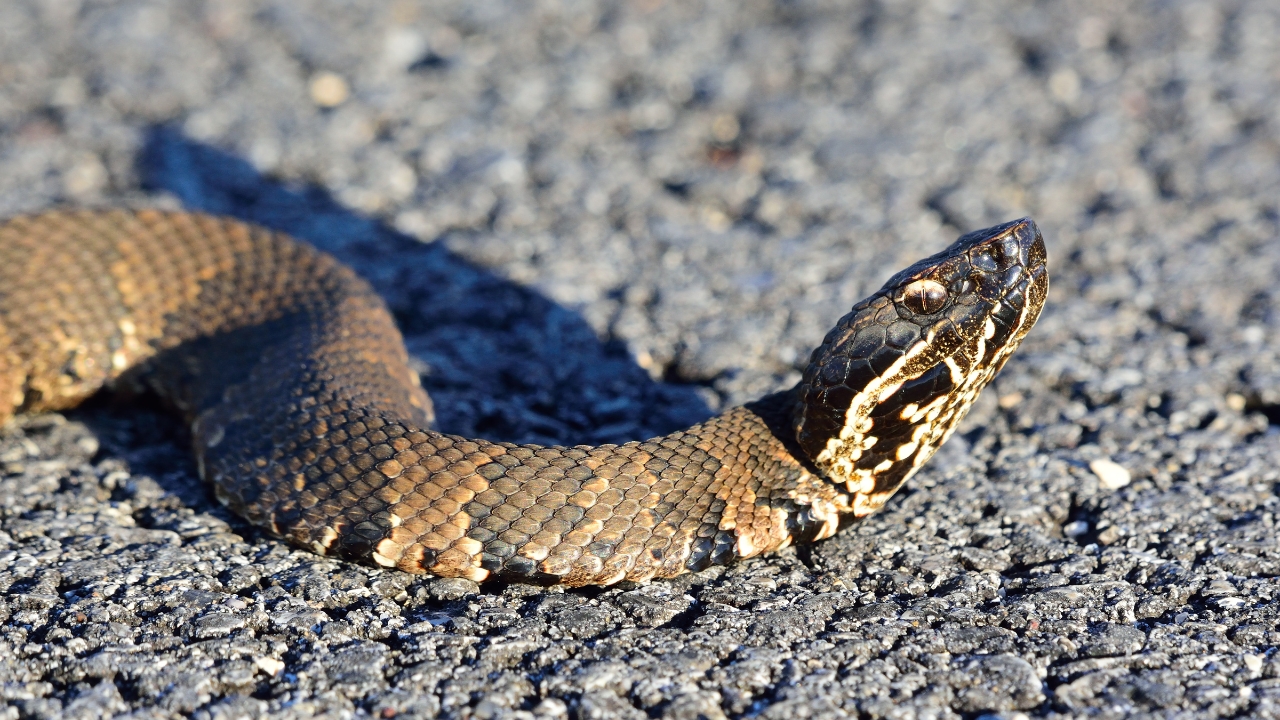
A cottonmouth gets dismissed as “another water snake” more than almost any venomous species. In yards near creeks, ponds, drainage ditches, or retention basins, people see a thick-bodied snake and assume it is a harmless nerodia. The problem is that cottonmouths can be dark, muddy, and patternless as adults, which erases the visual clues people look for. The blocky head and heavy body are the tells, especially when it is coiled near the waterline.
Cottonmouths also get a reputation for being aggressive, but the real issue is distance and surprise. When you crowd one on a bank, it may hold its ground. You reduce risk by giving shorelines space, using a light when walking near water at night, and keeping brush trimmed back. Dogs are frequent victims, so leashing near water edges helps.
Florida cottonmouth (Agkistrodon conanti)

Florida cottonmouths live in places people treat as routine yard territory: canal banks, pond edges, palmetto patches, and wet ditches behind fences. A lot of bites come from someone thinking they are dealing with a harmless water snake and trying to move it. Younger cottonmouths can show brighter banding, which makes them seem like a patterned “garden snake” rather than a venomous pit viper. As they age, many turn darker and easier to shrug off.
The safest mindset is that any heavy snake near water deserves space. You keep yourself safer by avoiding bare-handed yard work around wet cover, especially after rains when amphibians and small fish bring snakes in. Teach kids to watch with their eyes, not their hands. If you have backyard ponds, keep grass short near the edge so you are not stepping through tall cover where a snake can be invisible.
Eastern coral snake (Micrurus fulvius)

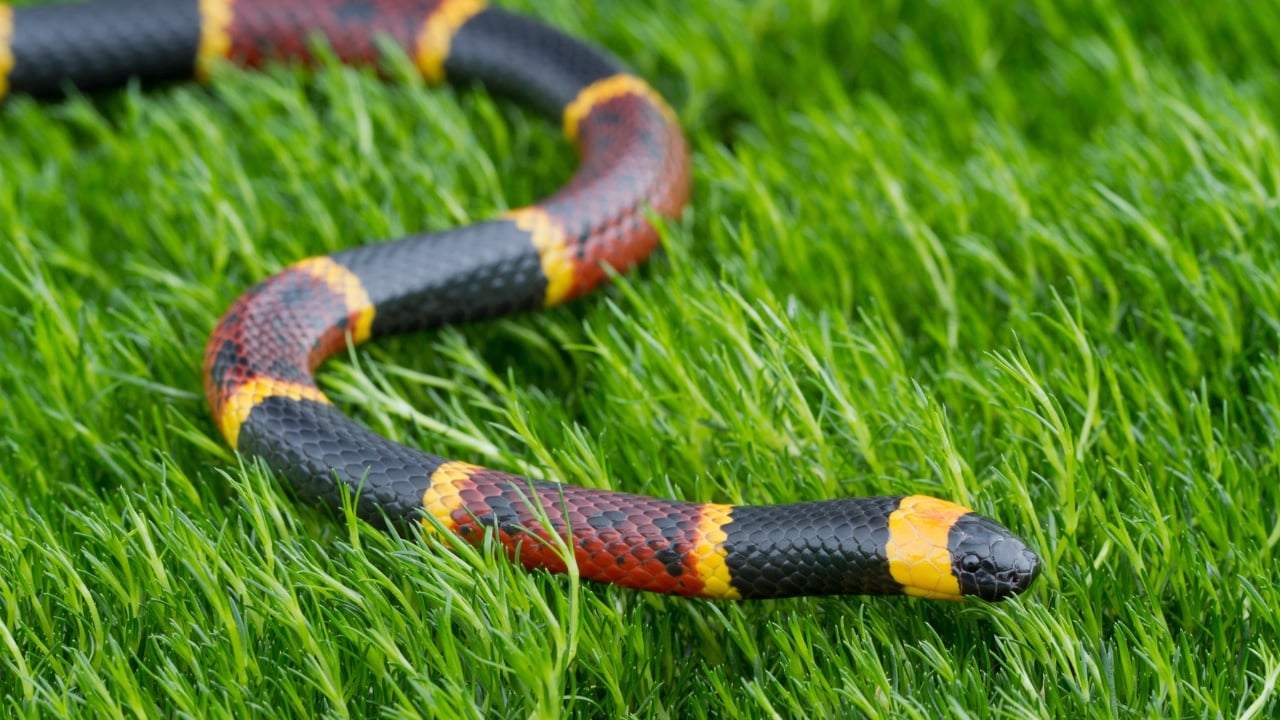
Coral snakes cause problems because they look like a harmless kingsnake to anyone who learned a color rhyme and then forgot the details. In the Southeast, people see red, yellow, and black and assume it is a “pretty little yard snake.” The reality is that the eastern coral snake is venomous, and the bite can be medically serious even if the snake is small and calm. The bands are usually clean and crisp, and the head is small with a black snout.
Coral snakes spend a lot of time hidden under debris, pine straw, boards, and leaf litter, so they show up in the same spots you clean and stack. You cut risk by lifting objects with tools and wearing gloves when moving old lumber or yard junk. Coral snakes are not built for chasing people, but grabbing or pinning one is where injuries happen.
Texas coral snake (Micrurus tener)
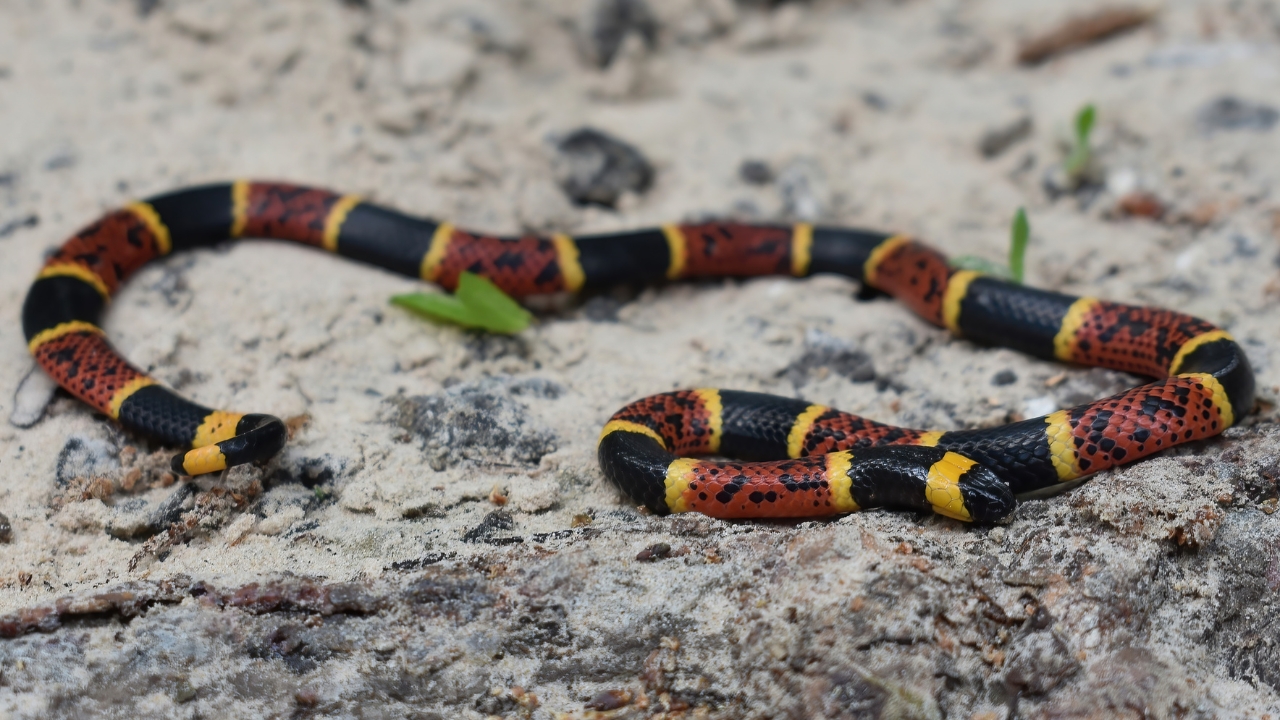
In parts of Texas and the surrounding region, the Texas coral snake gets mistaken for a scarlet kingsnake or milk snake, especially when someone sees it crossing a driveway and focuses on the bright colors. People also misread the band order when the snake is moving fast or partially covered by grass. The body is usually slender, and that “thin snake” look makes folks treat it like a harmless species that wandered out of a woodpile.
Texas coral snakes often hide in leaf litter, under rocks, and around brushy edges of yards. They can also show up after rains or warm evenings. You stay safer by keeping clutter down and by watching where you place your hands when you move decorative stones, landscape edging, or stacked branches. If you see a red-yellow-black banded snake, you give it space and let it move on without interference.
Eastern diamondback rattlesnake (Crotalus adamanteus)

An eastern diamondback rattlesnake is large enough that it seems like you would never miss it, yet people still do. In palmetto flats, tall grass, and sandy edges of rural yards, the pattern breaks up the outline and the snake can sit motionless. Folks mistake it for a big gopher snake or think it is a harmless snake because it is “too thick to be real.” The diamond pattern and heavy body are unmistakable when you see it clearly, but you rarely get a perfect view.
The danger comes from closing distance without knowing it. Diamondbacks often rely on staying still, not fleeing. You protect yourself by keeping grass trimmed, clearing palmetto piles, and wearing boots when walking through brush. If you hear a rattle, you stop where you are and look before you move. Most bites happen during that one careless step.
Timber rattlesnake (Crotalus horridus)

Timber rattlesnakes get written off as “another rat snake” because their pattern can look like rough bands and the snake may be stretched out in partial shade. In wooded yards, especially around rock walls and fallen logs, that mistake is easy. Some timbers are dark and muted, and people assume they are nonvenomous until the head shape or body thickness registers. They also like sun patches, so you can find one near a trail, woodpile, or the edge of a shed.
You stay safer by treating rock piles and log stacks as occupied until proven otherwise. Use a tool to roll logs, not bare hands. Timber rattlesnakes tend to conserve energy and stay still, which means you cannot count on them to flee. Keeping your yard edges clean and reducing rodent attractants also helps, since prey draws snakes into the same zones you walk daily.
Prairie rattlesnake (Crotalus viridis)

Prairie rattlesnakes blend into dry grass and gravel so well that people mistake them for bullsnakes, especially when they see a patterned snake near outbuildings. Bullsnakes can hiss and posture in a way that mimics a rattler, which makes identification messy when adrenaline spikes. Prairie rattlesnakes also live in exactly the places people work: fence lines, hay piles, stacked equipment, and brushy corners that hold mice.
The better way to handle it is to act like any patterned snake in those areas could be venomous until you confirm otherwise. You protect yourself by using a light around barns at night, stepping onto logs rather than over them, and avoiding reaching into dark gaps. Prairie rattlesnakes do not want contact, but they will defend themselves if you step close or try to move them.
Western diamondback rattlesnake (Crotalus atrox)

The western diamondback is the rattlesnake that turns up around patios, block walls, and desert yards where people think snakes have no cover. The pattern can look like a big, dusty “yard snake,” and people who are used to seeing gopher snakes assume it is the same story. In reality, western diamondbacks thrive around human structures because rodents thrive there. You can find them along irrigation lines, under pallets, and near brush piles that hold shade.
You reduce risk by controlling rodents, keeping clutter off the ground, and trimming shrubs so you can see the soil line. Western diamondbacks can be defensive when surprised, and they may hold their ground if cornered. Boots and a light are your friends, especially on warm evenings. If you see one, you give it room and keep pets back.
Mojave rattlesnake (Crotalus scutulatus)

Mojave rattlesnakes get mistaken for other small desert rattlers and even for nonvenomous snakes because their pattern can be muted and the tail bands can be hard to see in dust and shade. In some regions, people also confuse them with young gopher snakes when they spot a slimmer body and assume it is harmless. The issue is that Mojaves can live close to homes in desert and scrub landscapes where you have rock borders, stacked firewood, and irrigation equipment.
This is not a snake you brush off. You stay safer by keeping rock piles tight and low, avoiding thick ground cover near doors, and checking shaded spots before you kneel or sit. Dogs are at risk around brushy edges and washes, so keep them close in snake country. Good yard lighting and deliberate steps around evening watering time cut surprises.
Pygmy rattlesnake (Sistrurus miliarius)

Pygmy rattlesnakes are small, common in parts of the Southeast, and easy to dismiss because people expect venomous snakes to be larger. Their rattle can be faint, and many folks never hear it. The pattern can look like a harmless little “garden snake,” especially in leaf litter where the spots and bars disappear. That is why they show up in bite reports from yards, parks, and trail edges where people step over logs or reach into ground cover.
You protect yourself by respecting small snakes as much as large ones. Pygmies like brush piles, pine straw, and low vegetation where lizards and frogs hang out. Keep your yard edges tidy and avoid walking barefoot in thick ground cover. When you garden, avoid kneeling blind into plants. A short, stocky snake with a patterned back in pygmy country earns space every time.
Massasauga (Sistrurus catenatus)
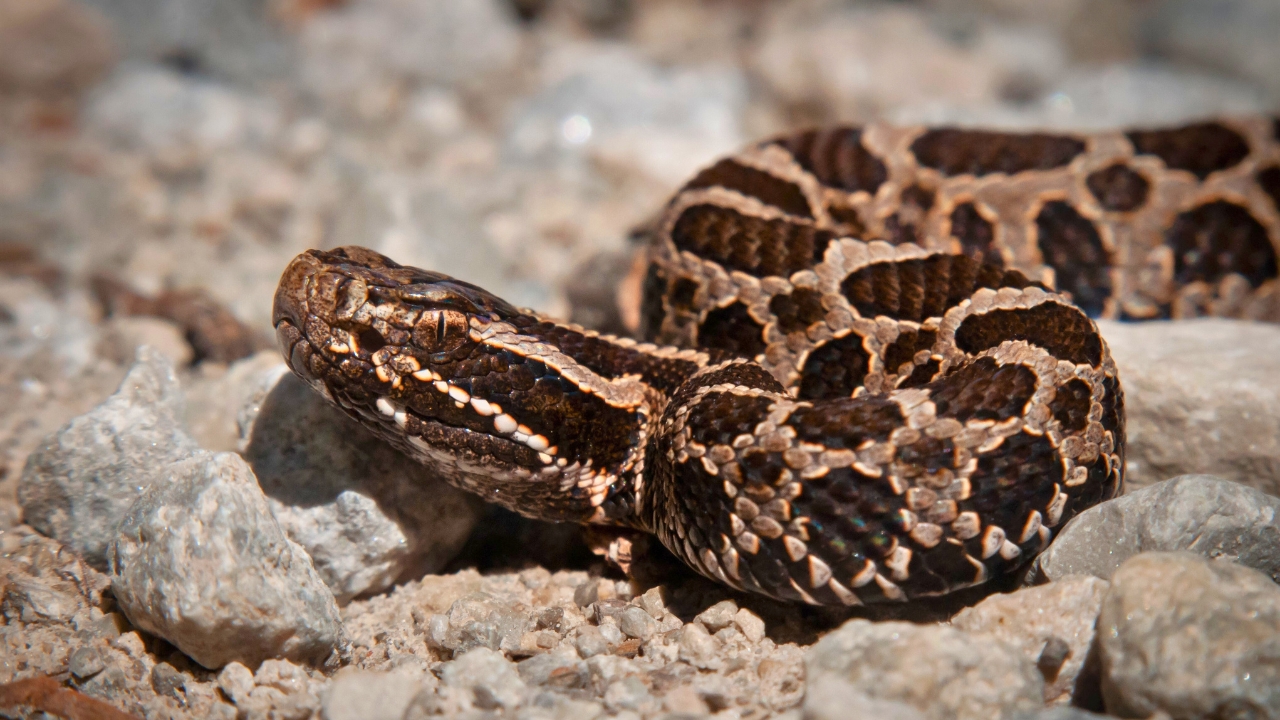
Massasaugas get mistaken for harmless small snakes in grassy yards and field edges because they are shorter than many people picture a rattlesnake to be. They also tend to sit still, relying on camouflage instead of flight, which lets you get close without realizing it. In wet prairie and marshy zones, people confuse them with water snakes or young rat snakes. The pattern is blotchy and can look like ordinary yard camouflage in poor light.
Massasaugas are a reminder that rattlesnakes are not only desert or mountain animals. If you live near wetlands, tall grass, or overgrown drainage areas, you treat those borders with respect. Wear boots when you work the edges, keep grass trimmed, and do not reach into thick cover. If you hunt frogs, check your footing near the bank. The goal is fewer surprises and more distance.
Sidewinder (Crotalus cerastes)
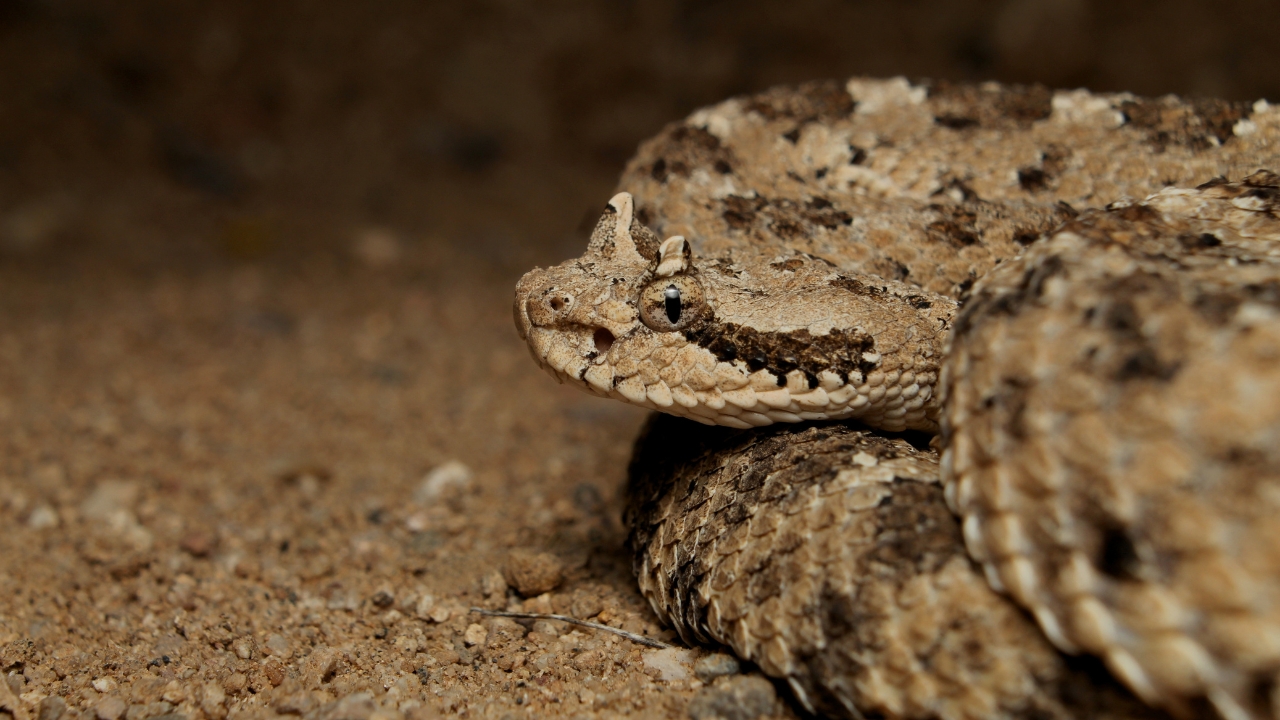
Sidewinders get dismissed because they are small and live in open sand where people assume they would be easy to spot. In reality, a sidewinder can bury itself with only the eyes and top of the back showing, which makes it look like a small stick or a ripple in the sand. People walking around desert yards, dunes, or sandy washes step close before noticing. Some confuse them with harmless small snakes that also use sandy habitat.
You stay safer by watching where you place your feet and hands around sandy edges, especially near brush where shade creates hiding spots. Sidewinders tend to avoid confrontation, but a close step can force a defensive strike. Keep pets from nosing into drifted sand and brush piles. If you do yard work in desert areas, check the ground before you kneel or set a hand down.
Southern Pacific rattlesnake (Crotalus oreganus helleri)

Southern Pacific rattlesnakes show up in California yards more often than people want to admit, and they get mistaken for gopher snakes because both species live around the same rodent-rich cover. A gopher snake can flatten its head and hiss, which convinces people they are looking at “a rattler that is bluffing.” That assumption can backfire when the snake in front of you is a rattlesnake that is staying still and quiet.
You cut your risk by treating any thick, patterned snake in rattlesnake country like it can bite. Keep brush trimmed, seal gaps under sheds, and reduce rodent food sources. Use a light around patios and walkways at night, especially in warm seasons. If you need to move yard debris, use tools and gloves. The goal is fewer close encounters, not braver ones.
Like The Avid Outdoorsman’s content? Subscribe to our newsletter so you never miss an article.
Here’s more from us: