Photo credit: Martin D Brown/Shutterstock.com
Woods-carry caliber debates get weird fast because people love extremes. One crowd acts like anything short of a hand cannon is irresponsible. The other acts like any full-size defensive pistol will solve every problem in the timber if the shooter just does his part. Real life usually lands somewhere in the middle. The National Park Service says bear spray is the recommended self-defense tool in bear country and calls it highly effective, which already tells you something important: the “best woods setup” is not just about raw handgun power. It is about what you can actually carry, control, and get into action when things go sideways fast.
That is why some calibers make more sense in the woods than people admit. They are not always the loudest, hottest, or most impressive ones in the argument. They are the rounds that give you a usable blend of penetration, controllability, carry comfort, and practical availability. If a caliber looks good on paper but turns your sidearm into something you hate carrying or hate practicing with, its advantage can dry up in a hurry. Woods carry is still carry. The gun needs to be with you, and you need to be able to shoot it well when your pulse spikes.
10mm makes sense for more people than the critics want to admit
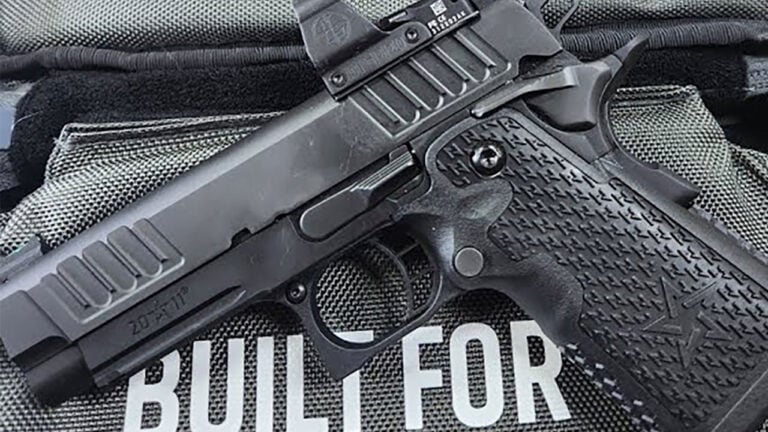
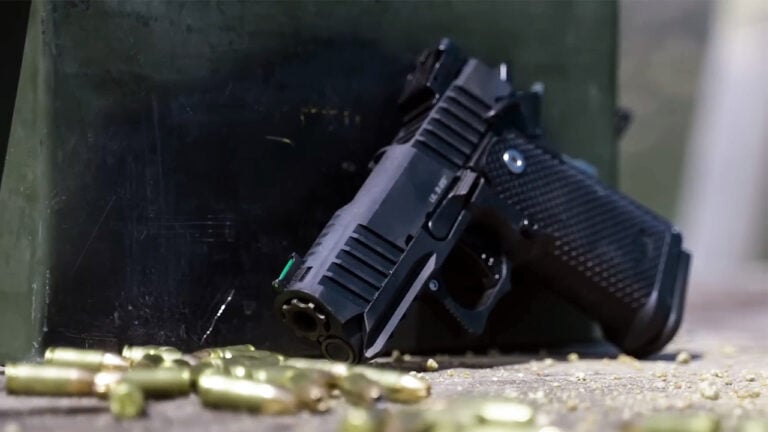
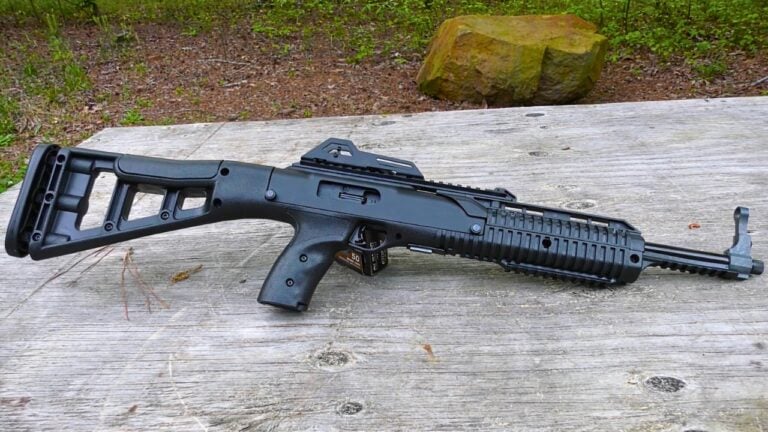
10mm gets talked about like it is either the perfect woods caliber or a trendy overcorrection, but the truth is simpler. It makes sense because it gives semi-auto shooters a serious step up in penetration and power while still living in pistols many people can carry and shoot better than a heavy revolver. Federal markets its 200-grain Solid Core 10mm specifically as a deep-penetrating load for tough game like bears and hogs, which puts it squarely in the conversation for backcountry defense. That does not mean every 10mm load is built for that job, but it does mean the caliber is not riding on internet hype alone.
What makes 10mm practical is not just the number on the ammo box. It is the platform advantage. A lot of shooters are quicker and more confident with a full-size semi-auto than they are with a powerful revolver under stress. More rounds on board, faster reloads, and familiar handling all matter in a sidearm people may carry on long hikes, around camp, or while working on rural property. The caliber still recoils enough that it needs practice, but compared with the bigger magnum revolver rounds, 10mm often hits that sweet spot where real-world carry and real-world shootability stay on the same team.
.357 Magnum still earns its reputation the honest way
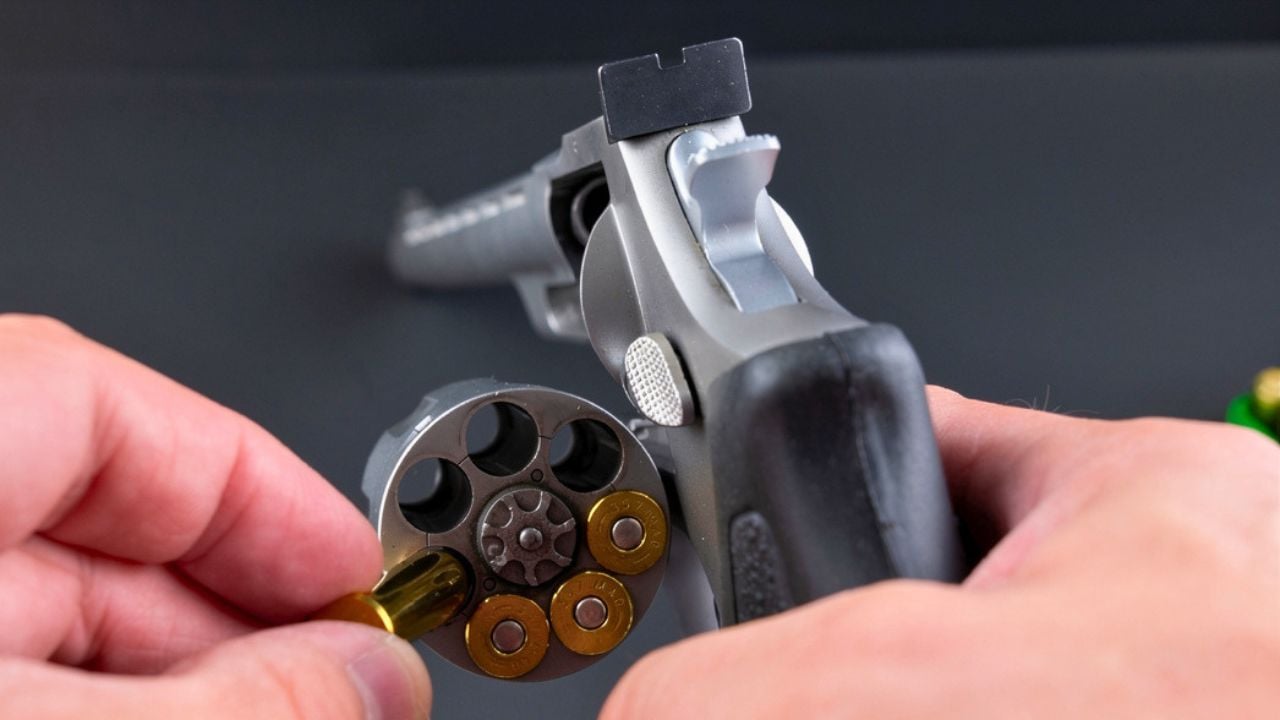
.357 Magnum keeps surviving every trend cycle because it solved a real problem a long time ago and never stopped solving it. It delivers meaningful power in relatively compact revolvers, and it has enough versatility that one gun can be loaded for different needs depending on where you are and what you expect. Speer’s 158-grain Gold Dot .357 Magnum load is rated at 1,235 feet per second, and even its short-barrel 135-grain load is still built around controlled expansion from compact revolvers. That tells you why the caliber keeps hanging around in serious conversations: it offers legitimate defensive performance without forcing everyone into the size and weight of the larger magnums.
The reason .357 makes so much sense for woods carry is balance. It is powerful enough to stay credible, common enough to keep support and ammo choices strong, and compact enough to ride on the belt without becoming a miserable burden. Plenty of people can also shoot a medium-frame .357 better than they can shoot a bigger revolver that thumps harder and takes longer to recover from. That matters. A woods gun is not there to win an argument. It is there to be present, dependable, and controllable when you are tired, sweaty, layered up, or moving through uneven ground.
.44 Magnum is still real, but not always the smartest answer
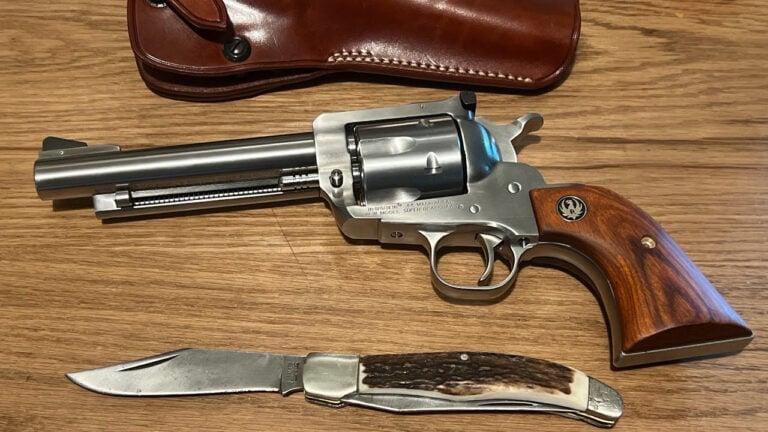
There is a reason .44 Magnum still gets respect in backcountry conversations. Federal’s 300-grain Solid Core .44 Magnum load is marketed for deep penetration on tough game like bears and hogs and for protection against aggressive bears and other dangerous animals. That is serious ammunition for serious problems. Nobody is pretending the caliber does not bring real authority to the table.
But this is also where some honesty helps. A caliber can be powerful and still be a poor fit for a lot of actual carriers. Heavy recoil, heavier guns, slower follow-up shots, and plain old carry fatigue all matter. Some shooters can run a .44 well, and for them it may be exactly right. Plenty of others would be better served by a sidearm they control faster and practice with more often. That is why .44 Magnum makes sense for some woods carry setups, but not as the automatic answer people sometimes make it out to be. The round is strong. The question is whether it stays strong in your hands after the first shot, while moving, under stress, in the conditions you actually face.
The best woods caliber is usually the one that keeps the whole setup usable
This is the part people skip because it is less exciting than arguing muzzle energy. The best woods-carry caliber is usually the one that keeps the entire sidearm usable enough that you will actually carry it and train with it. That means recoil you can manage, a gun weight you can tolerate, a platform you trust, and ammunition built for the kind of penetration the job may require. It also means remembering that in bear country, wildlife agencies still recommend bear spray as the primary defensive tool. The handgun is not a magic wand. It is one piece of a broader safety setup.
That is why calibers like 10mm and .357 Magnum make more sense than people admit. They are not weak. They are workable. They give many carriers enough performance to stay credible without pushing the gun into a category that gets left behind, dreaded at the range, or shot poorly when things get fast. And that, in the woods, usually matters a whole lot more than winning a comment section.
Like The Avid Outdoorsman’s content? Subscribe to our newsletter so you never miss an article.
Here’s more from us: