Photo credit: Kit Badger/YouTube
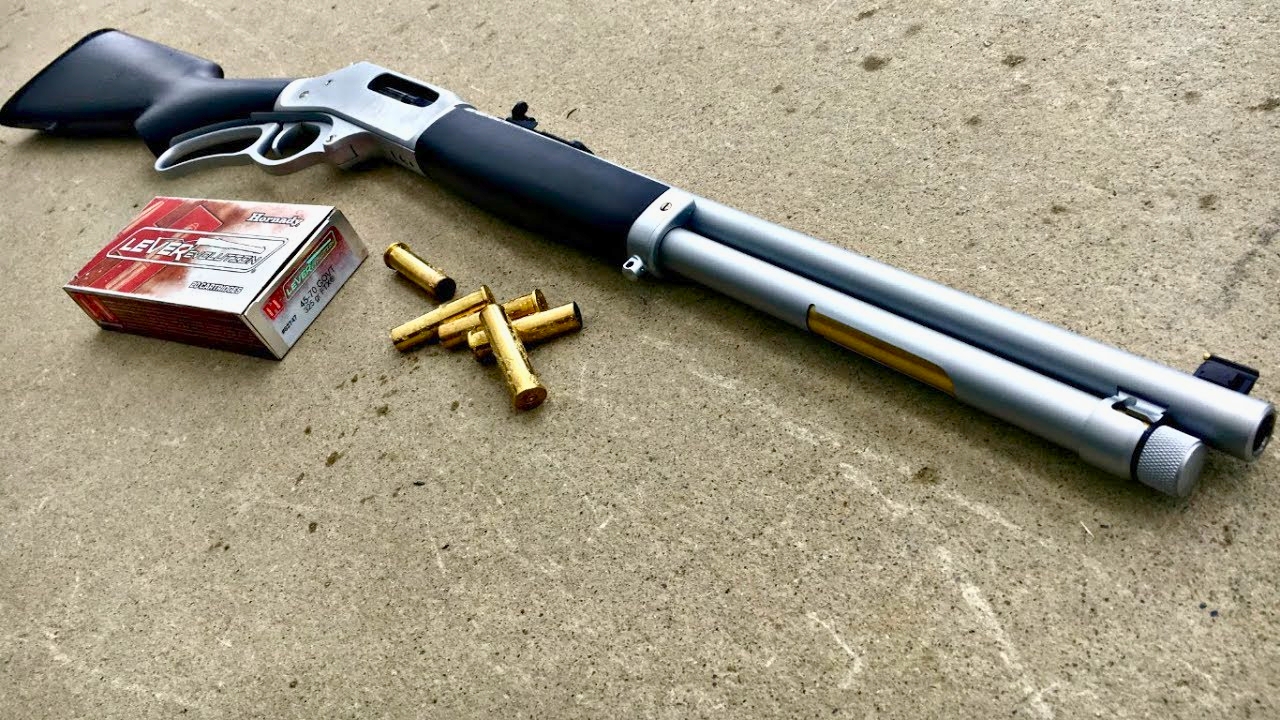
The .45-70 is one of those cartridges people talk about like it has a personality. It’s “thumper” this and “hammer” that, and you’ll hear guys act like owning one automatically puts them in some tougher category of shooter. The problem is, recoil doesn’t care what you post online, and it definitely doesn’t care what you paid for the rifle. If you flinch with .45-70, you’re not alone, and you’re not weak, but bragging about “power” while your trigger press is falling apart is backwards. Power only matters if you can actually place the shot where it needs to go, on demand, under real conditions, and a flinch is your body admitting it doesn’t trust what’s about to happen.
This isn’t a moral lecture about “man up.” It’s the opposite. Flinching is normal when you’re shooting something that hits you hard, and it shows up in experienced shooters too if they don’t manage it. The issue is that people treat recoil tolerance like a badge, when it’s really just another skill and another tradeoff. If the recoil is making you anticipate, blink, tense up, or jerk the trigger, then the cartridge is controlling you instead of you controlling the gun. That’s not “power.” That’s you paying extra recoil tax for accuracy you aren’t cashing in.
The flinch is not a mystery, it’s your brain doing math
A flinch isn’t random. It’s your nervous system predicting a hit and trying to brace for it. With .45-70, especially in lighter lever guns with a hard buttpad, the recoil can be sharp enough that your brain starts doing that prediction early. It tenses your shoulders, clamps your hands, and you start pushing into the gun right before the shot breaks. You might not feel like you’re doing it, but the target tells the truth. Shots start dropping low, or low-left for right-handed shooters, and groups open up in a way that doesn’t match what the rifle can do. That’s not the rifle’s fault, and it’s not the ammo’s fault. It’s timing, and timing is everything.
What makes .45-70 tricky is that it often feels manageable for the first few rounds, then it starts adding up. You take a couple solid hits, you start thinking about recoil between shots, and now your attention is split. The mind starts preparing for impact instead of focusing on the front sight or the dot. That mental shift is where flinch grows. You can watch it happen on the line when a guy is talking big, then his third shot looks like he’s trying to “help” the gun go off. The shot breaks, he immediately lifts his head, and he’s already explaining why it doesn’t matter. That’s the flinch talking for him.
“Power” is a useless flex if you can’t deliver it accurately
People act like more cartridge automatically equals more effectiveness, and that’s not how it works in the field. The .45-70 can hit hard and penetrate well with the right load, but none of that matters if your shot placement is sloppy. A smaller cartridge with a clean hit in the right place beats a bigger cartridge that gets yanked into the wrong place every time. This is the part that gets ignored in the bragging contest. Guys will talk about energy like it’s a trophy, then shoot patterns instead of groups. A flinch turns power into noise. It gives you recoil, blast, and ego, but it doesn’t give you better outcomes.
If you’re hunting, you don’t get points for “owning recoil.” You get results from putting a bullet where it needs to go, and doing it when you’re breathing hard, twisted around a tree, or shooting off a pack. If the recoil is making you rush shots or avoid practicing, you’ve already lost the advantage. The .45-70 is not a cartridge that rewards casual range time. If you only shoot it a few times a year and every session feels like punishment, you’re training your brain to anticipate pain, not training your hands to press the trigger cleanly. That’s exactly how flinches become permanent habits.
A lot of .45-70 owners “train” by enduring recoil instead of fixing it
There’s a difference between being tough and being smart, and a lot of guys confuse the two. Enduring recoil is not the same thing as mastering it. If your whole approach is to grit your teeth, rip a box of ammo, and go home with a sore shoulder, you didn’t actually improve anything. You just reinforced whatever bad timing was already there. The better approach is boring: fewer rounds, better rounds, and a plan to keep your trigger press clean. The goal is to leave the range with your mechanics intact, not with your confidence shredded.
A big tell is how people talk between shots. If you’re constantly “resetting” yourself like you’re about to step into a fight, you’re already behind. With .45-70, you want a repeatable mount, a solid cheek weld, and a grip that controls the gun without strangling it. When people over-grip, they build tension into their hands and forearms, and that tension shows up as a jerk at the trigger. You want the rifle to recoil the same way each time, and you want your body to accept it without panicking. That’s a skill you build, not a personality you claim.
The load and the rifle setup matter more than people want to admit
Not all .45-70 recoil feels the same, and pretending it does is how people get wrecked by their own choices. A hot load in a light lever gun can be a whole different animal than a moderate load in a heavier rifle with a better pad. The cartridge has a wide range of performance, and you don’t have to live at the top end to be effective. A lot of guys would shoot better, practice more, and hunt more confidently if they backed off the hardest-hitting loads and chose something they can control. The deer or hog won’t know you didn’t pick the most brutal option, but your groups will.
Setup matters too. A hard buttpad, poor length of pull, and a slick stock that slides around on your shoulder will make recoil feel worse and make you more likely to flinch. If the rifle doesn’t fit you, you’re going to be fighting it the whole time. A rifle that fits lets you mount it consistently, and consistency is what reduces anticipation. Even little things like where you place the butt on your shoulder and how high your comb sits can change how recoil feels. When recoil beats you up, it’s often not just “the cartridge.” It’s the cartridge plus a setup that’s punishing you every time.
The best way to beat the flinch is to force your brain to trust the trigger press
If you want to get rid of a flinch, you have to prove to your brain that the shot doesn’t require panic. That starts with dry fire, because dry fire removes the blast and recoil and lets you see what your hands are actually doing. If you can’t press the trigger without disturbing the sights in dry fire, recoil is not the problem yet. Your fundamentals are. Once your dry fire looks clean, you bring live fire back in a way that doesn’t ambush you. That might mean slower strings, more breaks, and stopping before you get fatigued. You’re training timing, not toughness.
This is also why mixing in dummy rounds can expose what’s happening. When the gun goes “click” and your muzzle dips like you just tried to shove it through the bench, that’s the flinch caught on camera. It’s humbling, but it’s useful, because it turns a vague feeling into a visible habit you can fix. The fix is always the same: accept the recoil after the shot breaks, not before. Keep your eyes open, call your shot, and don’t lift your head like you’re trying to escape the recoil. The more you can stay honest about what you did at the moment of the break, the faster the habit changes.
If you want to brag about power, earn it by shooting it well
There’s nothing wrong with liking .45-70. It’s fun, it has history, and it can be a legitimate tool for certain hunts and certain terrain. But the respect-worthy part isn’t the cartridge name. It’s what you can do with it. If you can shoot it clean, keep your groups tight, and place shots under pressure, you’ve earned the right to talk. If you’re flinching, the best move isn’t to pretend it’s fine. The best move is to fix it, because that’s what a competent shooter does. You address the weak point instead of building an identity around it.
At the end of the day, recoil is just a cost, and you’re supposed to get something back for paying it. If the cost is making you shoot worse, practice less, and trust your rifle less, you’re not getting the return you think you are. Either adjust the load, adjust the setup, or adjust the cartridge choice for what you actually do. That’s not quitting. That’s being realistic. Real shooters don’t brag about punishment. They brag about results, and results start with a trigger press that doesn’t blink just because the rifle hits hard.
Like The Avid Outdoorsman’s content? Subscribe to our newsletter so you never miss an article.
Here’s more from us: