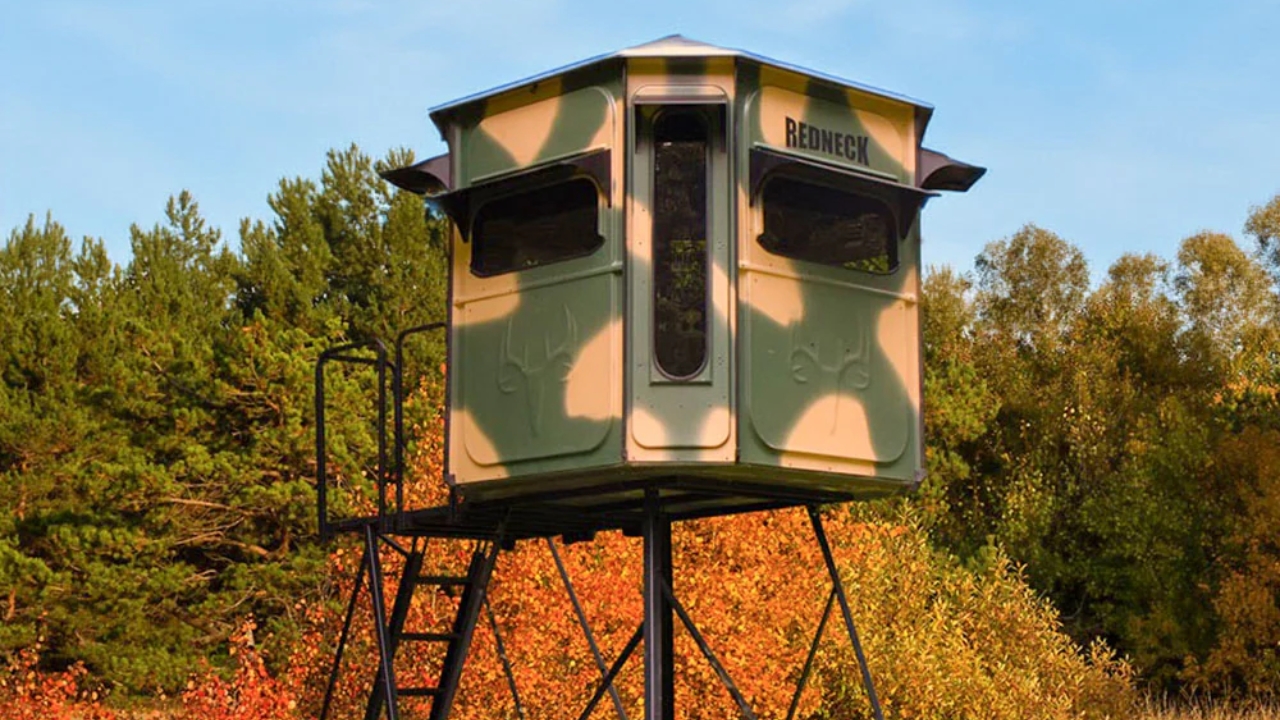
Photo credit: Redneck Blinds
Before you ever put a boot on a step or lean into a ladder, there’s a short mental checklist veteran hunters run through without even thinking about it. It’s not superstition or overthinking—it’s experience. Small oversights turn into blown hunts, close calls, or long walks back to the truck.
The guys who’ve spent decades in the woods know that what you check before climbing often matters more than what you do once you’re settled in. These aren’t complicated steps, but they’re the difference between a quiet, safe sit and one that goes sideways fast. If you’ve ever wondered why seasoned hunters seem calm and deliberate at the base of a stand, this is why.
Wind direction at ground level
Veteran hunters don’t rely on forecasts alone. Before climbing, you check wind at ground level where your scent actually starts. Leaves, milkweed, or light powder tell you more than an app ever will.
Wind often behaves differently near the tree than it does above the canopy. If it’s already drifting wrong on the ground, climbing won’t fix it. Experienced hunters would rather back out early than educate deer. This check saves sits, preserves spots, and prevents blowing out an area for the rest of the season.
Stand stability and attachment points
Before climbing, you put hands on the stand and feel for movement. Loose straps, shifting brackets, or creaking hardware don’t get ignored.
Veteran hunters know stands fail quietly long before they fail completely. Temperature changes, moisture, and time all loosen things. A quick tug and visual check can prevent a fall or noisy adjustments once you’re up. If it doesn’t feel solid on the ground, it won’t feel better twenty feet up.
Harness condition and connection
Experienced hunters check their harness before they ever leave the ground. That means buckles, stitching, and the tether point—not later.
You make sure it’s actually connected before climbing, not after you’re settled. Veterans don’t rush this step because they’ve seen what happens when someone does. It’s a quiet habit that keeps you alive and focused instead of distracted by “I’ll clip in once I’m up there.”
Entry noise around the base
Before climbing, you stop and listen. Sticks, leaves, and frozen ground around the base get cleared or noted.
Veteran hunters know most deer get alerted before you ever climb. One careless step at the base can end the sit before it starts. Taking thirty seconds to manage noise keeps movement calm and controlled. You don’t rush the climb if the woods aren’t settled yet.
Shooting lanes from ground perspective
You check shooting lanes before climbing because angles change once you’re elevated. What looks open from the stand might be blocked from below.
Veterans take mental notes of branches, vines, and small obstructions that matter at shot height. Fixing lanes after you’re up creates noise and movement. This check keeps shots clean and prevents last-second surprises when a deer finally steps into range.
Gear placement and access
Before climbing, you confirm where everything sits—bow rope, rifle sling, pack straps, rangefinder.
Veteran hunters don’t want to fight gear mid-climb or once they’re seated. Loose items bang, snag, or fall. Knowing exactly how you’ll pull gear up and where it will hang keeps movement minimal later. This habit makes settling in smooth and quiet instead of clumsy.
Thermals starting to shift
Experienced hunters pay attention to early thermal movement before climbing. Cool air settling or warming air rising tells you how scent may behave once you’re seated.
You don’t ignore subtle changes because thermals often dictate movement more than wind later. If thermals already feel wrong, climbing higher may only make it worse. Veterans trust these small cues because they’ve watched deer react to them too many times to dismiss them.
Tree cover and backdrop
Before climbing, you look up and check the tree’s cover behind the stand. Sparse branches or a bare trunk can silhouette you.
Veteran hunters choose trees that break outlines and provide visual cover. If the tree doesn’t hide movement, deer will catch it quickly. This check ensures you’re not climbing into a spotlight. A good backdrop matters as much as height.
Access trail visibility
You glance back at how visible your access route is before climbing. Trampled leaves, broken brush, or muddy tracks get noted.
Veterans know deer often cross access routes after you’re settled. If your trail stands out, deer may avoid the area or skirt wide. Understanding how your entry looks helps you interpret movement later and adjust expectations for the sit.
Stand height relative to cover
Before climbing, you reassess how high you actually need to go. Higher isn’t always better.
Veteran hunters match height to cover, terrain, and shot angles. Too high can worsen thermals or reduce shooting windows. Too low can expose movement. This check keeps you from defaulting to habit instead of strategy.
Sun angle for the sit
Experienced hunters think about where the sun will be during the sit before climbing. Glare and shadows matter.
You don’t want the sun in your eyes during prime movement or behind you casting movement shadows. This check helps with visibility and concealment. Veterans plan for the hours ahead, not just the moment they climb.
Exit plan before daylight ends
Before climbing, you think about how you’ll get down later. Wind, darkness, and deer movement all factor in.
Veteran hunters don’t trap themselves in stands that force noisy exits through bedding or feeding areas. Knowing when and how you’ll leave keeps future hunts intact. This foresight separates experience from luck.
Gut feeling about the setup
Finally, veteran hunters trust their instincts. If something feels off before climbing, they listen.
That feeling comes from years of blown sits and close calls. You don’t ignore it. Sometimes backing out saves the spot, the hunt, or the season. Experience teaches you that forcing a bad sit rarely ends well.
Like The Avid Outdoorsman’s content? Subscribe to our newsletter so you never miss an article.
Here’s more from us: