Photo credit: RUGER
The hottest long gun in American gun shops right now is not a tactical behemoth or a boutique custom build, but a compact, lightweight rifle that is quietly topping sales charts in several states. Retailers describe customers lining up for a platform that carries like a mountain carbine yet shoots with the confidence of a full‑size centerfire. I see a convergence of hunting, backcountry and home‑defense trends pushing this new generation of light rifles from niche curiosity to record‑setting bestseller.
How a lightweight rifle became a breakout bestseller
Across multiple states, shop owners and range managers describe the same pattern: customers walk in asking for a rifle that is light enough to carry all day but still accurate and rugged enough for serious work. In video walk‑throughs of current buying trends, reviewers point to a new wave of compact carbines and streamlined bolt guns that are “breaking sales records in 2025,” with particular attention on rifles that trim weight without sacrificing reliability or shootability. In one widely shared breakdown of current demand, a commentator highlights how hunters, hikers and first‑time buyers are all gravitating toward the same class of rifle, a lightweight platform that bridges the gap between traditional hunting guns and modern sporting rifles, and frames it as the standout among these rifles that are moving fastest off the racks.
What I see in those reports is not a single viral model so much as a category that has finally matured. Manufacturers have spent the past decade shaving ounces from barrels, stocks and actions, and the payoff is now visible in sales data and corporate earnings. When a rifle can ride comfortably in a scabbard on an ATV, disappear into a backpack or sit by the front door without feeling like overkill, it becomes the default choice for a wide range of shooters. That versatility is exactly what is driving this lightweight platform to record numbers in several regions, especially where backcountry access and deer seasons overlap.
Ruger’s numbers show how fast the market is shifting
Corporate filings from major gunmakers help quantify what store anecdotes only hint at. In its first‑quarter update, Sturm, Ruger & Company, Inc. Reports First Quarter Diluted Earnings and singles out “Sales of new products, including the RXM pistol, Super Wrangler revolver,” as a key driver of performance, a reminder that fresh designs are where growth is concentrated. While that disclosure focuses on handguns and rimfire, it underscores how aggressively Ruger is leaning into new platforms, including its latest generation of lightweight bolt‑action rifles that share the same design philosophy of modernized ergonomics and trimmed‑down profiles.
The trend continues deeper into the year. In its midyear snapshot, Sturm, Ruger & Company, Inc. Reports Second Quarter Results with Net Sales of $132.5 Million and a Diluted Loss of $1.05 Per Sh, explicitly listing Net Sales of $132.5 M and a Diluted Loss of $1.05 as headline figures. Later in the year, Sturm, Ruger & Company, Inc. Reports Third Quarter Results with Net Sales Of $126.8 Million and Diluted Earnings Of $0.10 Per share, again emphasizing $126.8 M, $0.10 and $126.8 Million as key benchmarks. Across those quarters, the company repeatedly highlights “Sales of new products” and investments that “strengthened facility infrastructure,” a clear signal that demand for updated rifles, including lighter hunting and utility models, is strong enough to justify expanded capacity.
What the popularity rankings reveal about rifle buyers
Sales rankings from major ammunition and accessory retailers help explain why a featherweight rifle is resonating so widely. A detailed breakdown of the Most Popular Guns in the U.S., compiled by Cassandra McBride, uses a Criminology and Sociology lens to show how handguns still dominate raw unit sales but rifles hold a crucial share among hunters and rural households. Cassandra’s analysis notes that semi‑automatic platforms and affordable bolt actions are the main contenders, with buyers prioritizing reliability, manageable recoil and the ability to mount optics over brand loyalty alone.
Within that landscape, a lightweight rifle that can double as a deer gun and a general‑purpose ranch or homestead tool has a built‑in advantage. I see the current bestseller as the logical endpoint of those preferences: it is light enough for smaller‑statured shooters, chambered in familiar calibers and designed around modern optics from the start. When a single rifle can cover whitetail season, predator control and informal target shooting, it naturally climbs any list of most‑owned long guns, especially in states where hunting culture and concealed‑carry ownership overlap.
The rise of ultralight backpacking rifles
One of the clearest signals that the market has shifted comes from the backcountry community. Longtime gear testers now talk about “ultimate backpacking rifles” in the same breath as tents and stoves, and they are not referring to heavy magnums. In a widely discussed review titled Is This the Ultimate Backpacking Rifle, the author opens with the line “I like weird guns. There are only so many bolt‑action hunting rifles you c…” before introducing a radically compact carbine that rethinks what a trail rifle can be. The piece frames this new platform as a totally new firearm category, one that trades traditional length and heft for packability and modularity.
That same ethos is embodied in a new generation of small AR‑pattern rifles. At Mountain Billy’s Mountain Billy Gun Lab, the company describes The GOAT‑15 as a lightweight rifle that is not just smaller but smarter. The GOAT‑15 is “Engineered to be 20% more compact than a standard AR‑15,” giving shooters “the maneuverability of a small AR‑15 without sacrificing accuracy or durability.” The marketing language around The GOAT, Engineered and GOAT makes clear that compactness is no longer a niche feature, it is the headline selling point. When a rifle that short and light can still deliver practical accuracy, it becomes an obvious choice for hunters who count every ounce in the backcountry and for homeowners who want something that handles easily in tight spaces.
How the Ruger American Gen II captured the deer market
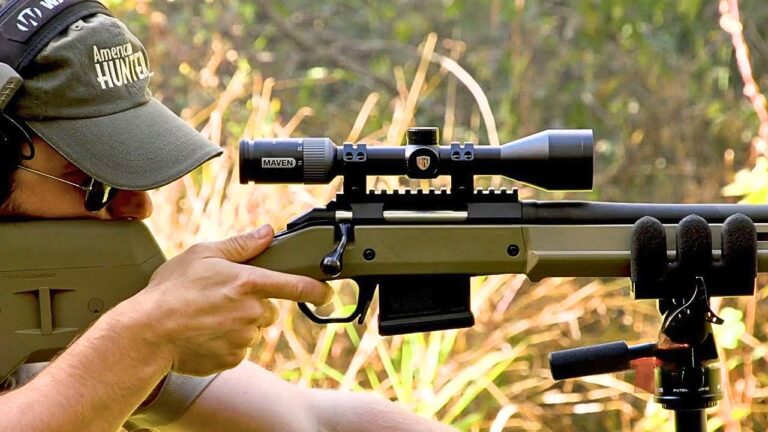
While ultralight AR‑style rifles grab attention online, the quiet workhorse of this sales surge is a bolt‑action. Multiple independent tests now point to the Ruger American Gen II as the standout value in modern deer rifles. In a comprehensive field test of the Best Deer Rifles, the evaluators label the Ruger American Gen II Ruger American as “Best Value,” noting that Ruger’s original American rifle is one of the most affordable and best‑selling centerfire bolt actions and that the Gen II iteration keeps the price approachable while adding practical features. That combination of heritage, affordability and incremental refinement is exactly what pushes a model from “good option” to “default choice” in many deer camps.
Other reviewers echo that verdict. A detailed video review of the Ruger American Gen II Standard Bolt‑Action Rifle points out that Ruger launched the original American back in 2012 and that, although the American remains a top seller, Ruger never stopped innovating. The segment notes that “Our American Ri…” audience has been eager to get their hands on Ruger’s next‑generation American rifle, simply named the Ruger American Gen II. When a company can refresh a proven platform without alienating existing owners, it tends to keep that rifle at the top of sales charts, especially in states where deer tags are a seasonal ritual.
Design details that make lightweight rifles shootable
Weight alone does not sell rifles; shooters care just as much about how a gun handles recoil, balances with a scope and fits different body types. The Ruger American Rifle Generation II is a case study in how thoughtful engineering can make a light rifle more forgiving. A full review of the Ruger American Rifle Generation II notes that “Recommended The American Rifle was a best seller for Ruger,” and predicts that trend will continue with the Gen II version. The write‑up highlights how the new stock geometry, improved trigger and modest price increase versus its predecessor all work together to keep the rifle controllable even as overall weight stays low.
Technical features back up that impression. A range report on the Ruger American Rifle Generation II describes a medium‑contour, cold‑hammer‑forged barrel with deep spiral flutes on most versions (depending on chambering) to reduce weight and aid cooling. Many configurations come equipped with a radial‑port muzzle brake, which tames recoil and muzzle rise so that even a relatively light rifle stays on target. When you combine that with adjustable stocks and modern recoil pads, you get a gun that feels less punishing than its scale weight would suggest, a crucial factor for new shooters and for hunters who might fire from awkward field positions.
Suppressor‑ready and optics‑first from the factory
Another reason this lightweight rifle class is thriving is that it ships ready for the way people actually shoot today. Hunters increasingly expect threaded muzzles for suppressors and brakes, and they want rifles that accept modern optics without gunsmithing. A survey of Top 10 Suppressor‑Ready Hunting Rifles singles out the Ruger American Gen II for its 20‑inch, spiral‑fluted, cold hammer‑forged barrel that arrives wearing an effective radial muzzle brake. That configuration lets a hunter screw on a suppressor or run the brake as‑is, all while keeping overall length manageable, which is especially important when the rifle is already trimmed for weight.
Optics and accessories tell a similar story on the semi‑auto side. A rundown of 2025 top‑selling items from Sig Sauer highlights how ammunition and gear categories like Nickel Plated Brass Category, Optics Smart Target Type, OHD, Speed Class, Subsonic and Supersonic Staked Primer are all tuned for modern rifles with threaded barrels and rail space. When a lightweight carbine is designed from the outset to run subsonic loads with a can, or to pair with smart targets and advanced optics, it becomes more than a stripped‑down gun. It is a hub for a whole ecosystem of accessories, which in turn encourages more buyers to choose that platform as their primary rifle.
Affordability keeps the lightweight leader within reach
Price remains the final gatekeeper for any rifle that aspires to record‑setting sales. Here, the leading lightweight platforms have a clear edge over premium imports and custom builds. A survey of the 10 Best Deer Hunting Rifles Under $1,000 notes that Ruger has made a name for itself as a producer of high‑quality firearms at reasonable prices, and that this reputation continues with newer models that incorporate features such as the Ruger Marksman Adjustable trigger. When a rifle offers adjustable triggers, threaded barrels and modern stocks while staying under the psychological $1,000 barrier, it becomes attractive not just to enthusiasts but to working families budgeting for a single do‑everything gun.
That value proposition is reinforced by how the broader gun market behaves. A look at Top‑Selling Guns on GunBroker for a recent month shows handguns like the Sig Sauer P365 and Sig Sauer P320, along with stalwarts such as the Glock G19 and Glock G43, dominating the charts, with each entry listing its Previous Rank to show staying power. Those pistols succeed because they hit a sweet spot of performance and price. The lightweight rifle that is now breaking records is following the same playbook in the long‑gun space: it delivers modern features and trusted branding at a cost that feels attainable, which is why it is showing up in first‑gun purchases as often as in seasoned hunters’ safes.
SHOT Show and the road ahead for lightweight rifles
Trade‑show floors often preview what will be hanging on gun‑shop walls a year later, and the latest crop of rifles suggests the lightweight trend is only accelerating. Coverage of new rifles from SHOT Show notes that Ruger’s newly released American Rifle Generation II brings a host of new features to the proven platform, including a removable comb riser and length‑of‑pull spacer. Those stock adjustments let one rifle fit a wide range of shooters, from youth hunters to adults layering heavy winter clothing, without adding much weight. When a single lightweight rifle can be tuned to fit nearly anyone in the household, it becomes an even more compelling purchase.
Looking across the data, reviews and corporate disclosures, I see a clear throughline. Lightweight rifles are no longer compromises or specialty tools; they are becoming the default long gun for a broad slice of American shooters. From The GOAT‑15 and other compact carbines that shrink the AR‑15 footprint, to the Ruger American Gen II that refines a best‑selling bolt action, the market is rewarding designs that carry easily, shoot comfortably and integrate seamlessly with modern optics and suppressors. As manufacturers like Ruger continue to report strong “Sales of new products” and as rankings of the most popular guns show rifles holding their own alongside handguns, the record‑setting lightweight rifle of today looks less like an outlier and more like a preview of where the entire rifle category is headed.
Like The Avid Outdoorsman’s content? Be sure to follow us.
Here’s more from us: