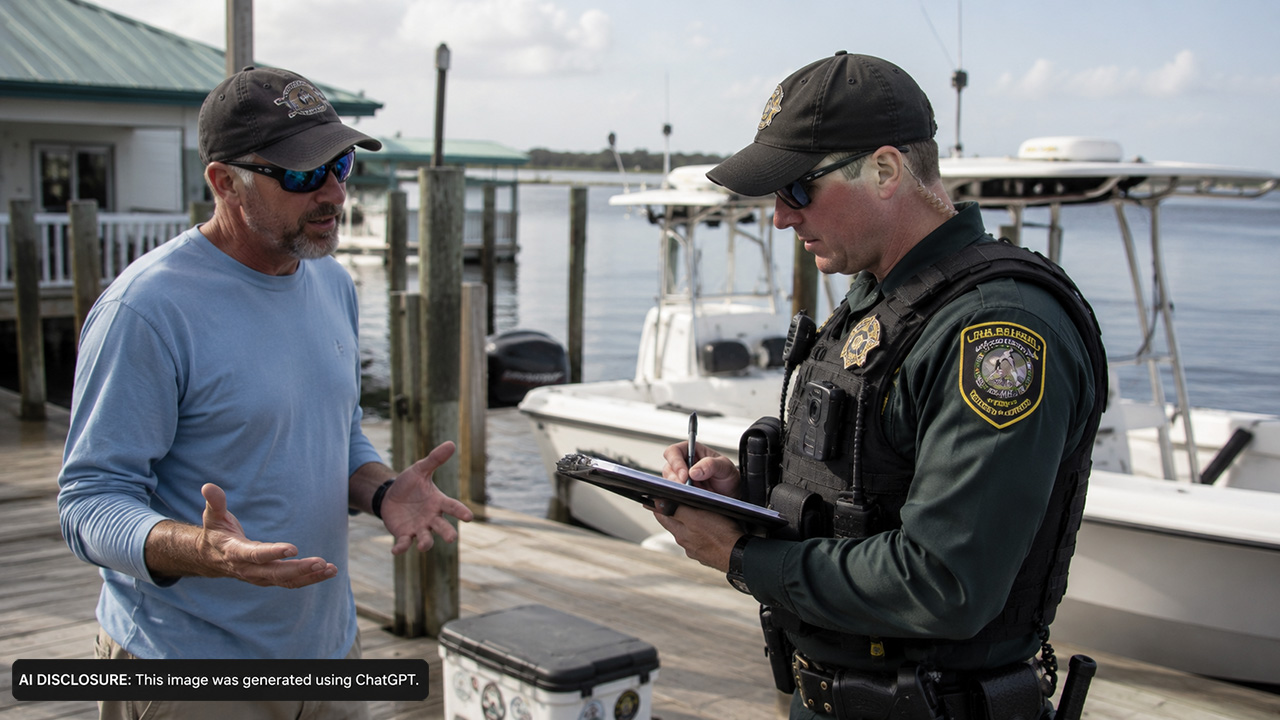
Photo credit: AI-generated image created using ChatGPT. Illustrative only
Nothing ruins a fishing trip faster than seeing a rig roll up with lights on top and a badge on the door. One minute you’re thinking about bobbers and bait, and the next you’re handing over ID and trying to explain yourself. That’s exactly where a young couple found themselves at a North Dakota lake after fishing without licenses—then learning the ticket in their hands wasn’t just a simple fine.
A day on the water turned into a Class B misdemeanor
In a post asking for advice, a 21-year-old said she and her boyfriend (also 21) drove to a North Dakota lake they believed was private, only to find out it was actually public water. They fished anyway, without getting licenses first, and were contacted by a game warden.
Instead of a basic citation that feels like a traffic ticket, both of them were issued citations for Class B misdemeanors. For a lot of folks, that wording hits harder than the dollar amount—because “misdemeanor” sounds like something that sticks with you, not something you pay and forget.
why it didn’t feel like a normal “license ticket”
Most anglers have heard some version of, “Just go buy your license and they’ll cut you a break.” Sometimes that’s true, sometimes it isn’t, and it varies by state. What threw this couple is the way the charge was framed—especially with the angle that out-of-staters can end up staring at a criminal charge while locals may be more likely to see it handled like a payable fine.
North Dakota, like many states, takes fish and game violations seriously because those dollars fund management and enforcement. And wardens tend to have wide discretion on what to write, especially when someone is actively fishing without a license in hand. The couple’s experience is a reminder that “I didn’t know” and “I thought it was private” don’t stop a citation once the warden has made contact.
They bought licenses two hours later, but the citation still followed them
After the citations were issued, the couple went and bought fishing licenses about two hours later. They also noted they were polite and the warden was polite back, and both of them have clean records.
That’s all good on the personal side, but it doesn’t automatically unwind what’s already been written. A license purchased after the fact may help show good faith, but it’s not the same as being licensed at the time you were fishing. In the real world, that can mean the difference between a warning and a misdemeanor citation comes down to timing, discretion, and whatever enforcement emphasis is happening in that area.
The real problem: they live 12 hours away and can’t just “show up in court”
The couple’s biggest practical issue wasn’t just the charge—it was distance. They live roughly 12 hours from North Dakota and said they can’t simply appear in court.
That’s a common pinch for traveling hunters and anglers. You’re not dealing with a speeding ticket where you can often pay online and move on. A misdemeanor citation can come with a court date, and ignoring it can snowball into bigger trouble than the original fishing violation. Even when a case can ultimately be reduced, dismissed, or handled by mail, you don’t want to gamble by doing nothing and hoping it disappears.
In their request for help, the couple asked what they should do next given the misdemeanor level and their inability to travel back for court. The core of the situation—and what experienced outdoorsmen tend to stress when these stories come up—is that a misdemeanor is a different animal than a civil fine.
When a citation is labeled as a criminal offense, the smart move is to handle it like one from the start: read the paperwork closely, figure out the exact court and deadline, and consider getting legal help in that state. Often, an attorney can appear on your behalf or negotiate a resolution that keeps you from burning vacation days and fuel money just to stand in a courthouse for five minutes. The original details are laid out in the source post, including the North Dakota location, the Class B misdemeanor citation, and the fact they purchased licenses shortly after.
A lot of good people get tripped up by the “private lake” idea. In many places, even if you’re on private water, you still may need a fishing license unless a specific exemption applies. And “I thought it was private” can be an honest mistake while still being an offense.
If you’re crossing state lines, the safest habit is simple: buy the non-resident license before you wet a line, even if you’re heading to a buddy’s pond. Keep a digital copy and a screenshot if the state offers e-licensing, and don’t assume cell service will be there when you need to pull it up. It’s cheap compared to the time, stress, and potential record issues that can come with a misdemeanor citation—especially when you’re a long way from home and the court is even farther.
Game wardens aren’t out there to ruin weekends, but they are tasked with protecting a resource that’s paid for by license holders. This couple did the right thing by buying licenses after the stop and staying respectful, but the bigger lesson is that out-of-state trips leave less room for “we’ll sort it out later.” When the paperwork says misdemeanor, handle it promptly, handle it seriously, and don’t let a fishing mistake turn into a bigger legal mess.
Like The Avid Outdoorsman’s content? Subscribe to our newsletter so you never miss an article.
Here’s more from us: