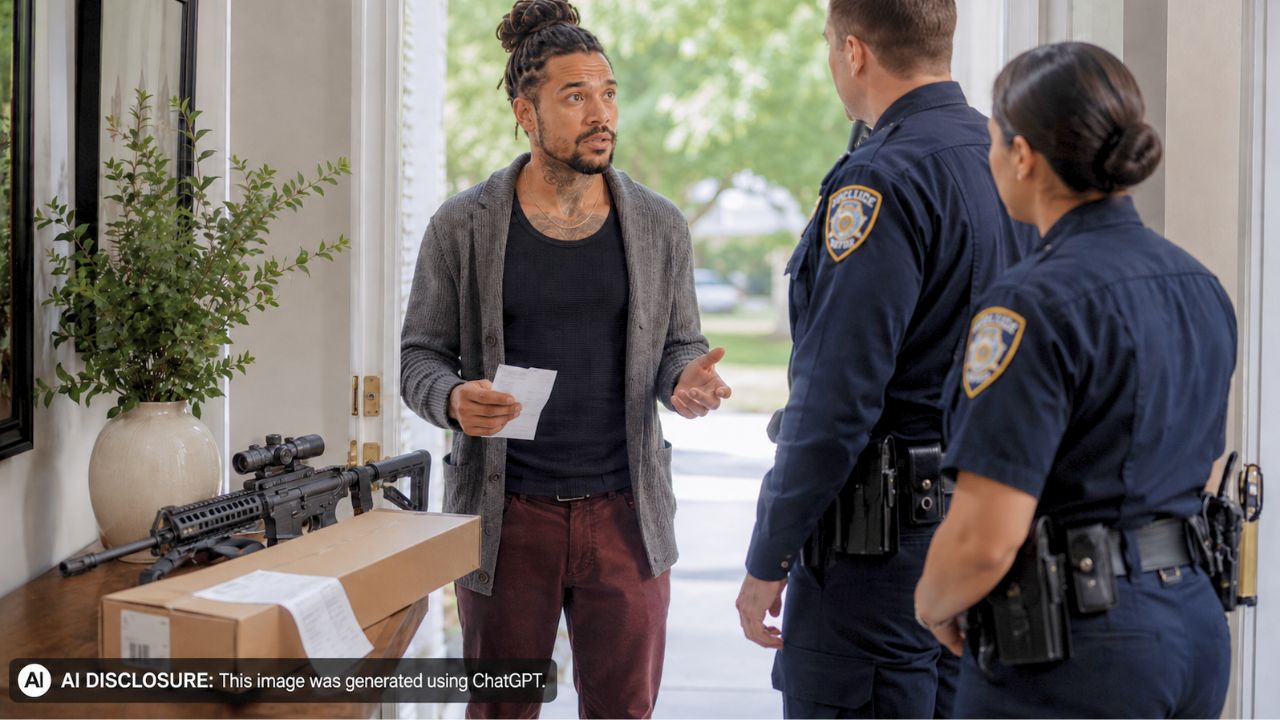
Photo credit: AI-generated image created using ChatGPT. Illustrative only.
It’s the kind of phone call that makes your stomach drop, especially if you’ve always tried to do things the right way with firearms. One day you’re moving a rifle around like any other piece of property, and the next you’re hearing it was stolen and has been confiscated—by a department in another state.
That’s what happened to a gun owner in Colorado who shared his situation in the original post. The rifle had been bought from a pawn shop for $300 about a year earlier. Two days before the call, he pawned that same rifle at a different pawn shop for $100, planning to retrieve it later. Instead, police from Idaho contacted him and said the rifle was reported stolen and had been seized from the shop.
The sale looked normal—until the stolen report caught up
From the buyer’s side, the timeline sounded routine. He paid full price for a rifle at a pawn shop, kept it for roughly a year, and then used it as short-term collateral to get $100 in a pinch.
Then the system caught up. An officer several states away called, explained the rifle had been reported stolen, and said it had been confiscated from the pawn shop where it was recently pawned. The officer asked where the rifle had been purchased, and the owner provided the shop’s phone number and address.
One detail matters here: the gun owner said he had proof of purchase and offered to provide it, but the officer told him not to worry about it. That doesn’t mean paperwork never matters—it just suggests the officer wasn’t treating him like a suspect during that call.
Why the second pawn shop got the knock instead of the original seller
Folks who’ve bought used guns know that pawn shops move a lot of firearms, and sometimes a gun’s history isn’t as clean as it looks on the rack. In the discussion, one commenter laid out a likely chain of events that helps explain why everything seemed fine for a year and then suddenly wasn’t.
The rifle may have been stolen, sold to a pawn shop, then sold again to the Colorado buyer. Later—after the buyer already owned it—it may have been entered into the NCIC (the national database used to flag stolen firearms and other property). The key point: a gun can be out in the world before it gets formally logged as stolen in the system, depending on when information is submitted and processed.
Once the Colorado owner pawned it again, the second shop likely entered the firearm’s information into its required reporting system. That’s when the stolen entry could have triggered an alert, leading to the confiscation and the out-of-state phone call.
Can the pawn shop he used most recently come after him?
The owner’s first concern was whether the pawn shop where he left the rifle two days earlier could press charges against him. The response he received was pretty straightforward: the pawn shop “can’t really press charges” in the usual sense, and situations like this aren’t rare.
More importantly, the commenter noted that if the gun was acquired through a standard firearm transfer with a 4473 background check form, it would be difficult for the pawn shop—or anyone—to prove he was involved in the original theft. In plain English: buying a gun through normal channels and having documentation tends to separate you from the criminal side of a stolen-gun story.
That doesn’t mean it’s enjoyable. A pawn shop loses money and inventory when a gun is seized, and nobody likes being in the middle of that. But based on the conversation, the facts described don’t line up with the owner being treated like the thief.
Getting your money back isn’t automatic, but it isn’t hopeless either
The second question was the one most outdoorsmen would ask after the initial shock wears off: “Can I sue the pawn shop that sold me the rifle to get my $300 back?” The answer offered was a qualified “possibly,” and it depended heavily on timing—especially when the rifle was entered into NCIC.
If a pawn shop sold a firearm in good faith before it ever showed up as stolen in the system, you’re in a gray area. They may not have had any way to know, and they might not be legally on the hook in the way people assume. On the other hand, if it was flagged before the sale and still went out the door, that’s a different story.
There’s also a practical angle here. Even when everyone is acting in good faith, pawn shops don’t love headaches that bring police into their records. The commenter suggested the original selling shop might offer store credit or otherwise try to make the buyer whole “to make you go away,” especially once law enforcement starts pulling paperwork.
What the out-of-state call tells you about how far guns can travel
The owner was in Colorado, and the officer who called was in Idaho. That sounds odd until you think about how firearms circulate. A rifle can cross state lines through private sales, trades, pawn transactions, and moves—sometimes multiple times—before it ever ends up in a database hit.
The commenter’s explanation matches what many gun owners have seen: the agency that inputs the stolen information is the one that starts chasing the paper trail. If the stolen report was filed in one state, the data may be entered there, and they’ll contact whoever is tied to the gun when it gets flagged again—whether that’s a shop or a new owner states away.
And if you’ve ever wondered why pawn shops take down so much information and have waiting periods on certain items, this is one reason. The reporting systems are built to catch stolen property after it moves—not just the day it’s taken.
Common-sense takeaways for gun owners who buy used
This whole mess started with a “normal” used-gun purchase. The buyer had a receipt and said he could prove where it came from. That’s exactly why keeping paperwork matters, even if you don’t like filing cabinets and envelopes.
It’s also a reminder that buying from a store doesn’t guarantee a clean history. Pawn shops generally keep records and follow rules, but they’re still working with what walks through the door. If the stolen report comes later, the gun can still be seized—because the legal owner is the person it was stolen from in the first place, not the guy who bought it honestly after the fact.
In the end, the advice from the discussion was simple: call the original pawn shop and talk it through. Police will likely contact them for pawn records anyway, and sometimes a calm conversation does more than threats ever will. It won’t put the rifle back in your safe, but it might be the best path toward not being left holding the bill for someone else’s bad act.
Like The Avid Outdoorsman’s content? Be sure to follow us.
Here’s more from us: