Photo credit: AI-generated image created using ChatGPT. Illustrative only
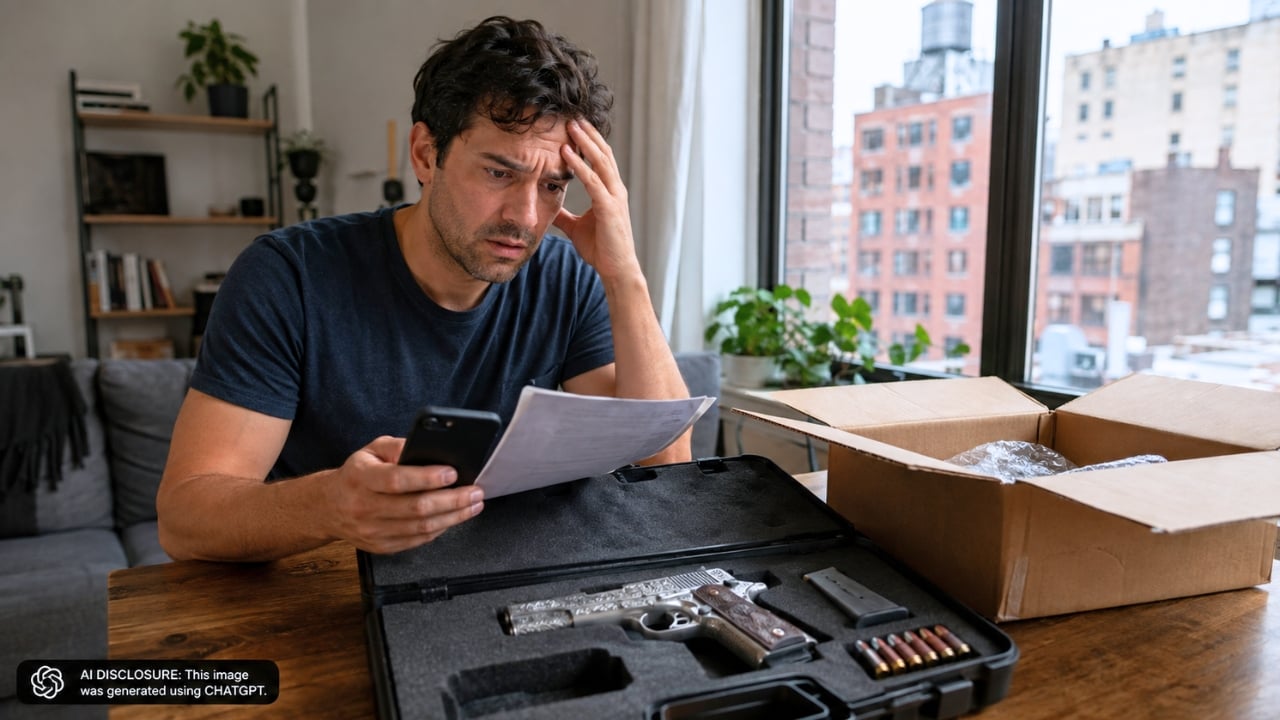
It’s one thing to inherit a firearm when a family member passes and everybody has time to sort out the paperwork. It’s another thing entirely to come home to a New York City apartment and find a handgun you didn’t ask for sitting there—complete with a magazine and 10 rounds.
That’s the spot one Queens resident found himself in, laid out in the original post. His aging grandfather—possibly dealing with dementia—shipped him a custom engraved handgun through USPS, apparently as a surprise gift. The gun was described as potentially worth around $3,000, mostly tied to the engraving and materials, and the grandson admitted he’s “not a gun person” and has never had a firearm license or any training.
A surprise “gift” showed up with ammo and a magazine
The handgun arrived in its case with the magazine and 10 rounds. The grandson hadn’t requested it and didn’t even know it was coming. When he called his grandfather, he was told the older man “had no use for it” and wanted him to have it.
Family reactions didn’t help clear the fog. The grandmother backed the grandfather up. The father didn’t sound alarmed, telling him to “make sure you take good care of it.” That’s the kind of well-meaning advice you might get in a rural household where folks grew up around guns—but it doesn’t map neatly onto New York City handgun rules.
Where the real danger sits: possession in NYC without a license
The grandson’s core problem wasn’t whether the engraving made it valuable, or whether it could be displayed like a piece of art. The problem was simple: he had a handgun in Queens and no gun license.
Even for experienced gun owners, the hard lesson is that firearm laws don’t care much about intent. “I didn’t ask for it” and “it’s a family heirloom” might be true, but they don’t automatically fix an illegal possession issue. In a place like NYC, handgun possession is tightly regulated, and being on the wrong side of that can turn a surprise package into a serious legal headache.
The shipping part matters too—even if the recipient didn’t do it
The grandfather shipping a handgun through USPS is another wrinkle. The recipient didn’t arrange the shipment, but the fact remains: it showed up through the mail, which is not how most lawful handgun transfers are handled for regular folks.
That’s part of what made the whole thing feel like a trap. The grandson wasn’t trying to buy a pistol on the sly or skirt rules. He was sitting in an apartment with something he didn’t order, didn’t transport himself, and didn’t have a permit for—yet he’s the one holding the bag if he makes the wrong move next.
“I don’t have a car” becomes a real-world problem fast
This is the part that people who live out in the country don’t always appreciate. In a small town, you lock the gun in a case, toss it in the truck, and drive where you need to go—gun shop, range, family member’s place, or an attorney’s office. In Queens, the grandson didn’t have a car and was understandably worried that Uber, a bus, or the subway would be a bad idea for moving a handgun around.
And he wasn’t wrong to be cautious. Even when you’re trying to do the right thing, “just take it somewhere” can create new problems if you’re handling or transporting it in a way the local rules don’t allow. That’s why he started looking for a path that kept him on the right side of the law from here on out.
Keeping it “in the family” isn’t as simple as handing it off
The grandson said he wasn’t opposed to shipping it to another family member. He also floated the idea of keeping it and asked practical questions: Could it be displayed? Should it be locked away out of sight?
But the family-angle cuts both ways. He wanted it to stay in the family, yet he also recognized that selling a custom engraved handgun might be tough because the engraving is so personal. A fancy scroll job and custom grip material might be worth a lot to the right buyer, but it could also narrow the market enough that you never “break even” if you tried to sell it.
In other words, it wasn’t just a firearm—it was a family artifact with firearm rules attached. That’s a tricky combo in any state, and especially in NYC.
The most practical move he made: calling attorneys and looping in family
Instead of trying to “figure it out” on his own, the grandson reached out to law firms and waited for call backs. That’s not dramatic, but it’s smart. When you’re dealing with a handgun and a city with strict rules, getting competent local legal guidance beats taking advice from well-meaning relatives who might be used to very different laws.
He also did another practical thing: he told his father what was going on. The father agreed to help cover costs that might come up, which matters because legal advice, proper transfers, and compliant storage can all cost money. It’s easy to say “keep it in the family,” but it’s better when the family is willing to help do it the right way.
From an outdoorsman’s perspective, the takeaway is straightforward. If you unexpectedly end up with a firearm you aren’t legally set up to own where you live, treat it like a hot stove: don’t show it off, don’t haul it around town trying to solve it yourself, and don’t assume good intentions will keep you out of trouble. Secure it safely, get qualified local help, and make the next step a careful one—because in places with strict handgun laws, the difference between a keepsake and a criminal charge can be nothing more than time and paperwork.
Like The Avid Outdoorsman’s content? Be sure to follow us.
Here’s more from us: