Photo credit: AI-generated image created using ChatGPT. Illustrative only
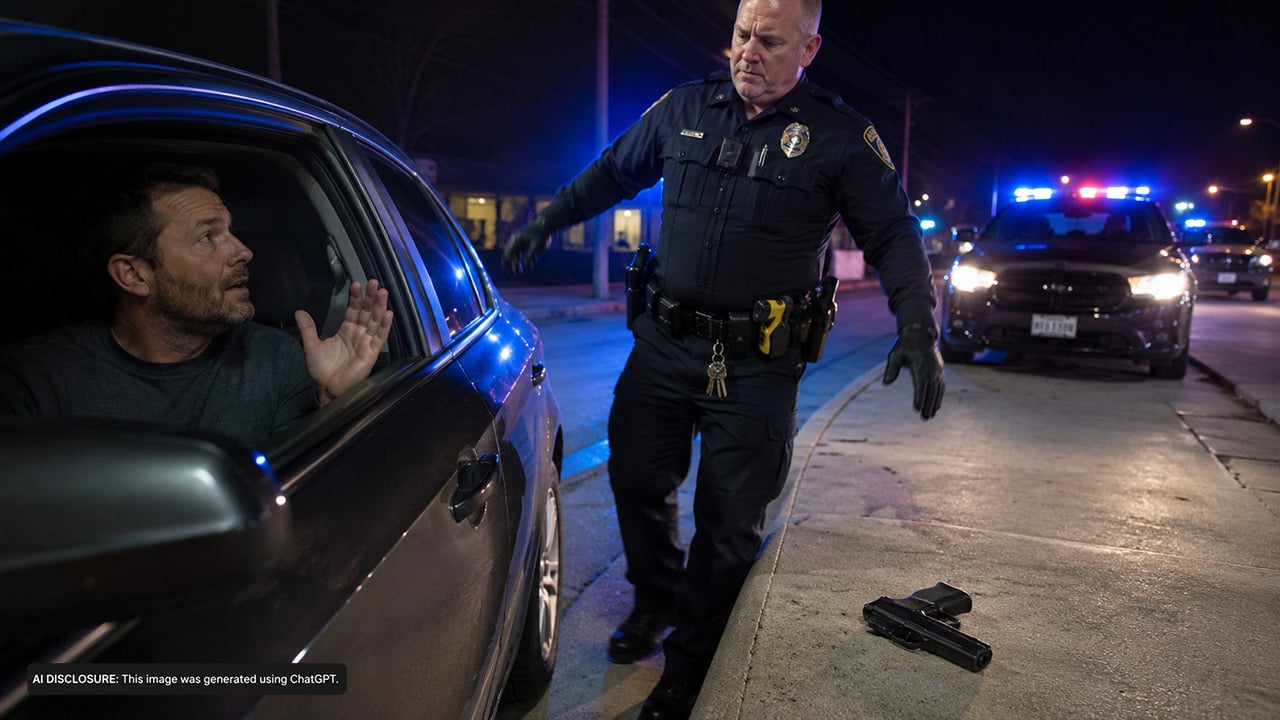
A routine traffic stop in Texas went sideways in a hurry for one concealed carrier after he says he answered an officer’s weapon question honestly. Instead of a calm “thanks for letting me know,” he reports the officer yanked his door open, hauled him out, and started treating the whole thing like a felony stop—right down to tossing his handgun onto the concrete where it slid and got damaged.
The account was shared in the original post, and it’s the kind of story that makes a lot of hunters and gun owners rethink what they’ll say and do when blue lights come on. Because whether you’re headed to the lease, the range, or just home from work, the roadside is not where you want your carry gun getting bounced like a wrench.
It started as a minor stop, then the tone changed fast
According to the driver, he was pulled over for going four miles per hour over the limit. The officer asked if he had any weapons, and the driver says he answered truthfully and also had a concealed carry license.
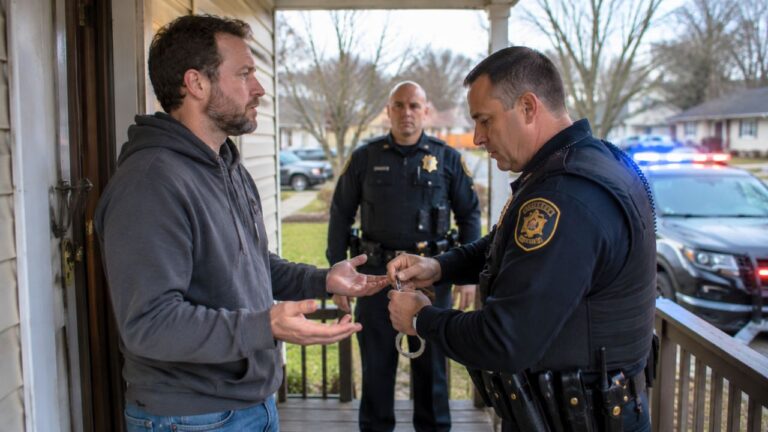
That’s when the stop escalated. The driver claims the officer forced the door open, pulled him out, and placed him with his hands on top of the car while conducting a search. From the driver’s perspective, this wasn’t a conversation anymore—it was physical control, with no time to process what was happening.
The handgun was removed and thrown, and that’s the part gun folks notice
Most people who carry understand there can be a safety-minded reason for an officer to temporarily secure a firearm during a stop. But the driver’s complaint wasn’t simply that the pistol was taken—it’s how it was handled.
He says the officer removed his pistol and threw it out of reach, damaging it when it hit and slid across the concrete. Anyone who’s owned a carry gun for more than five minutes knows what pavement can do: sights get dinged, finishes get chewed up, optics can lose zero, and a hard impact can create function problems you may not see until the next time you press the trigger.
Even if the gun “looks fine,” a drop onto hard surface can mean a trip to a competent armorer for inspection. It can also mean a new holster fit, replacement sights, and a defensive firearm you no longer trust until it proves itself again.
Handcuffs, more questions, and a search for another firearm
After the pistol was taken, the driver says he was cuffed behind his back. The officer then asked if there were any other weapons. The driver admits that after watching his pistol get thrown, he wanted to lie—but didn’t know whether he was allowed to stay quiet or refuse to answer.
He ultimately told the officer there was another weapon. The driver reports the officer searched the car and found an AR-15 in the trunk, checked that it was clear and safe, and then left it there. The driver remained handcuffed while the ticket was written and explained.
Then, according to the account, the officer uncuffed him, handed him the paperwork, told him to retrieve his pistol, and drove off. No arrest. No additional charges described. Just a ticket, a rough stop, and a damaged handgun.
What the driver wanted to know: damage claims, illegal search, and staying silent
Three questions came out of this that matter to anyone who carries in a truck, a boat, or on the way to the deer woods: can you recover the cost of damage, was the search lawful, and do you have to disclose that you’re armed?
On the damage side, the practical issue is pretty straightforward: if someone damages your property, you want to be made whole. In the real world, that usually means documentation—photos of the gun and any damage, a written repair estimate, and keeping track of anything you had to replace (sights, optic, refinishing, even a new firearm if it can’t be trusted). If the pistol is a defensive tool, not just a range toy, there’s also the cost of making it reliable again.
On the search side, the driver describes being searched and the vehicle being searched without his consent, after he disclosed lawful weapons. Whether an officer can frisk, temporarily disarm, or search a vehicle can turn on details that don’t always feel important in the moment—what was said, what was observed, how the stop unfolded, and what the officer believed was happening. But from a common-sense gun owner viewpoint, the frustration is clear: doing the “honest and licensed” thing appeared to lead to harsher treatment, not less.
And then there’s the silence question. The driver specifically asked if he was allowed not to tell an officer he had a weapon, or if he could stay silent. That’s a question every concealed carrier should have answered long before they’re sitting on the shoulder with their heart rate up, because different states handle disclosure differently and the “right” answer can depend on exactly what’s being asked.
The bigger takeaway for outdoorsmen: roadside safety and protecting your rights
This is the part that hits home for rural folks, hunters, and range regulars: a traffic stop is not the time to argue case law, and it’s not the time to get cute with an officer about what’s in the vehicle. But it’s also not the time to volunteer extra information beyond what your state requires.
If you carry regularly—especially if you also keep a rifle in the vehicle for ranch work, predators, or range time—know your state’s rules on disclosure and transport ahead of time. Keep your documents handy, keep your hands visible, and keep your movements slow and predictable. If an officer chooses to secure a firearm, the safest path in the moment is to comply physically and address any misconduct later through the proper channels.
And if property gets damaged, treat it like any other incident you might have afield: document it immediately, keep your emotions out of the report, and get a professional assessment. A carry gun that’s been thrown onto concrete isn’t something you just wipe off and forget about—your life might depend on it functioning exactly right.
For a lot of gun owners, the uncomfortable lesson here is that being licensed and being cooperative doesn’t always guarantee a calm interaction. Preparation helps, a steady tone helps, and knowing your obligations before the stop helps most of all.
Like The Avid Outdoorsman’s content? Be sure to follow us.
Here’s more from us: