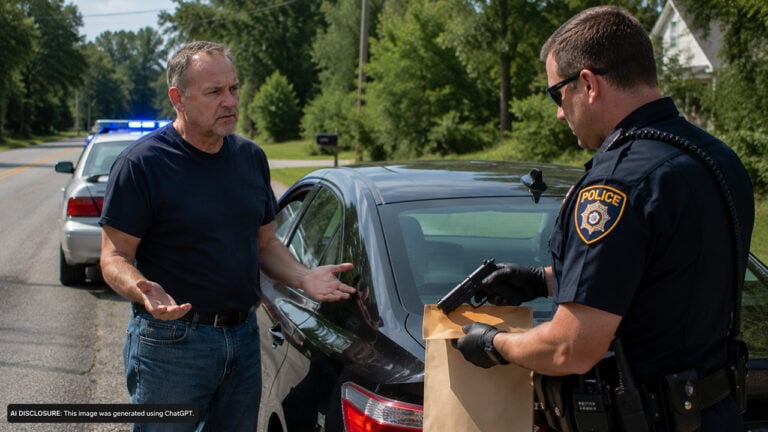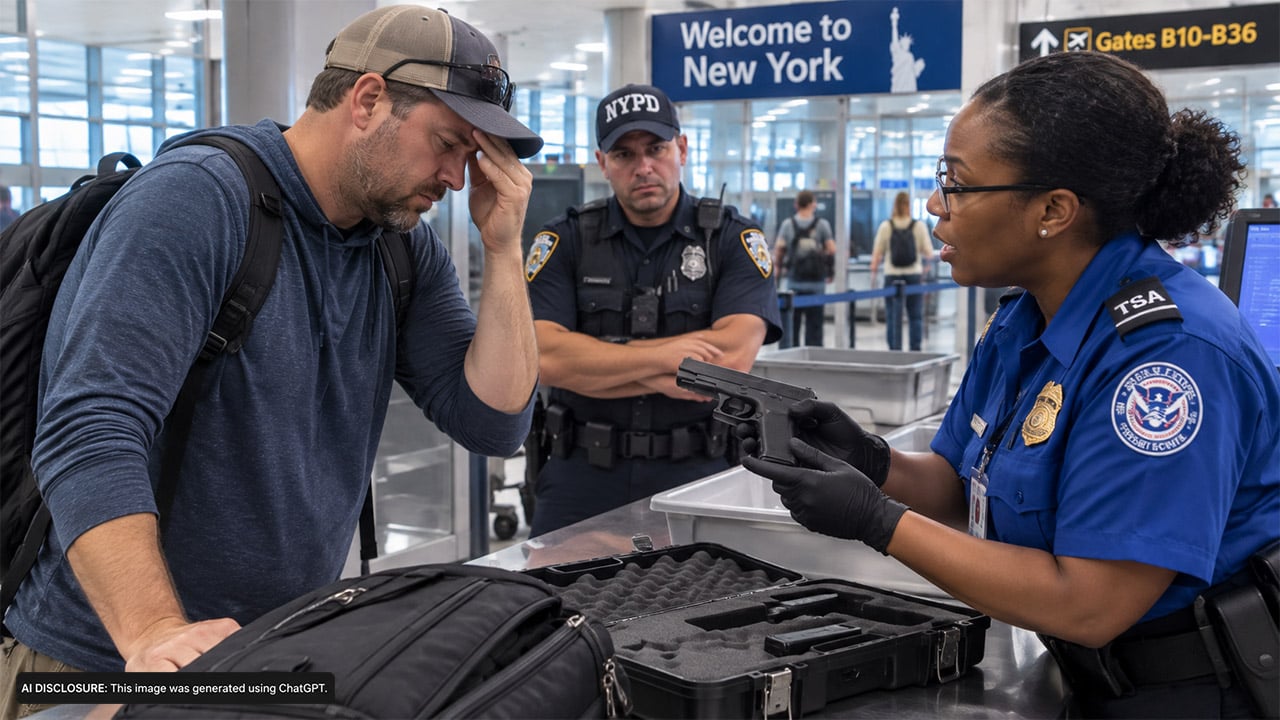
Photo credit: AI-generated image created using ChatGPT. Illustrative only
A guy from Wisconsin did what a lot of lawful gun owners assume is the “right way” to fly with a handgun: he kept it unloaded, locked it up, and told the airline he needed to declare it at the counter. Instead of a tag on his case and a quick walk to TSA, he says he ended up in handcuffs—arrested by police officers and facing a felony charge.
The details come straight from the original post. He wrote that he’d traveled to New York for the holidays, brought his handgun with him, and had “no problems” during the trip. The trouble hit when he tried to fly home from an NYC-area airport and followed the normal declaration process at the airline counter.
A common assumption: “If it’s legal at home and legal to fly, I’m good”
Plenty of outdoorsmen grow up with the idea that if you’re doing everything safely—locked case, no ammo, hard-sided container, the whole deal—you’re basically covered. That mindset comes from real experience: in much of the country, those steps are exactly what airports and airlines expect when you check a firearm.
But that “common sense” approach can run straight into a wall in certain states and cities. In his post, the traveler flat-out admitted bringing the gun to New York was a “very stupid idea,” which tells you he already sensed the political and legal climate is different there. What he didn’t expect was that trying to do the honest, by-the-book airline declaration would be the moment things went sideways.
What he says he did right at the counter
According to the account, he walked up to the airline counter and said the words you’re supposed to say: “I’d like to declare a firearm.” The agent reportedly responded calmly—“ok cool”—and made a call. Shortly after that, police officers came over.
He described the handgun as being in a locked case inside his checked bag, with no ammunition, and with the slide removed. In other words, he wasn’t trying to carry it onto the plane, he wasn’t waving it around, and he wasn’t claiming it was some kind of emergency self-defense situation. He presented it for inspection—and says that’s when he was arrested and charged with a felony.
Where New York flips the script for visiting gun owners
This is the part that trips people up: airline rules and federal transportation concepts don’t always play out the way gun owners think they will once local law gets involved. Many folks hear “declare it at the counter” and assume it’s a safe harbor everywhere, because you’re doing what TSA and the airline require.
New York is famous for having its own layers—especially around handguns—where possession can be treated as illegal unless you’re licensed in a way that state recognizes. From the traveler’s perspective, he was a legal gun owner back home and this was his first arrest. From the state’s perspective, the question tends to be simpler and harsher: did you possess a handgun there without the right New York permission? That disconnect is how a normal declaration can turn into a criminal case before you ever get to security.
He also mentioned he had been in New York for the holidays with “no problems.” That can create a false sense of safety. Just because you didn’t get stopped on the street doesn’t mean you were in the clear—especially when the airport counter becomes a forced interaction with law enforcement where the firearm gets brought to the front of the conversation.
The moment it escalated: the call, the officers, and the cuffs
In most airports across the country, the process is boring: counter agent calls over a supervisor or TSA, you open the case, they confirm it’s unloaded, you sign a card, and you’re on your way. Here, the agent’s call brought police officers, not just airline staff.
Once officers are involved, the whole tone changes. The traveler said they asked to see the firearm and then arrested him. That’s a hard lesson for anyone who thinks “doing the right thing” guarantees the right outcome. In certain jurisdictions, the lawful act of declaring a firearm for travel can also be an admission that you possess it—triggering local enforcement the second you say the quiet part out loud.
The practical aftermath: finding an attorney fast and staying quiet
The questions he asked after the arrest were the same ones any normal guy would ask: has anyone else made this mistake, what might the outcome be, and how do you even hire an attorney in New York City? He also asked what a lawyer might cost, whether it’s hourly or flat-fee, and how to judge whether an attorney can actually handle it.
Even without getting into legal strategy, there are a few practical realities gun owners should recognize from this situation. First: a firearms case in a place like New York isn’t a “talk your way out of it” traffic stop problem. If you’re facing a felony allegation, you’re in “get counsel now” territory. Second: this is not the time to explain and justify and try to educate your way through the process—especially when you’re stressed and unfamiliar with local law. The smartest move is usually to stop talking about details and let counsel do the communicating.
Third: costs can jump fast in big-city courts, and you want someone who actually handles firearms-related criminal defense, not just a general practice that dabbles. When a state is aggressive about handgun possession, the difference between a lawyer who knows the terrain and one who doesn’t can matter.
The outdoorsman takeaway: airports are where “state lines” hit hardest
This story is the kind that makes rural gun owners shake their heads because the guy wasn’t acting reckless. He wasn’t drunk in a bar. He wasn’t threatening anyone. He tried to follow the air travel routine that works in much of America—and still got hit with a serious charge.
The hard truth is that “I’m legal where I’m from” doesn’t mean much once you step into certain states with handguns. If you’re heading to a restrictive place, the safest move is to assume their rules are different until you’ve verified otherwise—preferably well before your tires hit the airport curb. And if you ever find yourself in a situation where declaring a properly packed firearm leads to handcuffs, you’re past the point of DIY problem-solving. At that stage, the priority is protecting yourself, getting competent legal help, and not making it worse with nervous explanations.
Like The Avid Outdoorsman’s content? Be sure to follow us.
Here’s more from us: