Photo credit: The Avid Outdoorsman
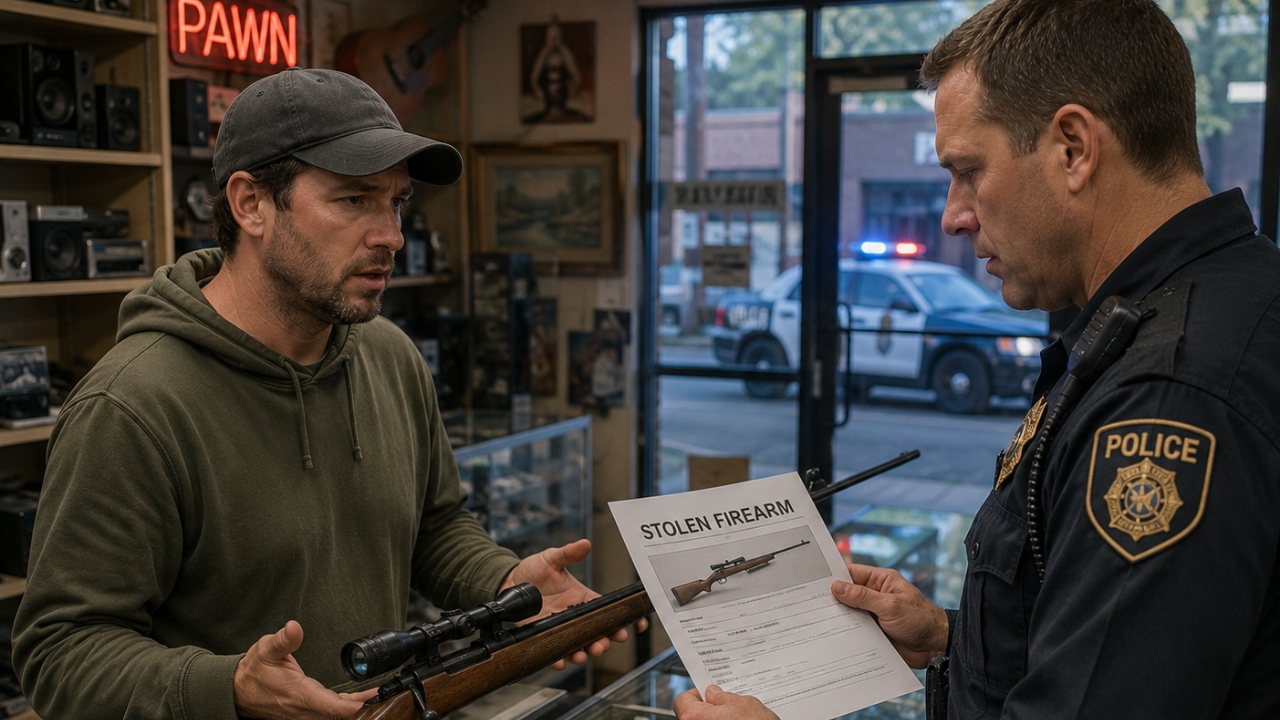
The man said the rifle came from a pawn shop, which made him think the purchase was clean. According to the Reddit post, he bought the rifle from a pawn shop and later pawned it again. That should have been a normal transaction, at least from his point of view.
Then police said the rifle was stolen.
The original Reddit post can be found here: https://www.reddit.com/r/legaladvice/comments/6zqybi/pawn_shop_sold_me_a_stolen_rifle/
That left the buyer in a strange position. He had not bought the rifle from a stranger in a parking lot or a friend with a sketchy story. He bought it from a business that deals in used property and firearms. A buyer might assume a pawn shop has already checked what it needs to check before selling a gun.
But the fact that a gun is sold through a shop does not always mean its history is clean forever. Stolen property can move through the system in ways that are hard to catch immediately. A firearm can be sold, resold, pawned, transferred, and later flagged when someone checks the serial number or when a report catches up.
For the man, the problem was not just losing the rifle. It was figuring out whether he was responsible for anything. If he bought it from a pawn shop in good faith, he likely felt like he should not be treated like the thief. But once police say a firearm is stolen, they have to treat it as stolen property until the ownership history is sorted out.
The situation also raised the money question. If the rifle was stolen before the pawn shop sold it to him, did the shop owe him a refund? Could the pawn shop be blamed for selling it? Did the man have any claim against the shop, or was he simply out the money because stolen property goes back to the rightful owner?
Those are frustrating questions because the innocent buyer can still lose. If property was stolen, the person who bought it later may not get to keep it just because they paid for it. Their remedy may be against the seller, not against the rightful owner or police.
The post was a reminder that firearm paperwork and serial numbers matter long after a sale. A gun can look ordinary on the shelf and still carry a problem from years earlier.
Commenters told him to keep every piece of paperwork from the pawn shop purchase and the later pawn transaction. Receipts, serial numbers, dates, and shop records could show that he acquired the rifle through a normal sale rather than theft.
Several people said he should cooperate with law enforcement but be careful about making assumptions. If police were investigating the stolen firearm, they would need to know where he bought it and when. That information could point back to the shop’s records and whoever originally pawned or sold it.
Others said the pawn shop may be the place to pursue reimbursement. If the shop sold him stolen property, he may have a civil claim for the money he paid, depending on the facts and state law. But commenters warned that recovering the rifle itself would be unlikely if it truly belonged to someone else.
A few people explained that pawn shops often keep transaction records and may be required to report purchases to law enforcement. If the gun slipped through anyway, the paper trail could still help police trace how it entered the shop.
The post ended with the buyer stuck in the middle of a chain he did not create. He bought from a pawn shop, later pawned the rifle, and only then learned police believed it was stolen. At that point, the important thing was not arguing that he paid for it. It was proving where it came from and figuring out who owed him for the loss.
Like The Avid Outdoorsman’s content? Subscribe to our newsletter so you never miss an article.
Here’s more from us: