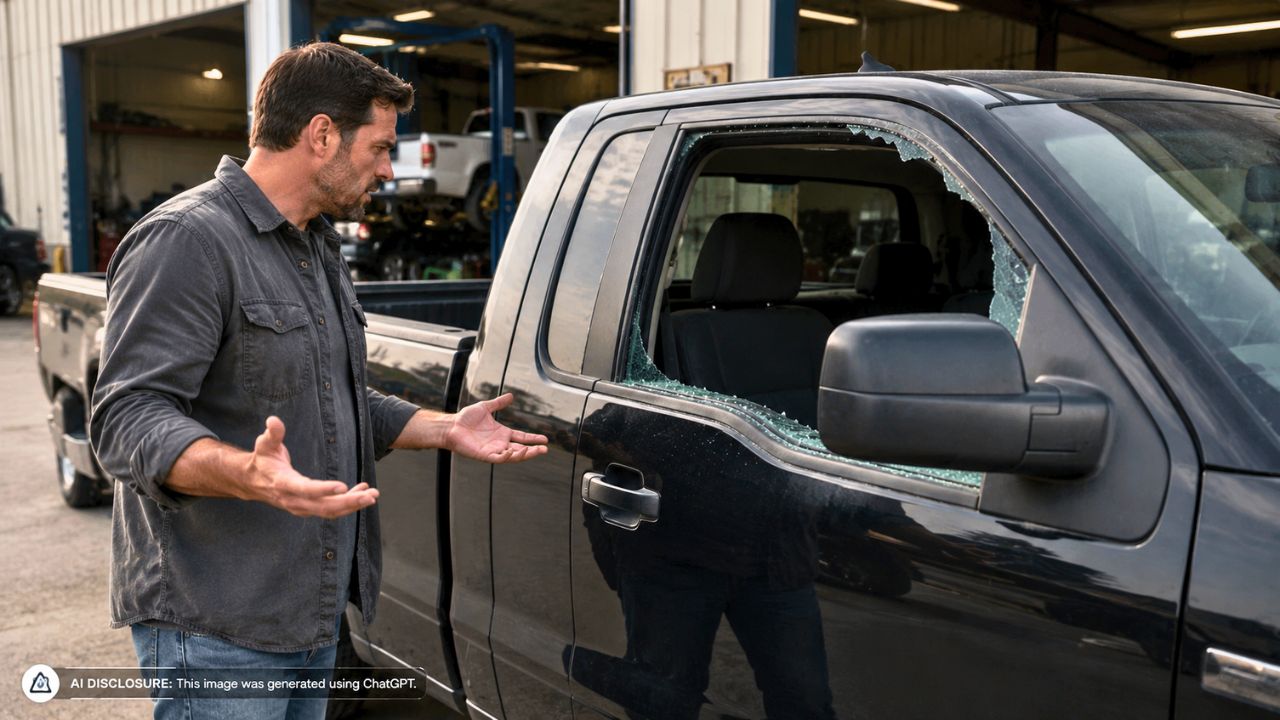
Photo credit: AI-generated image created using ChatGPT. Illustrative only.
You don’t have to spend much time around truck owners, hunters, or working tradesmen to know the routine: the pickup is the rolling toolbox, the gear locker, and sometimes the “just in case” storage spot. That’s why this Texas story hits hard—because it didn’t happen at a sketchy trailhead or a motel parking lot. It happened while the truck was sitting at an auto shop for brake work.
In the original post, the owner says he dropped his truck off and, over the weekend, someone broke in and stole roughly $5,000–$10,000 worth of business tools from both the bed and the cab. He also says the shop didn’t lock the truck despite him warning them they’d need to open the door to do it because the battery was dead.
A routine repair turned into a major loss
According to the account, the truck had been at the shop for about two weeks waiting on brake work. Sometime that weekend, a thief cleaned him out—tools from the bed and additional tools from inside the cabin. That’s the kind of hit that doesn’t just ruin a weekend. It slows down jobs, costs customers, and creates a long climb back.
The owner’s framing is blunt: those tools were his livelihood, built up over about five years. Anyone who’s pieced together a serious kit—impact guns, battery tools, specialty hand tools, meters, drill sets—knows how fast replacement costs stack up when you’re buying real-deal equipment and not bargain-bin stuff.
The battery detail matters more than it sounds
The truck owner says the battery was dead, and he specifically cautioned the shop about locking the truck. With some vehicles, a dead battery can make power locks useless, and if the shop had to open the door to access anything inside, it’s easy for “we’ll lock it later” to turn into “we forgot.”
That little detail is what makes a lot of outdoorsmen and working folks uneasy. If you leave your rig somewhere for service, you’re trusting that your stuff is treated like it’s in someone’s care—not just parked out back with the keys nearby and doors unlocked. Even if the thief is the one who committed the crime, an unlocked vehicle can become the center of the argument about negligence.
There was video, police reports, and a suspect in custody
One thing this case has going for it is documentation. The owner says the shop has footage of the incident. He also says both he and the shop filed police reports, and that those reports have already resulted in the suspect landing in police custody.
That doesn’t magically replace tools, but it does change the situation. Video and a formal report create a paper trail, and custody at least opens the door to recovering some property—though anyone who’s dealt with theft knows recovered property is never a guarantee, and cash restitution can be a long road.
The shop’s response: “Not our responsibility”
The real tension starts after the break-in. The owner says the shop is denying responsibility altogether, essentially telling him they aren’t on the hook for what happened—even though the truck was in their care at the time.
From a common-sense perspective, that’s hard to swallow. Most folks assume that when you drop a vehicle off for service, there’s at least some duty of care involved—especially if the customer told them there was a security issue (dead battery, locking complications) and the vehicle was left unsecured. The shop’s position may be based on signage, paperwork, or standard policies, but “we’re not responsible” isn’t always the end of the conversation when property is lost while it’s in someone else’s possession.
Practical routes the owner can consider
The owner’s big question was what legal routes he could take. Without turning this into a legal lecture, there are a few practical paths people in this situation typically look at: insurance, the shop’s insurance, and civil claims against the responsible party.
First is insurance—both personal auto coverage and any business policy that might cover tools or equipment. Some policies cover tools in a vehicle; some don’t, or they cap it low. If the tools were for a business, there’s also a chance a commercial policy could apply. Second, if the shop has a garagekeeper’s policy (common for repair businesses), that coverage sometimes exists for customer vehicles and property under certain conditions. Third, there’s the thief himself—charges are one thing, but restitution or civil recovery is another, and it can be difficult if the offender has no money or the property is gone.
And then there’s the uncomfortable possibility: a claim that the shop was negligent. The owner’s point about the truck not being locked—despite warning them—could be central to that argument. Whether it holds water depends on the details: what was agreed to, what the shop actually did, where the truck was stored, and what a court considers “reasonable care” for a vehicle left in their custody.
The truck-gun lesson: don’t let convenience turn into a loss
The headline angle a lot of gun owners will think about is the firearm side of theft. In the source material, the stolen items called out are tools, but the same scenario is exactly how guns disappear from trucks: a vehicle sits at a shop, at a dealer lot, at an impound yard, or even just in a driveway with predictable routines.
If you carry, hunt, or keep a pistol around for self-defense, the best practice is boring but effective: don’t leave it in the vehicle when you drop the truck off. A center console, glovebox, or under-seat “hidden spot” isn’t a safe. If you truly have to store a firearm in a vehicle, use a real, purpose-built lockbox anchored to the vehicle—and even then, understand that a determined thief with time can still win. The goal is to reduce opportunity and keep your gun from becoming someone else’s problem on the street.
Same goes for high-dollar optics, suppressor paperwork, tags, wallets, and electronics. When the truck is headed to a shop, treat it like you’re parking at the worst trailhead in the state: clear it out first. Tools are harder because they’re big and heavy, but if you can’t remove them, at least document them and lock them in a dedicated job box that’s bolted down.
For a working guy, this kind of theft is more than a property crime—it’s missed income, lost momentum, and time wasted rebuilding what was already earned. If nothing else, it’s a reminder that “in their care” needs to mean something, and that trucks full of tools and gear deserve the same level of security you’d want for your own stuff sitting in your own driveway.
Like The Avid Outdoorsman’s content? Subscribe to our newsletter so you never miss an article.
Here’s more from us: