Photo credit: AI-generated image created using ChatGPT. Illustrative only.
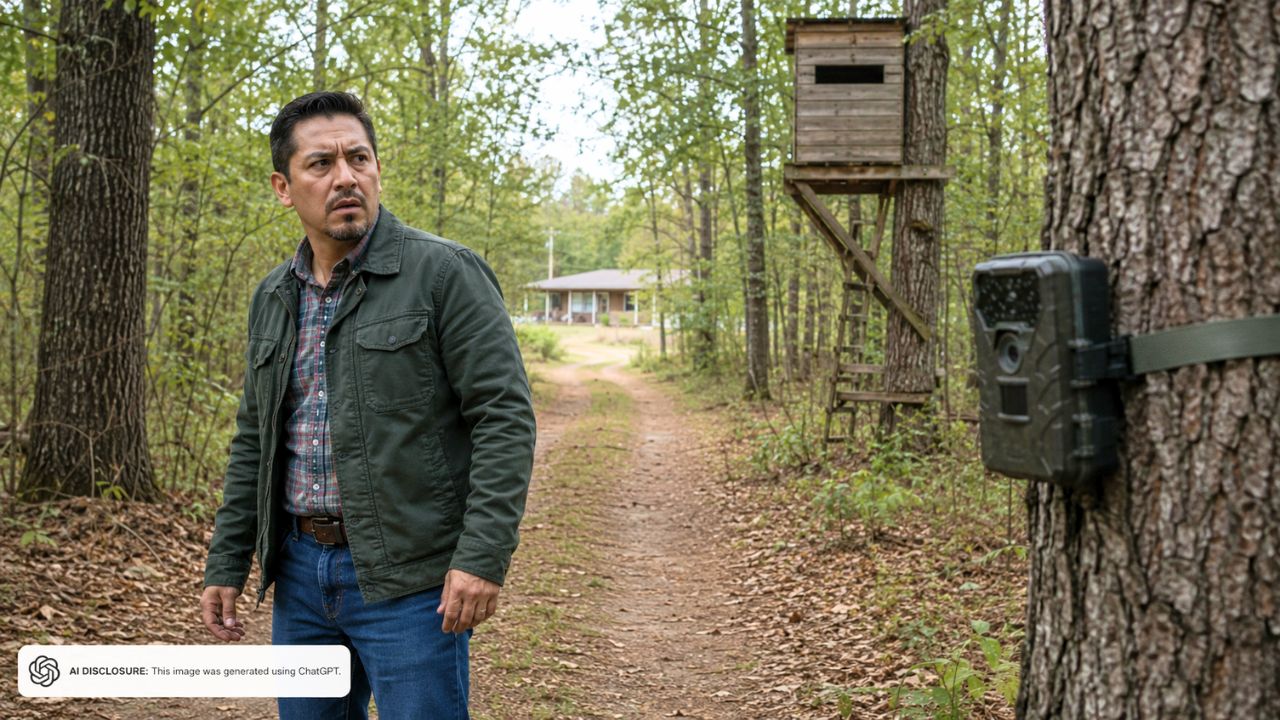
It’s one thing to catch boot tracks or see a cut fence. It’s another thing to walk your own ground and find a deer stand sitting there like it belongs—trees dropped, lanes cleared, and somebody acting comfortable on property that isn’t theirs. That’s the situation a landowner described in the original post after being pointed in this direction by other hunters.
In his case, the stand wasn’t the only problem. To get it set, several trees were removed. Then the trespassers went further, cutting a shooting lane roughly 100 yards long and about 5 feet wide through a section that was largely white oak, poplar, cherry, and red maple. He estimated 20–30 trees total, but wasn’t sure yet, and wanted to know how to put a valuation on what was taken.
A deer stand that didn’t just “show up”
Anyone who’s hung stands knows there’s labor involved, even when you do it the right way. You scout, you pick a tree, you pack gear, you clear a couple branches, and you’re careful about safety and wind. What happened here wasn’t that. This was a full-on install, done by people who weren’t supposed to be there.
The landowner described a stand “illegally erected” on his property. That wording matters because it points to intent. Somebody didn’t accidentally wander 20 yards over a line and lean a climber against a tree for one evening—they built a setup that required cutting and removing trees.
When trespass turns into property damage
The stand itself is a trespass issue. The cutting is property damage. And that’s where situations like this get expensive fast, because trees aren’t just “wood.” They’re shade, mast, future timber value, wildlife habitat, and a long-term investment you don’t get back overnight.
What makes this especially aggravating is the scale: a shooting lane around 100 yards long and 5 feet wide. That’s not trimming a sapling that blocks a view. That’s intentionally opening a corridor so a hunter can shoot farther, cleaner, and more often. And it was done on someone else’s land.
The species list tells you this wasn’t junk timber
The landowner said the area is mostly white oak, poplar, cherry, and red maple. Any one of those can be valuable depending on size, straightness, and local markets. White oak in particular gets attention—both for timber value and because it’s prime wildlife real estate when acorns are dropping.
Even if some of what was cut was smaller growth, it still has value. A young stand of hardwoods represents years of growth and management. When someone comes in with a saw and makes choices for you—where lanes go, what gets dropped, what gets “trimmed”—they’re changing your property in a way that can’t just be undone next weekend.
Putting a dollar figure on cut trees is the tricky part
The landowner’s big question was simple: how do you apply a valuation to what’s been removed? That’s where folks get surprised. Tree valuation isn’t always just “board feet times price.” Depending on where you live and what kind of claim you’re making, the value might be tied to timber value, replacement costs, or the value of landscape trees.
But before you can even talk dollars, you need good documentation. The estimate of 20–30 trees is a start, but the details matter: species, diameter, whether they were merchantable, and whether they were cut flush, left on-site, or hauled away. Photos, measurements, and a map of the lane and stand location can turn a frustrating story into something that can actually be acted on.
The part hunters should care about: safety and shooting lanes
There’s a reason most ethical hunters don’t like trespassers, even when there’s no money involved. Unknown shooters in the wrong place create bad situations. A 100-yard shooting lane carved through hardwoods is designed for one thing: sending bullets or arrows through an opened corridor with fewer obstructions.
On private ground, you control where that lane is pointed, what the backstop looks like, and what’s beyond it. When someone else cuts that lane, you don’t know what they considered “safe,” and you don’t know how often they planned to sit that stand. Even without getting into the details of the headline angle, the idea of someone setting up a surveillance-style hunt on private property raises the hair on the back of your neck for a reason.
What a grounded response looks like
There’s always a temptation to handle this kind of thing the “old way.” Don’t. Unknown trespassers who are bold enough to build a stand and cut lanes are bold enough to come back. The smart play is to treat it as both a land-management issue and a legal issue, and to keep your own safety at the front of the decision.
Practically, that means documenting everything before it’s disturbed further, keeping records of what you find, and bringing in the right professionals if you’re trying to establish damages. It also means thinking hard about access points, gates, signage, and how you monitor the property going forward—because once someone has invested time into a stand site, they tend to return to it.
At the end of the day, most hunters work too hard and care too much about the resource to pull this kind of stunt. But it only takes one group of bad actors to leave a landowner with a chopped-up woods line, a lane cut through good hardwoods, and a nagging worry about who’s watching and when they’ll be back. If you own rural ground, it’s a good reminder: walk your property, pay attention to fresh cutting, and don’t ignore small signs that somebody is getting comfortable where they shouldn’t be.
Like The Avid Outdoorsman’s content? Subscribe to our newsletter so you never miss an article.
Here’s more from us: