Photo credit: AI-generated image created using ChatGPT. Illustrative only
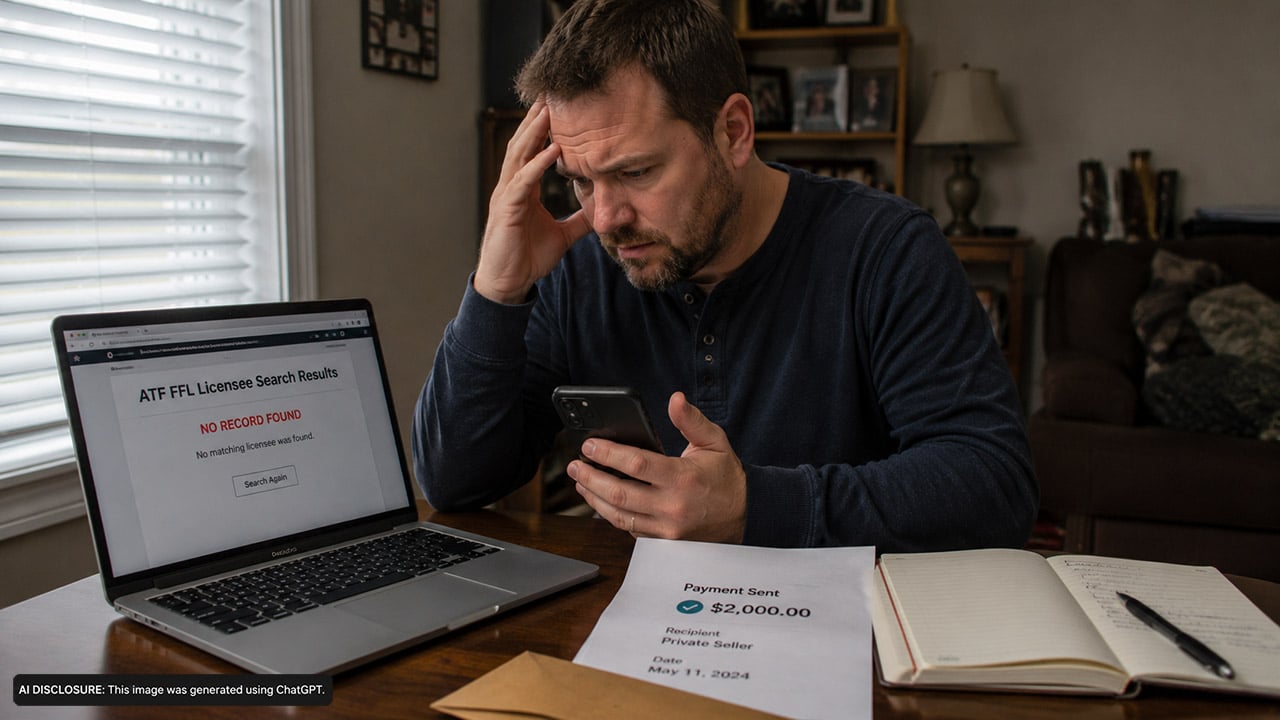
Ordering a pistol online is supposed to be simple: pay, ship to your local FFL, do the paperwork, and go home. But one 22-year-old in Illinois says his $2,000 purchase turned into a long, quiet stall that’s now pushing two years with no firearm in hand and no real answers.
In the original post, the buyer explains he paid in full back in February of last year, then got stuck in a loop of vague “delays” and shifting explanations. Lately, the seller has stopped responding altogether, and the buyer says even the ATF-related information he tried to verify didn’t check out—another red flag that the whole deal may be smoke and mirrors.
A delayed gun order that never seems to arrive
The buyer says he purchased a firearm through a local gun store’s website and paid the full amount up front. He expected the normal wait—maybe a backorder, maybe shipping issues—but not a timeline stretching into months and then nearly two years.
What makes this kind of situation especially frustrating for gun owners is that you can’t just “swap shipping addresses” or get creative like you might with boots or a scope. Firearms are controlled, transfers have to go through proper channels, and most buyers are trying to do everything clean and by-the-book. That leaves you dependent on the seller being legitimate and responsive.
The pattern other customers described
One of the biggest warning signs in the post is that the buyer says he spoke with other previous customers who described the same cycle: order online, get strung along with repeated delays, and eventually get worn down enough to accept “in store credit” just to be done with it.
According to the buyer, the shop won’t issue refunds—only store credit equal to the amount originally paid. And the way he tells it, that credit often ends with the customer taking home a lesser product than what they originally ordered, simply because they’ve run out of patience and want something—anything—for their money.
The excuses tightened, then the communication stopped
The buyer says the last time he spoke with the owner—about a month before posting—he was told the pistol was “in the warehouse” in a town about 10 minutes away. That’s the kind of detail meant to calm you down. It sounds close. It sounds concrete.
But when the buyer asked another gun store owner in that same town about this supposed warehouse, he says he was told there is no such warehouse used to hold the seller’s firearms. After that, communication went dark: no returned calls, no texts, no emails. The buyer even left a note on the door asking for a call back, and later noticed the note was gone without any follow-up.
Red flags that go beyond slow shipping
Delays happen. Distributors run out. Manufacturers fall behind. Anybody who’s tried to find a specific pistol, a left-handed rifle, or a particular load during the last several years knows that. But the buyer describes a pile of “sketchy” behavior that doesn’t line up with normal backorder headaches.
He claims the owner removed the company name from his license plate and replaced it with a standard randomized plate. He also says the doors are always locked even when the owner’s truck is parked outside—and then the truck stopped being parked in front and started showing up across the street instead. On top of that, locals allegedly told the buyer the owner is behind on payments, which would fit the ugly theory that the pistol may have never been ordered in the first place.
Why this hits gun owners harder than a normal online purchase
When a seller strings you along on a regular online order, you can usually charge back the card, dispute the transaction, or at least get a clean paper trail going fast. Firearms purchases can get complicated, especially if the seller is also the FFL, is acting as the broker, or is claiming the gun is tied up somewhere in the supply chain.
And there’s a practical safety side to this too. A buyer looking for a pistol may have planned on it for home defense, a carry setup, training, or simply to match magazines and ammo they already have. When $2,000 gets frozen in place, it can derail plans and push people toward rushed decisions—like settling for something they didn’t really want, just to walk away with a box in their hand.
What options the buyer appeared to be looking at
The post frames the situation as a small-claims problem, and that makes sense from a regular-guy perspective: you paid money, you didn’t receive the product, and the business isn’t making it right. The buyer also seemed worried the shop could close and disappear, leaving him with nothing but a receipt and a bad lesson.
He wanted people to review the store’s policies, and he was clearly weighing how to push back when the seller won’t respond and insists “no refunds.” In the real world, that’s often where folks start gathering documentation—receipts, emails, screenshots of the listing, and records of contact attempts—because once a business stops answering, the only thing that matters is what you can prove.
If there’s a clean takeaway for outdoorsmen and gun owners, it’s this: when a firearm deal starts to feel like it’s built on delays and excuses, treat it like a ticking clock. Don’t let weeks turn into months without written updates, and don’t accept store credit as your only option just because a seller says so. A reputable shop can explain where the gun is, who has it, and when it’s expected—without disappearing when you ask for specifics.
Like The Avid Outdoorsman’s content? Subscribe to our newsletter so you never miss an article.
Here’s more from us: