Photo credit: Martin Poirier/Shutterstock.com
Public land gives hunters a lot of freedom, but that freedom comes with rules that are easier to overlook than people think. A lot of hunters get in trouble not because they were trying to poach or start problems, but because they assumed public land means anything goes. It does not. Different tracts can have their own access rules, vehicle restrictions, permit requirements, and area closures on top of regular hunting laws. Hunter-ed guidance warns that public lands may have special regulations and may require special permits, and both the BLM and U.S. Forest Service tell hunters to check site-specific rules before heading out.
The hunters who stay out of trouble on public land are usually not doing anything fancy. They just do the boring stuff first. They check maps, read the rules, know how they are getting in, and understand that one public tract may be managed very differently from another. Most mistakes happen when somebody skips that part and figures they will sort it out once they get there.
Assuming public land is open the same way everywhere
This is one of the fastest ways to mess up. A hunter finds a big block of public ground on a map and assumes it is all open, all accessible, and all fair game. Sometimes it is not. Hunter-ed materials note that public lands can have special regulations and permit requirements, while the Forest Service says some areas on forests and grasslands may be off limits to hunting.
That means the smart move is always checking the actual tract, not just the category of land. “Public” does not automatically mean open from every road, every gate, or every season. Some places are walk-in only. Some have restricted access routes. Some close certain sections altogether. If you skip that homework, you can end up in trouble before the hunt even starts.
Driving where you are not supposed to drive
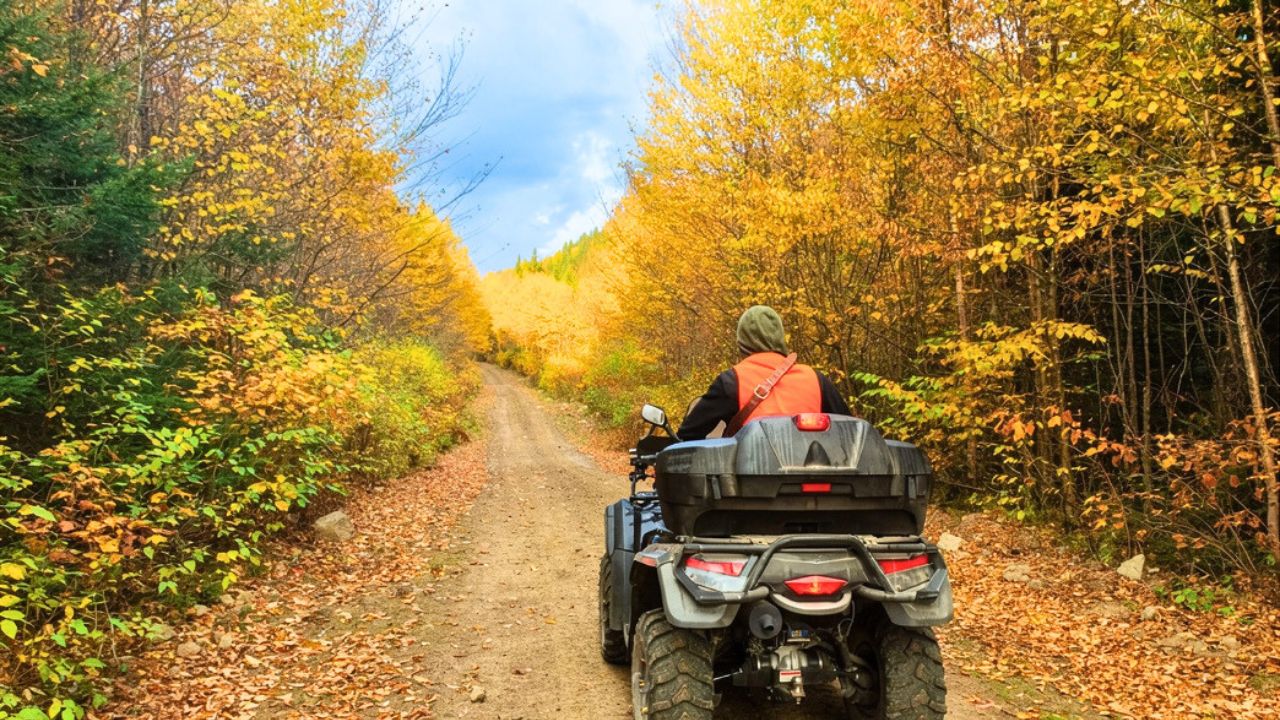
This one gets people every year. They see a two-track, an old road, or a shortcut that looks usable and assume it is fine because they are on public ground. A lot of the time, it is not fine at all. The BLM says OHV use is regulated on roads, trails, and lands under its jurisdiction, and the Forest Service says hunters should remain on designated ATV and OHV trails only and not travel off the forest road system with vehicles.
That matters because vehicle violations pile up fast. Now you are not just hunting. You are damaging ground, ignoring route designations, or blocking access for other people. A lot of hunters think the main risk is getting stuck. The real risk is that you just turned a normal hunt into a citation.
Blocking gates, roads, or access points
A surprising number of hunters create problems before they even shoulder a pack. They park in a hurry, leave a truck where it “should be fine for a few hours,” and block a gate or part of a road without thinking much about it. The Forest Service specifically tells visitors not to block gates, because emergency access may be needed, and to park off the traveled portion of the road.
This is the kind of mistake that makes everybody mad fast. Other hunters remember it. Land managers notice it. And if someone needs through access, it turns from annoying to serious in a hurry. Public land works better when people stop acting like their truck is the center of the whole place.
Entering public land the wrong way
A lot of hunters focus on where the public tract is and not on whether they can legally get to it. That is where problems start. Hunter-ed guidance for Wyoming says legally accessible public land generally must be reached by a public road, navigable water, or by walking from other legally accessible public or state land.
That means you cannot just cut across private ground because it is the shortest route to the back side of a public parcel. It also means you need to know exactly where the access is before daylight, not after you are already halfway in. Plenty of public-land trespass problems start with a hunter who technically intended to hunt legal ground but got there the wrong way.
Ignoring local maps and site rules
This one sounds basic, but it catches people constantly. The BLM says hunters should consult recreation maps and contact the local office for area-specific conditions, and Hunter-ed says official state publications, agency websites, access guides, and mapping tools are key resources for legal hunting information.
A paper map, downloaded layer, or motor vehicle use map is not overkill. It is how you avoid wandering into closures, using the wrong road, or hunting the wrong side of a boundary. On public land, a lot of mistakes come from not knowing where you actually are. Guys think they need better boots or a new pack when half the time what they really need is better map discipline.
Treating public land like nobody else matters
This is more than etiquette. It affects safety too. Crowding another hunter, cutting in too close, blasting down a road before daylight, or acting like your plan matters more than everyone else’s is how simple public-land days turn ugly. Hunter-safety guidance emphasizes always knowing where others are and maintaining a safe zone of fire, and state agencies routinely remind hunters to avoid crowding and unsafe behavior on shared ground.
The truth is, public land is shared ground by definition. If you act like you are the only one using it, trouble shows up quick. Sometimes that trouble is just a ruined hunt. Sometimes it is a much bigger deal.
The hunters who stay out of trouble plan ahead
Most of the mistakes that get people jammed up on public land are preventable. Check the tract. Check the access. Check the roads. Check the closures. Know where you can park and how you are getting in and out. The Forest Service says to follow state hunting laws and local restrictions, while the BLM says access and use can vary by area and should be checked before the trip.
That is really the difference. The hunters who get in trouble usually assume public land is simple. The hunters who keep enjoying it year after year know it is not simple, and they prepare like it is not. That extra bit of homework is usually what keeps a good hunt from turning into a dumb mistake.
Like The Avid Outdoorsman’s content? Subscribe to our newsletter so you never miss an article.
Here’s more from us: