Photo credit: seeetz/Unsplash
Most people build their carry setup the same way they pick a pair of boots for a long day. They prioritize what feels good right now. They choose a gun that doesn’t dig into their side, a holster that doesn’t pinch, a belt that doesn’t feel stiff, and a position that lets them sit in the truck without adjusting anything. Then they tell themselves they’re “ready,” because the gun is technically on them. The problem is that comfort doesn’t automatically equal capability, and when the situation turns real, comfort is not the standard you’re being graded on. The setup either works when you need it, or it doesn’t, and a lot of comfortable carry rigs fall apart when you actually try to move, draw, fight, or retain the gun under stress.
This isn’t about carrying a miserable setup just to prove something. It’s about understanding what survival actually demands from a concealed-carry rig. Survival means the gun stays on you, stays accessible, stays secure, and can be brought into the fight fast from real clothing, in real positions, with your heart rate up. That’s a much higher bar than “it doesn’t bother me when I’m sitting.” Comfort matters, because if it’s unbearable you won’t carry it. But if comfort is your only filter, you’ll end up with a setup that’s pleasant in normal life and questionable when the day goes bad.
Comfort-driven choices usually create slow draws and weak access
The first place comfort priorities show up is access. People choose deep concealment positions, soft holsters, low-ride setups, or loose cover garments because they’re comfortable and discreet. Then they try to draw quickly and realize the gun is buried, the grip is hard to establish, or clothing gets trapped between hand and frame. In a calm environment, you can fix that with two hands, a little patience, and a couple re-grips. Under stress, you don’t get those luxuries. If your setup requires perfect conditions to draw cleanly, it’s not a survival setup. It’s a “hope nothing happens” setup.
This is why so many people practice draws once, feel clumsy, and then quietly stop practicing. The rig doesn’t support a clean, consistent draw, so practice becomes frustrating. Rather than change the rig, they change the behavior: they stop testing it. That’s how bad setups survive. They feel fine during daily life, and they never get challenged until it matters. A good carry setup is one you can access from a seated position, from a compromised stance, with one hand if needed, and still get the gun out without fighting the holster.
Soft belts and “comfy” holsters create movement and instability
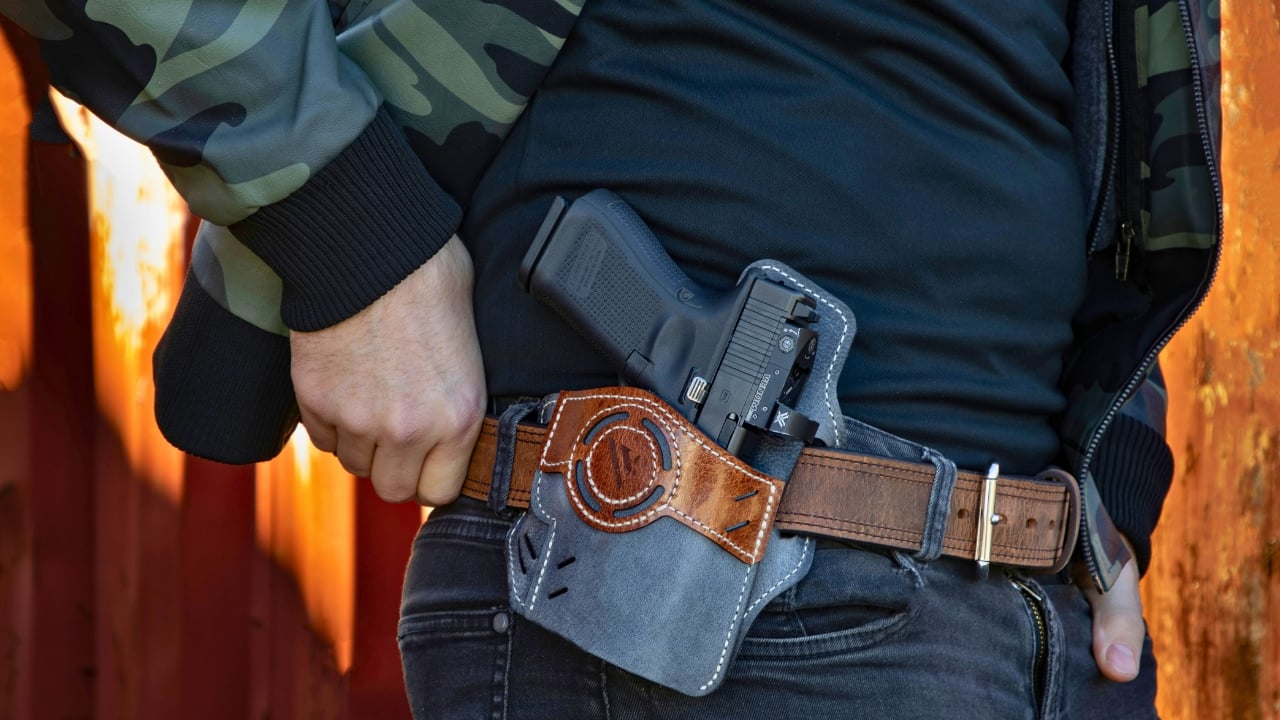
Comfort also pushes people toward softer belts and softer holsters. That feels nice, especially for all-day wear, but it creates a hidden problem: instability. If the gun shifts, tips outward, or rides differently every time you move, your draw becomes inconsistent. Inconsistency is what gets people tangled up. A rigid belt and a properly designed holster keep the gun in the same place all the time. That’s what makes draws repeatable. When your setup is floppy, your grip changes. Your angle changes. Your timing changes. That’s the kind of small issue that doesn’t show up when you’re standing still at home, but it shows up immediately when you’re getting in and out of vehicles, wrestling with a jacket, or moving quickly.
This is also where “printing fear” drives bad choices. People choose rigs that let the gun melt into their body, but the tradeoff is often that the grip becomes harder to acquire and the holster collapses or shifts. A survival setup has to hold its shape and hold its position. If the holster collapses when the gun comes out, you’ve made reholstering a two-handed operation, which can be a safety issue. If the gun flops around during movement, you’ll subconsciously adjust it all day, which is not discreet and not smart.
People optimize for sitting, not for moving
A lot of carry setups are built around car comfort. People drive, sit at desks, sit on couches, and the setup that feels best while sitting often compromises everything else. Appendix carry can be extremely effective when done correctly, but many people shift it too low or too centered because it feels better, then they can’t get a clean grip. Strong-side carry can be comfortable, but people position it in ways that are hard to access when seated or when pinned against something. Small-of-back can feel comfortable until you fall, twist, or need to draw while moving. Comfort-based decisions are often made in a chair, not on your feet.
Survival is movement. If you can’t run, bend, climb, or fight without the gun shifting or exposing itself, you’ve built a lifestyle setup, not a survival setup. The gun has to stay put. It has to be accessible when you’re hunched, when you’re on the ground, when you’re carrying something with your support hand, and when your clothing isn’t perfectly arranged. That means the rig has to be tested in the positions you actually live in, not just worn while you scroll your phone.
Retention and security get ignored because they’re inconvenient
Comfort carry often sacrifices retention. People choose minimal holsters, loose clips, or cheap setups because they’re light and comfortable. The problem is that retention matters when things get physical. If someone grabs you, if you fall, if you’re in a scuffle, a loose setup can turn into a lost gun. That’s not just embarrassing. That’s dangerous. A survival setup keeps the gun secure even when you’re moving hard, sweating, or getting knocked around.
Security also includes the way the gun is concealed. If you print badly, you draw attention. If you adjust your gun constantly because it’s uncomfortable or shifting, you draw attention. Comfort-first rigs often lead to constant micro-adjustments, which people don’t even realize they’re doing. In real life, that’s one of the biggest tells. The goal is a setup that disappears without you babysitting it. That usually requires more structure, not less.
Training exposes the truth, which is why people avoid it
If you want to know whether a carry setup is built for survival, train with it. Not once. Regularly. Draw from concealment. Do it from standing, sitting, and moving. Do it with your normal clothes. Do it when you’re slightly out of breath. Comfort-first setups start showing cracks immediately. The draw gets hung up. The holster shifts. The grip is inconsistent. The belt rolls. The muzzle sweeps something you don’t want it to. Those problems don’t show up when you simply wear the gun around the house. They show up when you try to use it.
A lot of people know this, which is why they don’t train from concealment. They’ll shoot at the range from a low ready all day and tell themselves they’re practicing. That’s fine for marksmanship, but it’s not testing the carry system. The carry system is what gets the gun into the fight. If you never test that system, you’re trusting your life to something you’ve never proven works under real constraints.
A survival setup is a balance, but the balance has to favor function
The goal isn’t misery. The goal is function that you can live with. A survival setup is the one you will actually carry, but also the one that gives you reliable access, stable positioning, and secure retention. That usually means a quality holster with real structure, a belt that supports the weight, and a carry position you can draw from even when life isn’t perfect. It means accepting that a little discomfort is normal, and that some “comfort” is actually just sloppiness disguised as preference.
If your setup only works when you’re standing straight in a t-shirt with both hands free, it’s not a survival setup. If it works when you’re seated, twisted, moving, and distracted—then you’ve built something real. Comfort matters because carry has to be sustainable, but comfort can’t be the boss. The boss is function. If you want survival, you choose a setup you can live with that still works when life gets ugly.
Like The Avid Outdoorsman’s content? Subscribe to our newsletter so you never miss an article.
Here’s more from us: