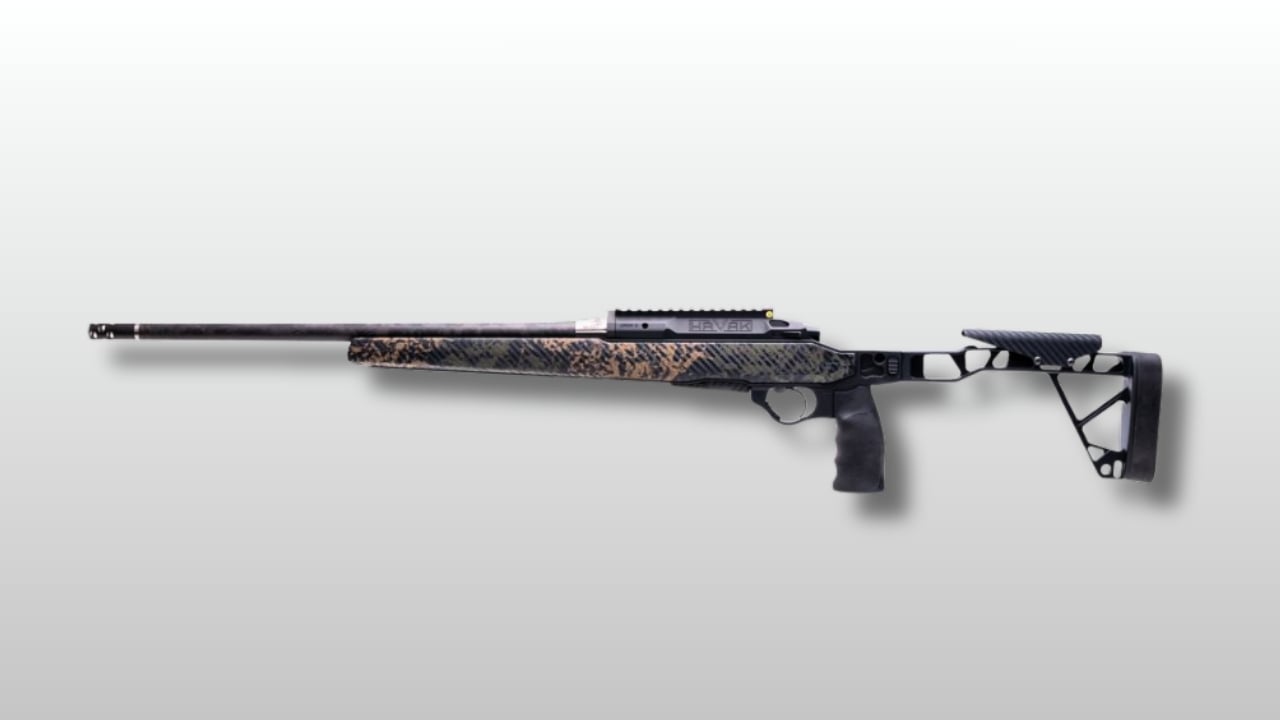
Photo credit: Seekins Pecision
The Seekins Element Hunter gets talked about a lot in the same breath as lightweight mountain rifles and precision builds, and that combination can confuse people about what the rifle is really meant to do. Some see the weight savings and assume it’s a specialist tool for extreme terrain only. Others see the branding and expect a bench-rest personality in a hunting package. Both takes miss the point. The Element Hunter wasn’t built to chase specs or impress on paper. It was built for hunters who carry their rifle all day, shoot from imperfect positions, and expect the rifle to behave the same way every time without needing constant attention.
That intent shows up once you stop looking at the rifle as a collection of features and start looking at how it behaves over a full day in the field. It’s not trying to be the lightest rifle ever made, and it’s not trying to be a competition rig in disguise. It’s trying to live in the middle ground where real hunting happens. That middle ground is where most rifles either get annoying or get exposed, and that’s where the Element Hunter quietly does its best work.
It’s built for carry comfort without turning into a recoil problem
One of the hardest balances to strike in a hunting rifle is weight versus shootability. Go too heavy and the rifle becomes a chore by mid-afternoon. Go too light and recoil, wobble, and bad habits start creeping in. The Element Hunter sits in that zone where the rifle is light enough to carry without resentment, but not so light that it punishes you every time you break a shot. That balance matters more than people admit, especially late in the day when fatigue shows up and your tolerance for annoyance drops fast.
A rifle that carries well stays in your hands more often. It comes up faster, settles quicker, and doesn’t make you rush just to get the shot over with. That’s what the Element Hunter was actually designed around. It’s meant to be comfortable enough that you don’t dread another mile, and stable enough that when you do get a shot opportunity, you’re not fighting the rifle. That combination does more for real-world accuracy than shaving the last few ounces ever will.
The action and trigger are tuned for field consistency, not bench drama
Another place people misunderstand this rifle is in how the action and trigger feel. The Element Hunter isn’t built to feel flashy or hyper-tuned in a way that only makes sense from a bench. It’s built to feel consistent when your hands are cold, when you’re wearing gloves, and when you’re shooting from something less than ideal. The bolt lift, the feed behavior, and the trigger break are all geared toward predictability rather than impressiveness.
That predictability is what matters when you’re trying to stay quiet, chamber a round smoothly, or break a clean shot without overthinking it. A trigger that’s technically “better” on paper isn’t better if it surprises you in the field or feels different when conditions change. The Element Hunter’s trigger setup leans toward control and familiarity, which is exactly what most hunters actually need once the adrenaline hits. It’s meant to disappear into the process instead of demanding attention.
It’s designed to shoot well from real positions, not just ideal ones
A lot of rifles can shoot tight groups from a bench. Far fewer feel good from kneeling, sitting, or awkward rests where your body is doing more of the work. This is where the Element Hunter’s stock geometry and balance start to make sense. It’s shaped to support natural shooting positions and repeatable cheek weld without forcing you into a single “perfect” posture that only exists on the range.
When a rifle fits well, your body doesn’t have to fight it. That matters when you’re braced against a tree, resting on a pack, or shooting off uneven ground. The Element Hunter was clearly built with that kind of use in mind. It encourages a stable position without requiring accessories or constant adjustment. That’s not accidental. It’s the difference between a rifle that looks good in photos and one that actually helps you execute when the terrain refuses to cooperate.
It favors reliability and simplicity over constant tinkering
Another thing the Element Hunter does well is stay out of its own way. It isn’t loaded down with adjustments that tempt you to tinker every time something feels slightly off. The design assumes you’ll zero it, confirm it, and then leave it alone. That philosophy matters more than people realize, because constant tinkering kills confidence. Hunters who do best with this rifle tend to set it up once and then put their time into shooting it instead of modifying it.
That simplicity also helps reliability. Fewer moving parts, fewer adjustable interfaces, and fewer add-ons mean fewer things to shift or loosen over the course of a season. When a rifle keeps behaving the same way week after week, you stop thinking about the rifle and start focusing on the hunt. That’s what the Element Hunter was built to encourage: trust through repetition, not trust through specs.
It shines when paired with a sensible optic and nothing extra
The Element Hunter really comes into its own when it’s paired with an optic that matches its purpose. This isn’t a rifle begging for giant glass or exposed turrets that turn every shot into a math problem. It works best with a straightforward scope that’s clear in low light, forgiving on eye position, and reliable enough that you don’t question it. Keep the setup clean and balanced, and the rifle feels cohesive instead of front-heavy or awkward.
This is where a lot of hunters go wrong. They over-scope the rifle and undo the balance it was designed around. A lighter, simpler optic often makes the whole system feel faster and more intuitive. Places like Bass Pro and Scheels carry plenty of hunting-oriented scopes that fit this mindset, and the key isn’t the brand so much as the restraint. When the optic complements the rifle instead of dominating it, the Element Hunter feels like it’s doing exactly what it was meant to do.
It’s built for hunters who value repeatability over novelty
The kind of hunter the Element Hunter is built for isn’t chasing the newest trend every season. It’s built for the hunter who wants a rifle that behaves the same way on day ten as it did on day one. That kind of consistency builds confidence, and confidence shows up as better decisions and cleaner shots. You don’t hesitate. You don’t second-guess. You know what the rifle will do because you’ve lived with it long enough to trust it.
That trust matters more than raw performance numbers. A rifle that shoots slightly tighter groups but feels different every time you shoulder it is less useful than a rifle that feels familiar in every position. The Element Hunter leans hard into that philosophy. It’s not flashy. It’s dependable. And dependable is what keeps showing up in successful camps year after year.
Where the rifle can disappoint the wrong buyer
The flip side of this design is that it can disappoint people who want a rifle to constantly “do more.” If you’re the kind of shooter who enjoys dialing for every shot, swapping components, or experimenting endlessly with setups, the Element Hunter may feel a little restrained. It’s not trying to be a modular experiment platform. It’s trying to be a hunting rifle that works as-is.
That doesn’t make it limited. It makes it focused. The disappointment only shows up when expectations don’t match intent. Hunters who understand what the rifle was built for tend to appreciate it more over time, not less. Hunters who want a different experience sometimes move on quickly, not because the rifle failed, but because it refused to be something it was never meant to be.
Like The Avid Outdoorsman’s content? Subscribe to our newsletter so you never miss an article.
Here’s more from us: