Photo credit: Magnum Ballistics/GunBroker
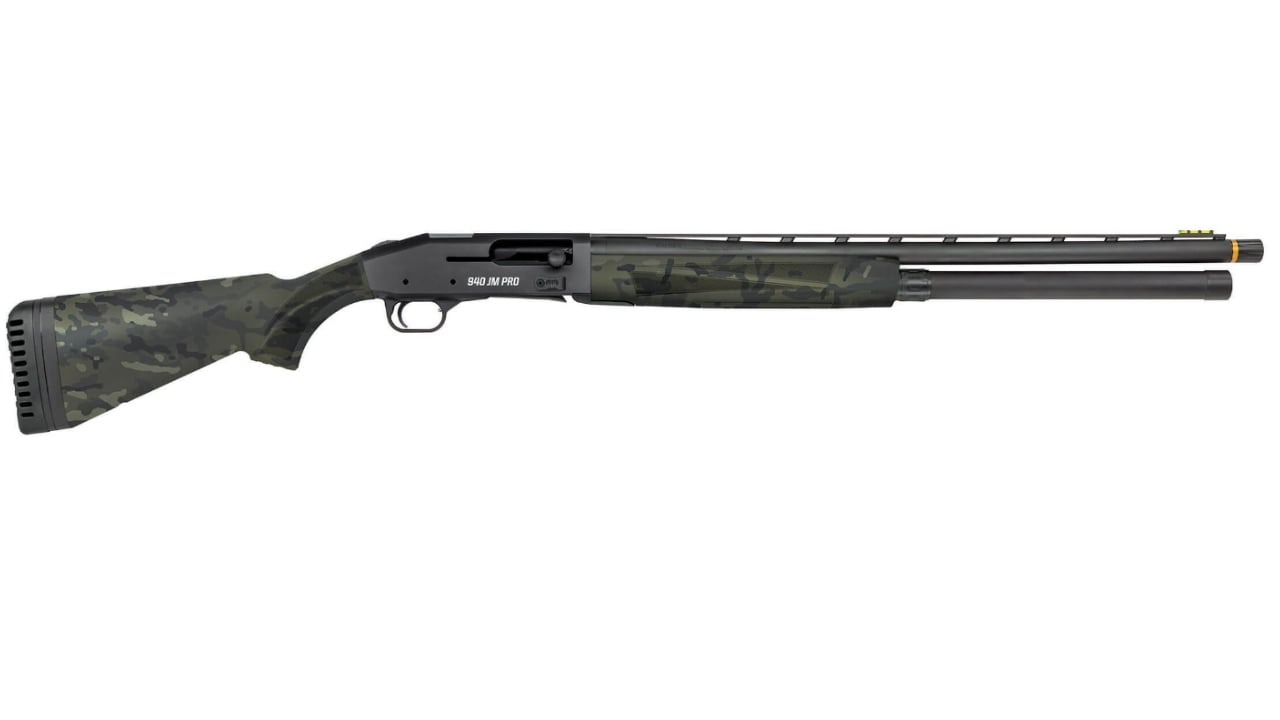
The Mossberg 940 JM Pro was built with competition in mind, and that changes the way people judge it. A hunting shotgun can get away with being a little slow or picky as long as it fires when needed. A competition shotgun gets judged by how fast it loads, cycles, ejects, and stays running through high round counts. When something goes wrong, shooters notice it fast.
The 940 JM Pro is a gas-operated 12-gauge with competition-focused features like an enlarged loading port, elongated elevator, quick-empty magazine release, adjustable stock, extended magazine capacity, and Briley choke tubes. Mossberg also advertises the 940 Pro line with a cleaner-running gas system and corrosion-resistant internal parts meant to stretch cleaning intervals. That is a strong setup, but it is still a semi-auto shotgun. Most of the common problems come down to feeding, ejection, extraction, shell-release timing, light-load cycling, and maintenance.
Failure to Feed
Failure to feed is one of the more common complaints you’ll see with the Mossberg 940 JM Pro. The shell may leave the magazine tube but hang before chambering, ride at a bad angle, or get caught as the bolt moves forward. Some owners describe the gun firing one round, cycling, and then jamming the next shell instead of feeding it cleanly. That is exactly the kind of problem that will ruin a stage in a hurry.
This can come from several places. The magazine spring, follower, shell stop, lifter timing, ammo length, and overall cleanliness of the gun can all affect feeding. Some owner reports mention failures where a live round would not feed all the way and got stuck, even alongside ejection issues. That does not mean every 940 JM Pro will do it, but feeding is one of the first things to watch during early range time.
Failure to Eject
Failure to eject is another recurring complaint with the 940 JM Pro. The gun fires, the bolt cycles, but the spent hull does not clear the receiver properly. It may stovepipe, bounce around in the action, or get caught before the next shell can feed. On a gas semi-auto, that usually means something in the cycle is not happening with enough speed, force, or consistency.
A few things can cause it. Light target loads may not drive the action hard enough, especially in a new or dirty gun. A fouled gas system, dirty chamber, rough hulls, weak ammo, extractor issues, or ejector trouble can all play a part. Owner reports on 940 JM Pro ejection failures often mention the problem appearing during range sessions with target loads, which makes load selection worth checking before assuming the shotgun itself is junk.
Failure to Extract
Failure to extract is a little different from failure to eject. In this case, the spent hull stays in the chamber or does not come out far enough for the ejection cycle to finish. The gun may try to cycle and then jam because the old hull is still in the way. That is one of the more annoying semi-auto problems because it stops the gun cold.
This can happen with cheap shells, swollen hulls, a dirty or rough chamber, extractor wear, or a shotgun that is cycling weakly. Mossberg’s manual for the 940 autoloading shotgun warns that all auto-loading firearms can occasionally have ammunition-feeding jams and tells users to use new commercial ammunition made to SAAMI standards. That is worth keeping in mind because semi-auto shotguns are usually less forgiving of questionable ammo than pump guns.
Double-Feeds
Double-feeds show up when the shotgun releases shells out of order and more than one shell tries to occupy the action at once. Instead of one shell landing on the elevator and feeding into the chamber, a second shell gets involved and locks everything up. In a competition gun, that is more than a minor annoyance because clearing it burns time and breaks rhythm.
On the 940 JM Pro, double-feeds usually point toward the shell stop, interrupter, magazine spring, follower, or shell-release timing. Some owner reports mention double-feeds along with ejection and feeding trouble, which makes sense because these systems all work together. If the gun is releasing shells inconsistently, the problem may not be one single part. It may be timing, tension, dirt, ammo length, or a part that needs adjustment or replacement.
Cycling Problems With Light Loads
The 940 JM Pro is a gas semi-auto, so light-load cycling deserves its own mention. Some shotguns run cheap target shells fine. Others need more break-in, more lubrication, or stronger loads before they become consistent. If the bolt does not travel far enough rearward, the gun may fail to eject, fail to cock, or fail to pick up the next shell.
This is not unique to the 940 JM Pro. Semi-auto shotguns are always somewhat dependent on shell power. A gun built for competition still needs enough gas and recoil impulse to complete the cycle. If it runs buckshot, heavier birdshot, and quality shells but chokes on bargain light loads, the ammo may be the bigger issue. But if it struggles across light and heavy loads, then the gas system, chamber, bolt, and shell-control parts need a closer look.
Shells Hanging Up During Loading
Because the 940 JM Pro is built for competition, the loading port and elevator matter a lot. Mossberg designed the gun with an enlarged loading port and elongated elevator to make fast loading easier. That is a major selling point for 3-gun shooters, but shells can still hang up during loading if the shooter angle is off, the shell stop is stiff, the follower drags, or the magazine tube is dirty.
This problem may not show up as a firing malfunction. It shows up when the shooter is trying to load fast and the shell does not glide into the tube cleanly. The rim may catch, the shell may resist going past the stop, or the loading motion may feel rough. Some of that is technique, especially with quad-loading. But if loading stays rough even when done slowly, the magazine tube, follower, shell stop, and loading port area deserve attention.
Gas-System Fouling
Mossberg advertises the 940 Pro line as having a durable gas system that can go up to 1,500 rounds between cleanings. That sounds great, and it is a major part of the 940’s appeal. But “up to” still depends on ammunition, weather, lubricant, round count, and how dirty the gun gets during real use. A competition shotgun can eat a lot of shells fast, and carbon buildup eventually matters.
When the gas system starts getting sluggish, the problems usually show up as weak cycling, failures to eject, failures to feed, or random stoppages that get worse as the gun gets dirtier. Some shooters assume a gas gun should run forever because the marketing says it runs cleaner. That is not how shotguns work. The 940 JM Pro may have longer cleaning intervals than older designs, but it still needs maintenance if it is being shot hard.
Magazine Spring or Follower Problems
The 940 JM Pro’s extended magazine setup is part of what makes it useful for competition, but it also adds another place for problems to start. If the magazine spring is weak, kinked, dirty, or not giving enough pressure, shells may not move fast enough toward the receiver. If the follower drags inside the tube, the shell stack can slow down or hang up.
This can cause failure-to-feed problems that look like a bolt or lifter issue at first. The bolt cycles, but the next shell does not get where it needs to be in time. Competition shooters who load and unload constantly also put more wear and attention on the magazine system than the average bird hunter ever will. If a 940 JM Pro feeds inconsistently, the magazine tube, spring, follower, and extension should be checked before chasing more complicated problems.
Like The Avid Outdoorsman’s content? Be sure to follow us.
Here’s more from us: