
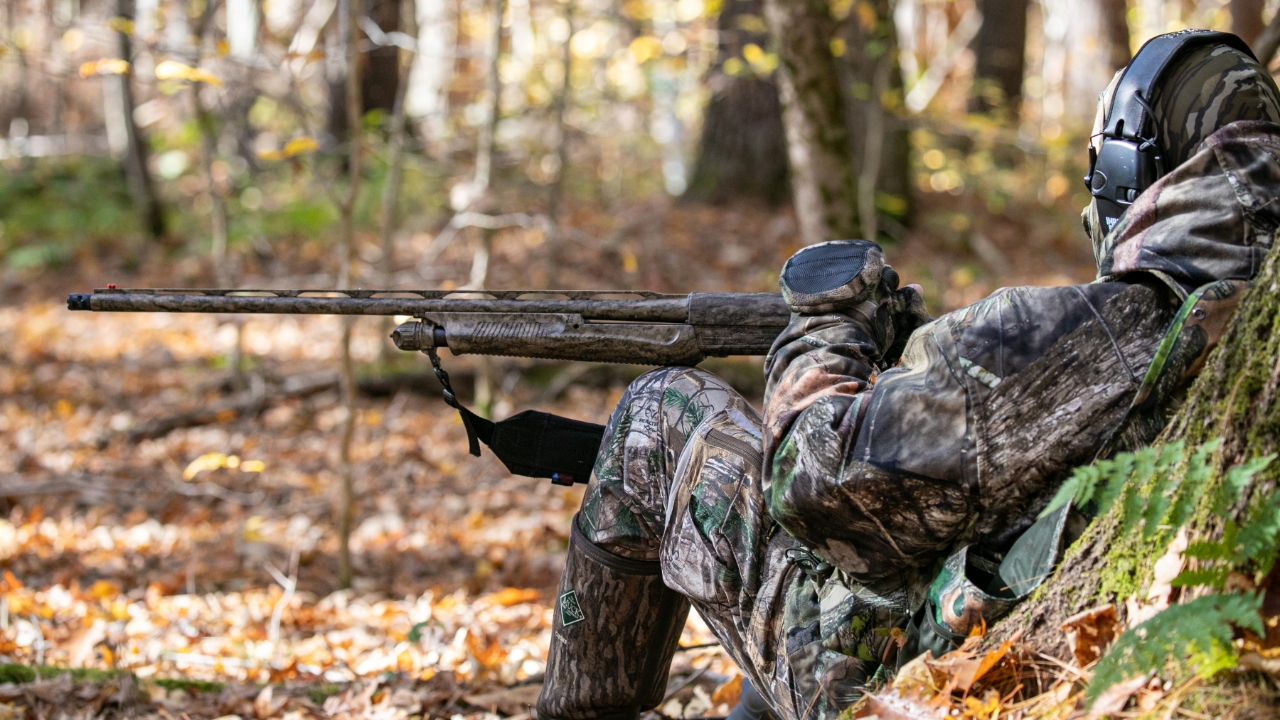
Photo credit: CHRISTINA RADCLIFFE/Shutterstock.com
Finding another hunter sitting near your stand can make your blood pressure jump in a hurry. You did the scouting, hung the stand, trimmed the lane where legal, checked the wind, and slipped in early thinking you had a plan. Then you get close and realize someone else is already there. Maybe he’s sitting on the ground nearby. Maybe he’s tucked into a tree close enough to affect your setup. Maybe he didn’t even know your stand was there until daylight.
That moment can go bad fast if you let anger make the call. A stand on public land or shared hunting ground does not automatically reserve the area around it. Even on private land, there may be lease members, guests, neighbors, or people with permission you didn’t know about. Before you assume the worst, slow down, figure out what you’re actually dealing with, and keep safety ahead of pride.
Stop before you walk right into the setup
The first move is to stop as soon as you notice him. Don’t keep walking toward the stand just because you planned to hunt it. If he’s already settled in and doesn’t know you’re there, barging closer can create a safety issue and turn a quiet overlap into a confrontation.
Give yourself a second to read the scene. Is he in your actual stand, or just nearby? Is he facing away from you? Does he have a firearm or bow in hand? Is it still dark? Is he close enough that you’d both be hunting the same lane? Those details matter. The goal is to avoid surprising an armed hunter at close range, especially in low light.
Make your presence known calmly
If you’re close enough that he needs to know you’re there, speak in a low, clear voice. A simple “Hunter behind you” or “I’m walking out from your left” is enough. Don’t whistle sharply, shout, or step out suddenly from behind cover unless you have no safer choice. Startling someone in the woods is never smart.
Once he sees you, keep your tone even. You can say, “I have a stand right there and was planning to hunt it this morning.” That explains the situation without accusing him of anything. Most reasonable hunters will understand the problem immediately. The way you introduce it can determine whether the conversation stays calm or turns into a stubborn argument.
Don’t open with an accusation
It’s tempting to start with, “What are you doing here?” or “You knew my stand was there.” Don’t. Even if you believe he crowded you on purpose, accusing him right away usually makes him defensive. Once both hunters feel accused, the whole conversation gets harder.
Try to leave room for the possibility that it was accidental. He may have come in from another direction, missed the stand in the dark, or picked the same travel corridor without realizing how close he was. That doesn’t mean you have to like it. It means you’re handling it like someone who wants a solution more than a fight.
Remember that your stand may not claim the spot
This part is hard for some hunters, but it matters. On most public land, hanging a stand does not give you exclusive rights to that area. Rules vary by state and property, but the basic principle is the same: public land is shared. Your gear does not create a private bubble around a tree.
That doesn’t make it respectful for someone to sit right beside your setup, especially if he clearly saw it. But “my stand is here” and “you must leave” are not always the same thing legally or practically. Before you push the issue, know the rules for that specific property. If stands must be removed daily, tagged, placed only during certain dates, or kept out of certain areas, those rules matter too.
Decide whether the hunt is already ruined
If another hunter is close enough to your stand that you’re both watching the same movement, your original hunt may already be compromised. You can sit there frustrated, climb into the stand anyway, and spend the morning annoyed. Or you can make a better decision based on what the woods are giving you.
Ask yourself whether staying creates a safety concern, whether your shooting lanes overlap, and whether your scent or movement will mess up both hunts. Sometimes the best move is backing out and going to a backup spot. That may feel unfair, especially when you did the work. But a ruined setup does not need to turn into a ruined day.
Never climb into the stand just to prove a point
If another hunter is close, don’t climb into your stand simply because it’s yours and you want to make that clear. That can put both of you in a bad position, especially if you end up above or behind him with overlapping lanes. It also raises tension because now you’re forcing the issue physically.
A stand is not worth creating an unsafe setup. If he’s too close, talk first. If the conversation doesn’t solve it, move. You can be mad about it later. You can document it if needed. But don’t put yourself in a risky shooting arrangement because you’re trying to show him he can’t push you around.
If he is in your stand, handle it differently
Finding someone near your stand is one thing. Finding someone sitting in your stand is another. If it’s your legally placed stand and someone else is using it without permission, stay calm but be more direct. “That’s my stand. I need you to climb down safely.” Keep your voice steady and do not crowd the base of the tree.
If he refuses, don’t escalate in the woods. Do not shake the stand, grab the ladder, threaten him, or try to force him down. Get out safely and contact the land manager, game warden, lease manager, or property owner, depending on where you are hunting. Someone using your stand without permission is wrong, but you still need to handle it in a way that doesn’t put anyone in danger.
Document serious problems after you leave
If the hunter is threatening, using your stand, damaging gear, harassing you, or repeatedly crowding your setup on purpose, document what happened. Write down the date, time, location, and what was said. If you can safely get a vehicle description later, that may help. Photos of damaged gear or stand placement can also matter if rules were broken.
Don’t stick a phone in someone’s face in the woods just to make a point. That often makes things worse. Document from a safe distance when it’s practical, then report the issue through the proper channel. Public land managers, game wardens, and lease holders can’t do much with vague complaints. Clear details help.
Use the moment to rethink your stand location
If people keep showing up near your stand, the location may be too obvious. Good-looking spots attract hunters. A saddle near a main trail, a clean creek crossing, a field edge close to parking, or a funnel that jumps off the map is going to draw attention. Your stand may be in a productive area, but it may also be in a predictable one.
That doesn’t mean you did anything wrong. It means pressure is part of the pattern. Look for ways to get away from obvious access, hunt less comfortable wind directions, use overlooked cover, or set up where other hunters don’t want to work as hard. Sometimes the best public land stand is not in the prettiest spot. It’s in the place most people walk past.
Have a backup plan before you need one
The worst time to create Plan B is when you’re standing in the dark, irritated, and staring at another hunter near your stand. Public land and shared leases demand backup options. You need another setup, another ridge, another pinch point, or a ground plan you can shift to without burning half the morning.
A backup plan keeps you from feeling trapped. When you have nowhere else to go, every conflict feels bigger. When you have options, you can make a smart call and keep hunting. That is often the difference between a frustrating morning and a productive one.
Don’t let one bad encounter make you reckless
It’s easy to let a situation like this get in your head. You start thinking about the other hunter instead of the wind. You rush into a new setup. You stomp through bedding cover because you’re mad. You text buddies, complain, and stop paying attention. That only lets the problem ruin more of your hunt.
Take a few minutes, reset, and make the next move carefully. Check the wind. Think about where the pressure may push deer. Use the other hunter’s presence as information. If he’s sitting near your stand, maybe you can move to catch deer skirting around him. Frustration is normal, but it doesn’t need to run the morning.
Respect works both ways
If you find another hunter near your stand, handle it the way you’d want someone else to handle it with you. Make your presence known, ask what’s going on, and keep safety first. Don’t threaten, accuse, or climb in out of spite. If it’s an honest mistake, solve it calmly. If it’s a real problem, document it and report it properly.
Hunters don’t get judged by whether everything goes perfectly. They get judged by how they act when it doesn’t. Finding someone near your stand is frustrating, but it’s also one of those moments where good judgment matters more than being right. Keep your head, protect the hunt if you can, and walk away if that’s the smarter call.
Like The Avid Outdoorsman’s content? Be sure to follow us.
Here’s more from us:


