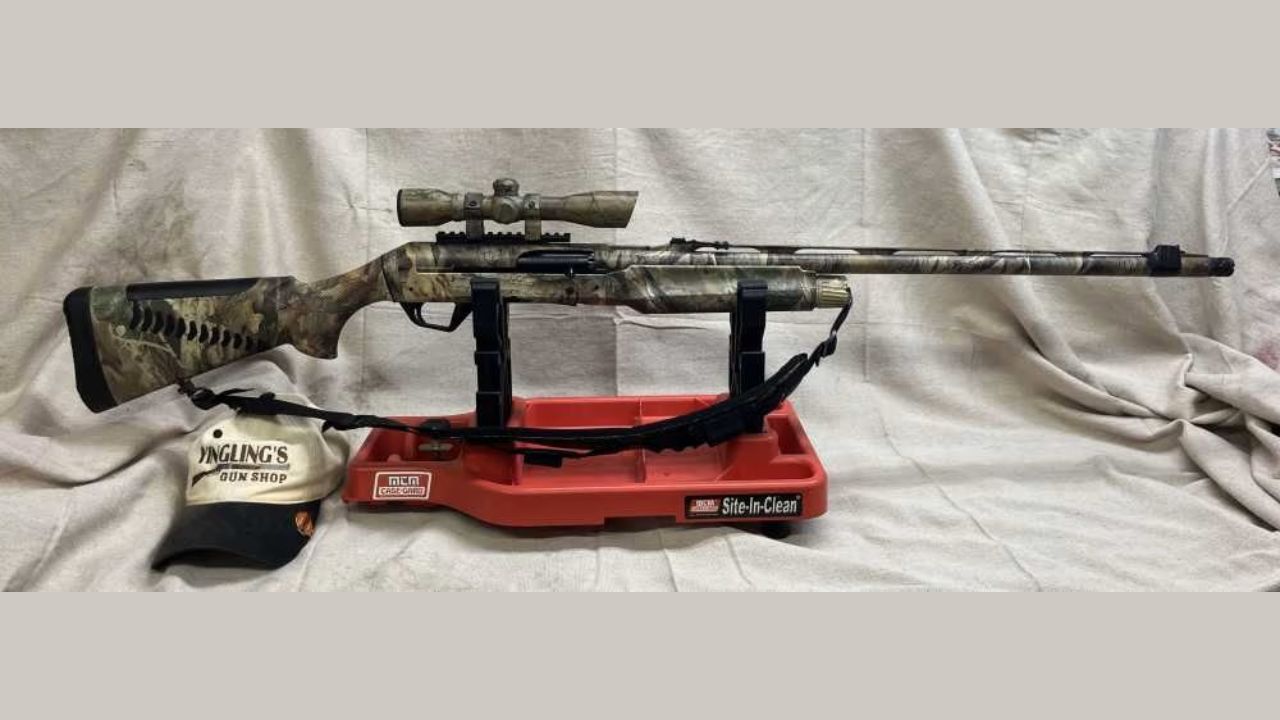
Photo credit: rsyandjly/GunBroker
The Benelli Super Black Eagle 3 is one of those shotguns that comes with big expectations. It is not a budget semi-auto. It is a premium waterfowl gun built for hunters who expect it to run in cold, wet, muddy, nasty conditions while handling everything from lighter field loads to heavy 3½-inch shells. Benelli markets the SBE3 around its Inertia Driven System, which it says does not require adjustment and is built to cycle consistently across a wide range of loads.
That reputation is a big reason people get frustrated when an SBE3 acts up. For the money, owners expect a shotgun that runs cleanly. Most of the common issues tied to the SBE3 are not random. They usually come back to the inertia system, shell choice, shouldering technique, recoil spring condition, bolt lockup, shell release, or the gun being dirty in places people do not always think to clean.
Cycling Problems With Light Loads
The most common complaint with the Benelli Super Black Eagle 3 is cycling trouble with lighter loads. Since it is an inertia-operated shotgun, it needs recoil energy to run the action. If the shell does not generate enough recoil, or the gun is not held firmly enough, the bolt may not travel fully rearward. That can lead to failures to eject, failures to feed, or the bolt closing on an empty chamber.
Benelli says the SBE3’s inertia system is designed to handle light field loads through 3½-inch magnums, but real-world performance can still depend on the specific load, the shooter, and the gun’s condition. Some owners report that SBE guns tend to prefer heavier loads at first, especially before they are fully broken in. If the shotgun runs hunting loads fine but stumbles with soft target loads, the load may be the bigger problem than the gun itself.
Failure to Eject
Failure to eject is closely tied to cycling problems. The gun fires, the bolt begins to move, but the spent hull does not clear the receiver. It may stovepipe, get trapped in the ejection port, or interfere with the next shell feeding. On a waterfowl gun, that usually shows up at the worst time, when birds are working and the shooter needs the second or third shot fast.
A lot of SBE3 ejection trouble comes down to shell strength, shoulder pressure, a dirty recoil system, or a sluggish bolt. Inertia guns are different from gas guns. A gas gun uses gas pressure to help drive the action, while an inertia gun depends on recoil movement. If the shooter is not giving the gun a firm enough platform, the action may not cycle with full energy. Shell brand can also matter. Some owners report ejection issues with one specific shell while other loads run normally, which is a pretty good sign that ammo should be part of the diagnosis.
Failure to Feed the Second Shell
Another common SBE3 complaint is the gun firing the first shell, cycling, then failing to feed the second shell correctly. The next shell may lift halfway, hang on the carrier, or get stuck before it reaches the chamber. That kind of malfunction is especially aggravating in a duck blind because the gun technically fired, but it did not get itself ready for the next shot.
Owner complaints on Benelli’s own forum describe the second shell lifting partway and getting stuck after the first round fires. This can point toward shell release timing, the carrier, magazine spring tension, shell length, or a bolt that is not cycling with enough authority. It can also be made worse by dirt, cold, heavy lubricant, or shells that do not move cleanly through the magazine tube. If the problem repeats with different loads, it deserves more than a quick wipe-down.
The Benelli Click
The “Benelli click” is probably the most famous reliability complaint tied to Benelli inertia guns. It happens when the bolt is not fully locked into battery, but the shooter does not notice. The trigger is pulled, and instead of a shot, the gun gives a click. That is a terrible sound when ducks are dropping into range or a turkey is standing in front of you.
The problem comes from the bolt not being fully seated. It can happen if the bolt is eased forward too gently, bumped slightly out of battery, or slowed by dirt and friction. Some hunters notice it after quietly chambering a shell, trying not to make noise. The gun looks ready, but the bolt head is not fully locked. Benelli has worked on this over the years with easier-locking bolt designs on newer guns, and Benelli lists the SBE3 family with its Easy Locking Bolt System. Still, any inertia gun owner should know to let the bolt close with authority and visually check lockup when it matters.
Dirty Recoil Spring Problems
One problem that gets missed on inertia shotguns is the recoil spring in the stock. A Benelli can look clean in the receiver and still have a dirty, sluggish recoil spring assembly hidden in the buttstock. When that spring gets packed with moisture, grit, rust, old oil, or marsh grime, the action can slow down enough to cause cycling problems.
This matters more for waterfowl hunters because the SBE3 often lives in the kind of conditions that punish shotguns. Mud, rain, flooded timber, layout blinds, cold mornings, and dog hair all find their way into guns over time. One hunter discussing Benelli cycling trouble noted that his issue was caused by a dirty spring in the stock after the gun had seen a lot of marsh and wet conditions. If an SBE3 starts acting weak or inconsistent after hard use, the recoil spring assembly should be on the cleaning list.
Failure to Extract
Failure to extract is less common than general cycling complaints, but it can happen. The shell fires, but the spent hull does not come out of the chamber cleanly. The extractor may slip off the rim, the hull may stick, or the bolt may not move far enough rearward to pull the shell out with authority.
This can come from a dirty chamber, rough shells, swollen hulls, a worn extractor, or the same weak cycling issues that cause ejection problems. Waterfowl loads can be rough on a gun, and cheap or inconsistent shells can make the problem worse. If the SBE3 extracts some brands perfectly but struggles with one specific load, the shell is probably part of it. If it struggles across several different loads, the extractor, chamber, recoil system, and bolt movement all need to be inspected.
Shell Release Problems
Some SBE3 problems show up before the shell ever reaches the chamber. The shell may not leave the magazine tube correctly, may release late, or may hang up around the carrier. This can create a failure to feed that looks like a bolt problem at first, even though the issue starts with shell release and timing.
On a semi-auto shotgun, the magazine spring, follower, shell latch, carrier latch, and shell length all have to work together. If one part is dirty, worn, stiff, or out of time, the gun can stumble. Waterfowl hunters also tend to swap loads often, moving between 2¾-inch, 3-inch, and 3½-inch shells depending on what they are doing. Benelli advertises the 3½-inch SBE3 as capable of handling 2¾-inch, 3-inch, and 3½-inch shells, but individual shell length, crimp style, and load power can still affect how smoothly the gun feeds.
Failure to Return Fully to Battery
A related issue is the bolt failing to return fully to battery after cycling. The gun fires, ejects, and chambers the next shell, but the bolt does not lock completely. The shooter may not notice until the next trigger pull produces a click instead of a shot. This overlaps with the Benelli click, but it can also happen during normal cycling if the action is dirty, dry, or slowed down.
This can be caused by fouling in the bolt rails, a dirty recoil spring, heavy lubricant in cold weather, weak ammo, or debris in the action. Some owner discussions point to buildup in the rails where the bolt rides as a possible reason the action does not close completely. The fix is not always complicated, but the problem matters. A semi-auto shotgun that almost closes is still not closed enough to fire.
Like The Avid Outdoorsman’s content? Be sure to follow us.
Here’s more from us: