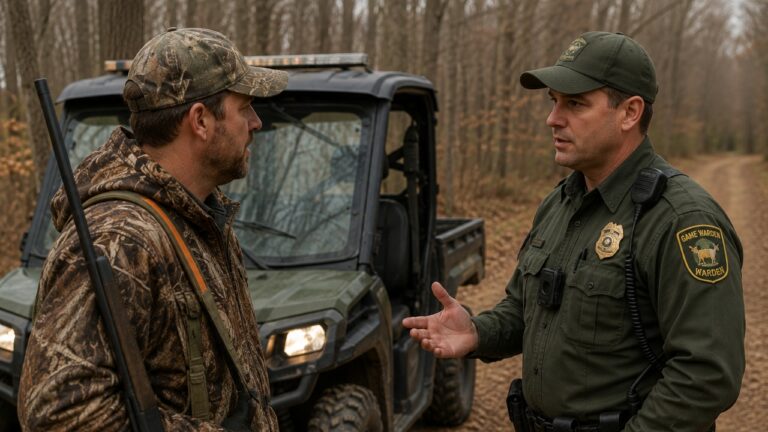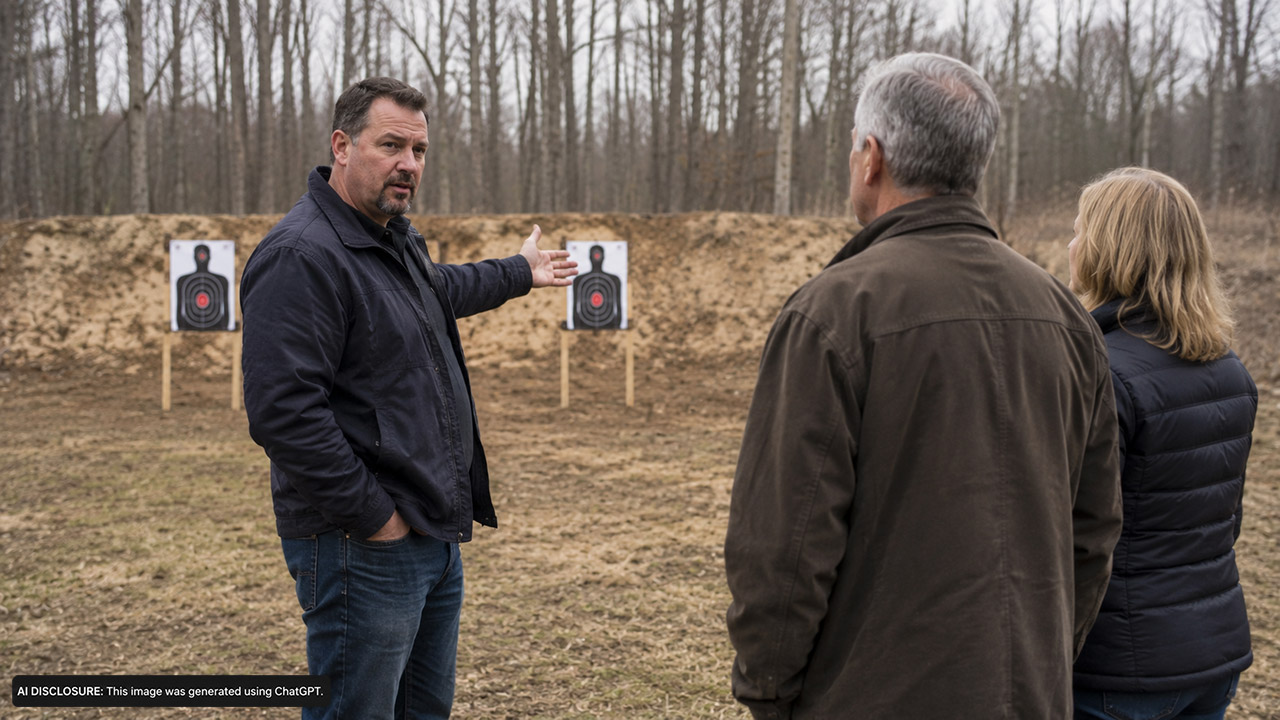
Photo credit: AI-generated image created using ChatGPT. Illustrative only
When you live in the country, you get used to a few things folks in town don’t: tractors at daylight, dogs barking at night, and the occasional gunshot drifting over from somebody checking a scope or knocking down a coyote. But it hits different when the guy next door buys raw woods and starts turning it into a dedicated shooting spot that’s “extremely close” to your home.
That’s the situation one Georgia family found themselves in after the vacant property beside their parents’ place sold. According to the original post, the new owner is planning a “private shooting range” on the land in rural Monroe County. Nothing has been officially approved yet, but the neighbor has already cleared some ground and put in a large gravel parking lot—enough visible work to make the parents and surrounding neighbors believe he’s serious.
A rural purchase turned into a big change, fast
The land next door wasn’t a developed lot with a driveway and a house pad. It was simply woods—quiet, natural cover, and a buffer between neighbors. That kind of property is part of what people think they’re buying when they settle outside city limits.
Then the “For Sale” sign comes down, and the first real change isn’t a new home going up. It’s clearing, and a parking lot. Even before a single shot is fired, that’s the kind of development that tells you the property’s purpose is shifting.
Noise is one thing—safety and daily life are another
The family’s worry wasn’t framed as politics. It was practical: they don’t want to listen to guns “of all types” being fired every day for the rest of their lives. Anyone who has lived near regular shooting knows it’s not just volume; it’s the frequency and unpredictability. A couple shots on a Saturday afternoon is a lot different than steady fire that starts when you’re trying to drink coffee and runs through supper.
And when a range is extremely close to a home, people naturally start thinking beyond annoyance. Even a well-run private range has to be designed right—safe direction of fire, a legitimate backstop, and enough distance that a mistake doesn’t become a tragedy. The closer it is, the less room there is for error.
“Nothing has been approved” can be the most important detail
The post notes that no approvals are in place. That can matter, but it also depends on what the county requires. In many rural areas, a landowner can clear land and build certain improvements without much involvement from local government, especially if it’s truly “private” and not a commercial operation open to the public.
That’s where a lot of people get surprised. If the land is zoned agricultural or rural residential, and the county doesn’t treat a private range like a business, there may not be a neat “permit” process for neighbors to object to. If there’s no hearing, there’s no microphone to step up to, and that’s usually when folks realize stopping a project can be harder than they assumed.
Where to start if you’re the neighbor who’s concerned
The parents in the post wanted to fight it “tooth and nail” and asked where to begin. In a situation like this, the best first steps aren’t yelling over the fence line. They’re boring steps—the ones that hold up later if things go sideways.
Start with the county. Call or visit the planning and zoning office and ask simple, direct questions: What is the zoning on that parcel? Is a private shooting range specifically addressed in the county code? Is there a noise ordinance that applies in unincorporated areas? Are there limits on hours of operation for loud activities? If the neighbor plans to host groups and collect fees, would that be considered a commercial use that requires additional approvals?
Next, document what you can see from your own property without trespassing. If you’re seeing major clearing and a large gravel parking lot going in, that’s relevant. Dates, photos, and notes—kept calmly and consistently—are more useful than angry phone calls when you need someone to take the concern seriously.
Why lawyers often tell people “stopping it” isn’t simple
From a rural landowner’s perspective, this is where it gets uncomfortable. Private property rights are a real thing, and in many places discharging firearms on private land is legal as long as it’s done safely and within any local restrictions.
Unless a neighbor is violating a specific ordinance, creating a provable hazard, or running an unpermitted business, there may not be a clean legal lever to pull to shut the whole thing down. And even when there is a lever, it often takes time—complaints, inspections, letters, hearings, maybe court. By then, the dirt work is done and the use of the land may already be established.
That’s why this kind of project can feel like it’s happening “too fast,” especially when the first visible changes are heavy equipment, cleared lanes, and a parking area that suggests more than just a guy sighting in one deer rifle a year.
The practical middle ground: pushing for safe, responsible setup
Not every situation like this ends with someone “winning” and someone “losing.” Sometimes the most realistic outcome is pressure—through neighbors, through county questions, and through careful reporting of legitimate issues—that encourages the landowner to build and run the range in a way that’s safer and less disruptive.
That can mean asking for thoughtful orientation so shots are directed away from homes, meaningful backstops, and reasonable hours. It can also mean making sure “private” doesn’t quietly turn into a busy weekend destination with a full parking lot and constant firing lines. A large gravel parking lot is exactly the kind of detail that makes folks wonder what “private” is going to look like in practice.
And if the neighbor refuses to communicate, that’s still valuable information. It tells you the only language that may work is the county code, documented safety concerns, and persistent—but level-headed—follow-through.
Living rural means you’re going to share space with other people’s plans. Sometimes those plans are a new chicken coop. Sometimes it’s a bulldozer and a shooting berm. When the change lands close to home, the smartest move is to get clear on the rules where you live, keep good records, and stay focused on safety and enforceable standards—not just frustration. That approach gives you the best chance of slowing things down, shaping the outcome, or at least keeping everyone on the right side of responsible gun handling and neighborly common sense.
Like The Avid Outdoorsman’s content? Subscribe to our newsletter so you never miss an article.
Here’s more from us: