Photo credit: The Avid Outdoorsman
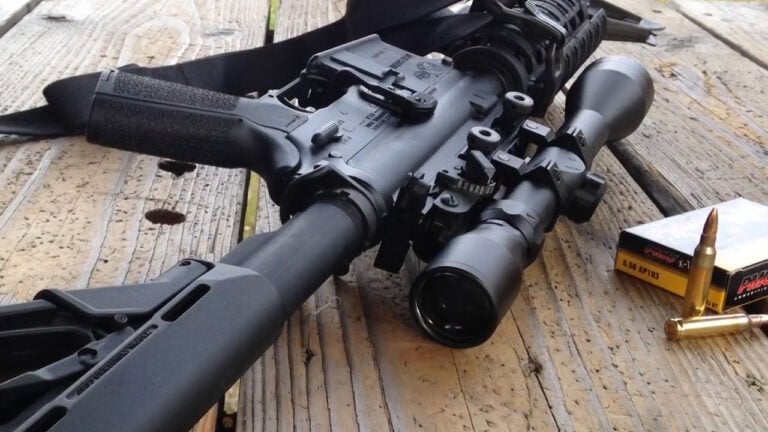
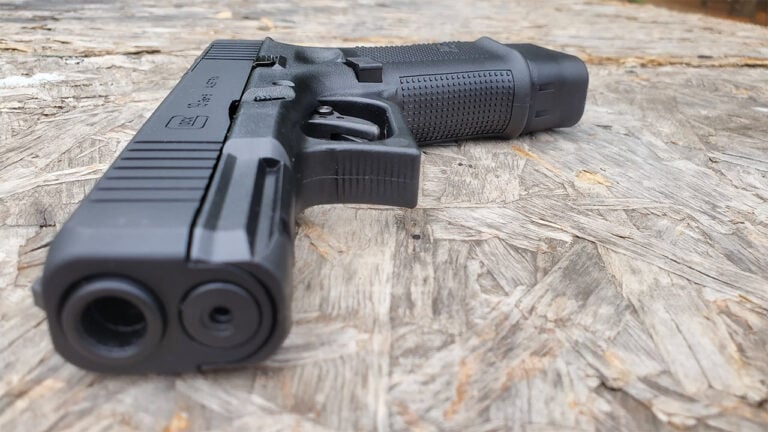
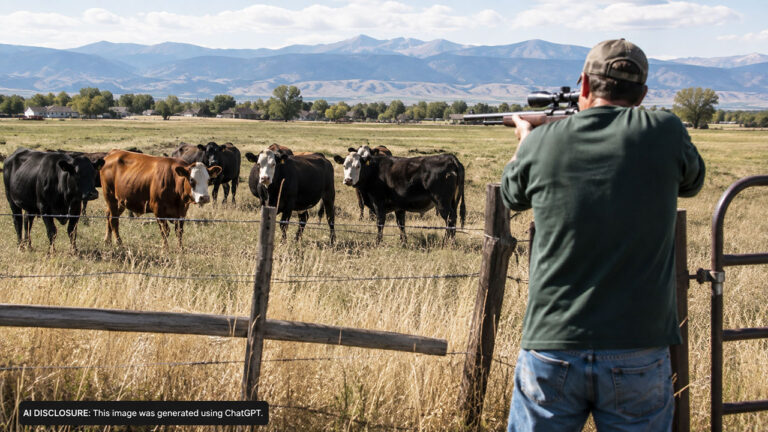
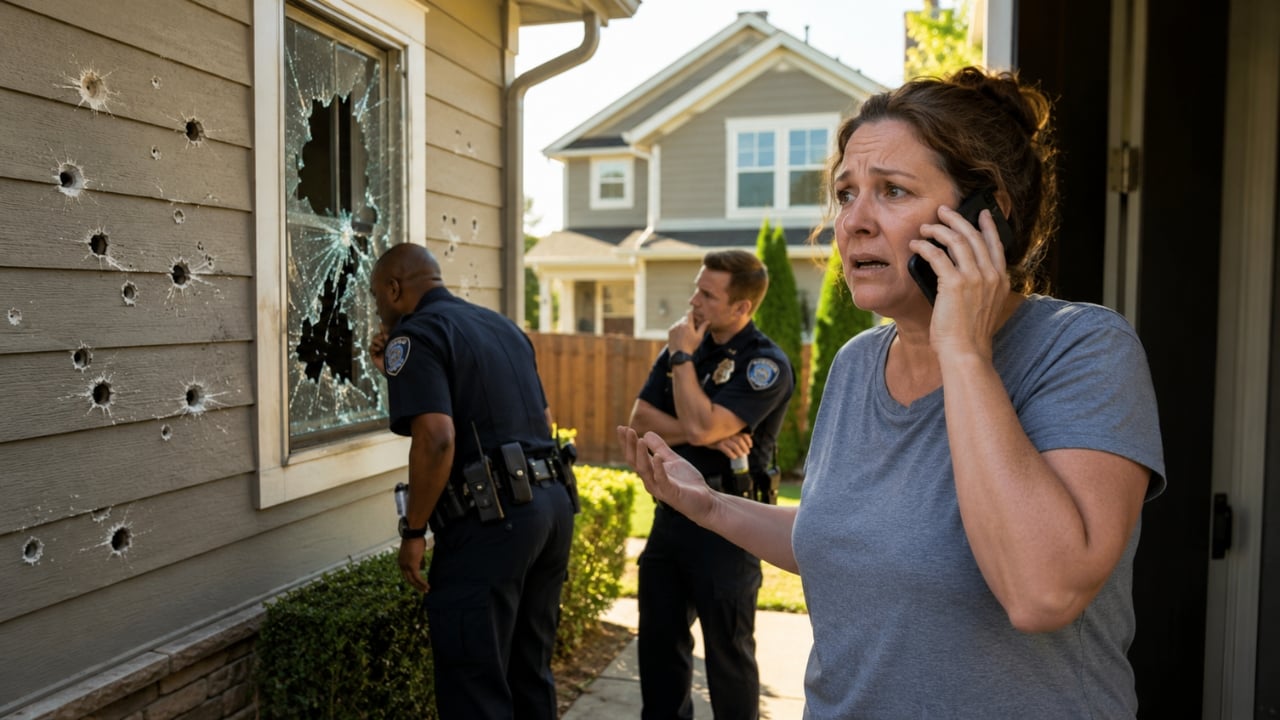
It doesn’t take much to get your attention like the sharp crack of a rifle and the immediate, ugly thump of something hitting your house. That’s what one homeowner dealt with when a couple rounds punched into the exterior of a rural home on a quiet stretch of lots where people are used to hearing the occasional target practice.
The homeowner did what most folks would do when the threat is real and immediate: called 911, reported shots hitting the residence, and pointed officers toward the most likely direction—next door, where shooting had been heard before.
The first sign wasn’t the sound, it was the damage
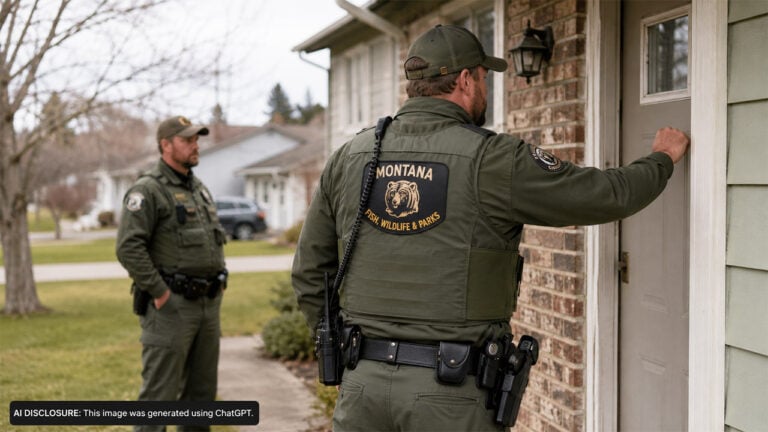
When law enforcement arrived, the homeowner walked them straight to the impact points. At least two spots on the home showed fresh damage consistent with bullet strikes—splintered siding, a clean puncture, and fragments that looked like they’d skipped or broke apart after contact.
In a situation like that, the first question isn’t “who did it,” it’s “is anyone hurt” and “is it still happening.” With the property secured and no injuries reported, the focus shifted to figuring out where the rounds came from and whether there was an immediate threat to the neighbors and anyone else nearby.
Why “it came from next door” isn’t always enough
The homeowner’s suspicion wasn’t random. They’d heard shooting from the neighboring property before, and the timing lined up. In a lot of rural areas, it’s common to set up a small backyard range—berm, steel, paper—especially when you’ve got space and a safe backstop.
But suspicion and proof are two different things. Officers reportedly checked the area, talked with the neighbor, and looked for the kind of evidence that ties a specific firearm discharge to specific impacts: directionality, angles, distance, the likely caliber, and any recovered projectile or jacket material that could be compared.
Without a round pulled from a wall, a clear trajectory line, or something like matching fragments to a known firing position, it can be hard to say, on the spot, “Yes, those shots came from that property.” That’s not a satisfying answer when you’re the one staring at holes in your house, but it’s often how these calls go in the moment.
What officers usually look for on a “shots into a dwelling” call
Most responding officers are going to start with the basics: find the impact points, note the height from the ground, and look for the likely line of travel. A round that hit low and flat might suggest a skip off the ground. A higher entry point could suggest a more direct line from a firing position.
They’ll also look at what’s behind the home. If the house sits with open space behind it, the round could have come from farther than the nearest neighbor. If there are trees, a ridge, or a hill, the terrain can act like a funnel or a deflector, changing where you’d expect impacts to show up.
And then there’s the simplest piece: did anyone actually see someone shooting in that direction at that time? In a lot of rural “I heard shots” situations, witnesses are inside, windows closed, HVAC running, and they’re working off sound and assumption.
The safety issue that changes everything
Plenty of us have fired rifles and handguns on private land. Done right, it’s one of the best ways to stay sharp for hunting season and keep skills from getting rusty. Done wrong, it turns into the kind of call nobody wants to make.
A safe range setup on private property isn’t complicated, but it is non-negotiable: a real backstop that stops rounds (not “a few logs”), a direction that doesn’t point toward homes or roads, and a lane that accounts for misses, ricochets, and folks getting careless with height. One bad shot off steel at the wrong angle, one round that skips off frozen ground, or one “just one more” when the light’s fading can send a bullet a long way.
If rounds truly struck an occupied home, that’s not “country living.” That’s a serious failure of judgment and a hard reminder that every trigger press has consequences outside your property line.
What neighbors and online commenters tend to focus on
Whenever a story like this makes the rounds, people split into camps fast. One camp says, “If bullets hit a home, somebody needs to be held accountable.” The other says, “You can’t pin it on the neighbor without proof.” Both points can be true at the same time.
The practical voices usually push the same ideas: document everything, don’t escalate face-to-face, and make the problem easy for law enforcement to work. That means photos with timestamps, notes on when the shots were heard, and—if it can be done legally where you live—cameras that cover the likely firing direction or the property line.
A lot of rural folks also bring up involving a local conservation officer or game warden if there’s any hint the shooting is tied to hunting or target practice during odd hours. They’re used to dealing with boundary problems, unsafe shots, and “it wasn’t me” conversations that happen every deer season.
The frustrating part: what the homeowner can do next
When officers can’t confirm a source right then, it leaves the homeowner in a rough spot. The damage is real, but the fix isn’t as simple as pointing next door and expecting it to be handled like a parking ticket.
The best next steps are usually boring, but they work. Get the damage documented. If any projectile or fragments can be safely recovered by a professional, that matters. Ask for an incident report number. If it happens again, call immediately again—patterns matter, and multiple calls build a timeline.
On the neighbor side, if someone is shooting on their land, the best move is to take the hint and re-check their setup even if they believe they did nothing wrong. Walk the line, look at the backstop, consider where a miss goes, and think about ricochets off rocks or steel. A few hours of correction beats a lifetime of regret.
Living rural comes with noise, dust, and the occasional “that’s just how it is.” But rounds hitting a house isn’t normal, and it shouldn’t be shrugged off. Whether the shots came from next door or farther out, this is one of those moments where calm documentation and serious safety changes are the only path that ends well for everyone involved.