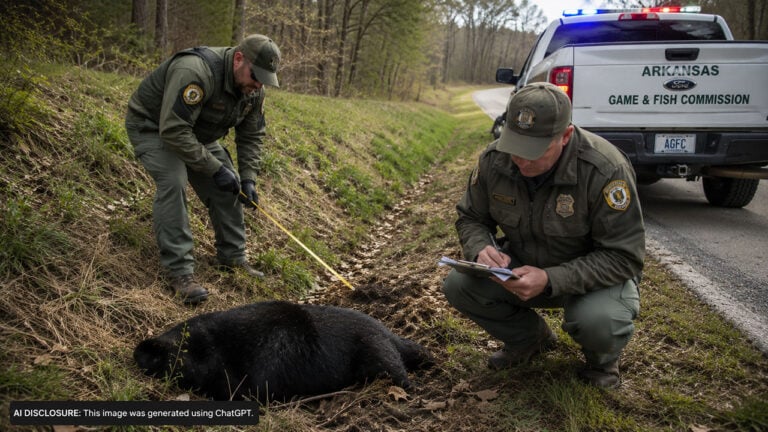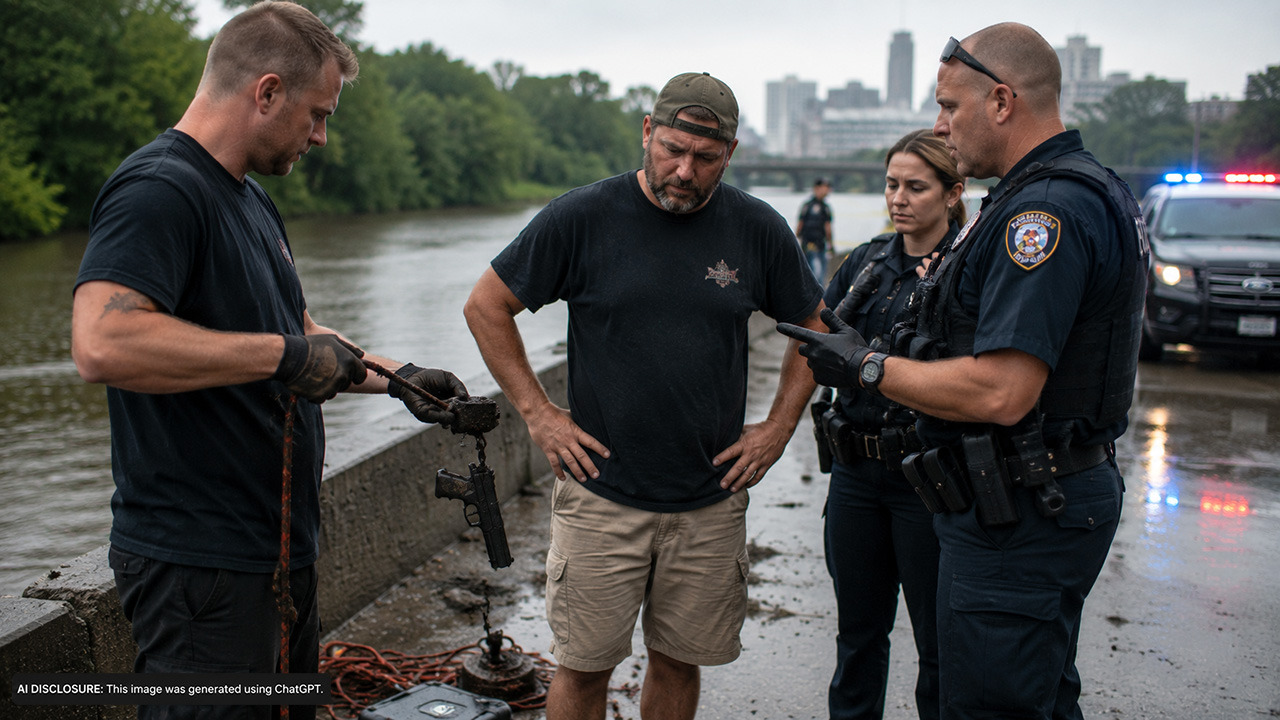
Photo credit: AI-generated image created using ChatGPT. Illustrative only
Magnet fishing usually feels like a treasure hunt with rusty surprises—old rebar, lures, maybe a bike frame if you’re lucky. But on a trip to hit bridges in Indiana, one group’s day on the river turned into a law-enforcement scene fast after they pulled up a handgun frame with a loaded magazine.
A bridge-hopping trip in Indiana took an unexpected turn
The group made a two-hour drive to meet up with friends and work a few bridge spots. That’s standard magnet-fishing strategy: bridges collect all kinds of metal, and the current tends to funnel debris into predictable lanes.
At one of those bridges, the tone changed when a buddy named Jeff pulled up what was described as a Smith & Wesson SD40VE frame, and it still had a loaded magazine with it. A lot of magnet fishers have found firearms before, but any time you’re dealing with a gun—especially one that’s been in the water—there’s no “just toss it in the bucket and keep going.”
This wasn’t their first serious find of the day
What makes this story stand out is that it wasn’t a one-off. Earlier that same day, the group said they found 18 other guns and a live 175mm naval shell, which led to the bomb squad being called out.
That’s not the kind of “haul” anyone should feel casual about. Finding one gun is a big deal. Finding that many, plus military ordnance, suggests you’re working an area that’s been used as a dumping ground—whether for criminal reasons, panic disposal, or just plain bad decisions.
Why a stripped handgun frame still matters
The gun Jeff pulled up wasn’t described as a complete, ready-to-fire pistol. It was a frame, and the post made a point that “nothing good comes from a disassembled firearm.” That’s the truth, and it’s worth saying out loud.
Even if it’s incomplete, it can still have evidentiary value—serial numbers, tool marks, and association with a magazine or other parts can matter. And from a safety standpoint, you don’t want to assume anything about a firearm that’s been underwater. Waterlogged ammo, stuck parts, grit in the action—none of that is a reason to handle it more than you have to.
They did the right thing and called non-emergency
After pulling the pistol frame and magazine, the group called the non-emergency line to have police collect it. That’s the smart move: document the find through proper channels and get the gun out of your hands quickly.
They said local checks didn’t turn up information, and they weren’t sure what might show up when it was run through national systems. They also noted they were just outside one of the toughest neighborhoods in South Bend, which adds some context for why a dumped pistol and magazine would be taken seriously.
Police asked them to leave while detectives took over
After the call, police told them to magnet fish somewhere else while detectives took over the scene. That part may surprise folks who haven’t dealt with an active investigation before, but it makes sense. Once a firearm is found in a place where it could be tied to a crime, officers don’t want the area disturbed.
Magnet fishing can inadvertently move evidence—dragging the bottom, pulling up objects, shifting debris. Even if you’re careful, it’s still activity that changes the scene. From law enforcement’s perspective, clearing the area is about controlling the environment and keeping the chain of events clean.
What outdoorsmen can take from this if they ever snag a gun
If you spend time on rivers—whether you’re fishing, running traps, scouting, or dragging magnets—you’re eventually going to find things you didn’t expect. And the right move is usually the boring move.
Don’t mess with it. Don’t try to “make it safe” beyond basic common sense like not putting your finger in a trigger guard and not pointing it at anyone. Keep it where it is if you can, mark the location, and call it in. If you already pulled it up, set it down, step back, and let responding officers decide what they want touched and what they don’t.
The full account and video were shared in the original post, but the main lesson doesn’t need a replay: waterways can hide real hazards, and once firearms and ordnance enter the picture, the day stops being a hobby trip. It becomes a safety problem first—and sometimes a crime-scene problem right after that.
Like The Avid Outdoorsman’s content? Subscribe to our newsletter so you never miss an article.
Here’s more from us: