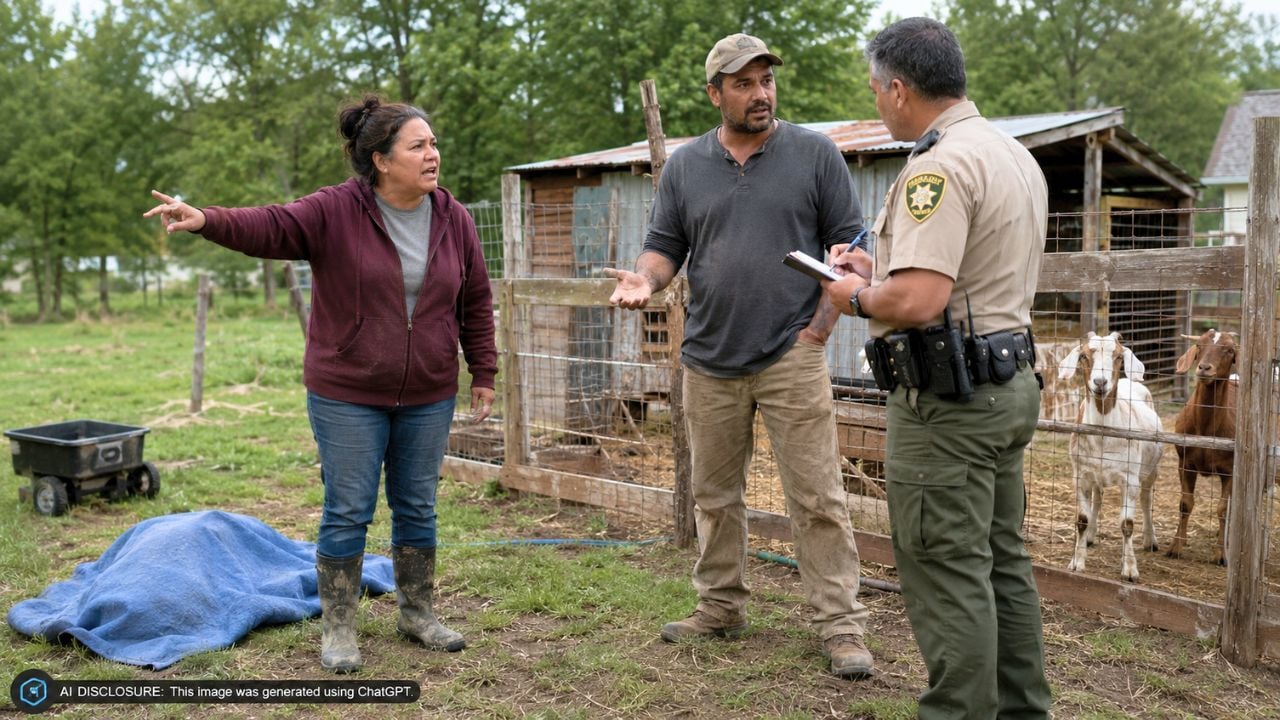
Photo credit: AI-generated image created using ChatGPT. Illustrative only.
It was the kind of noise that snaps you awake on a rural place—growling in the dark, animals screaming, and the sick feeling that something is already happening out in the pasture. In a Texas incident described in the original post, a goat owner grabbed a rifle and a spotlight and ran outside after hearing his goats in distress.
What he found set off a chain of events that a lot of livestock folks can relate to: dead animals, a split-second decision, and then a neighbor who treated it like a personal attack instead of the aftermath of an uncontrolled dog doing what uncontrolled dogs sometimes do.
A midnight predator turned out to be a neighbor’s dog
The landowner said he initially believed he was seeing a coyote dragging a baby goat away. In the beam of his spotlight, he fired and the animal disappeared into the night. He went back inside long enough to put shoes on, then returned to the pasture to assess the damage.
That’s when the scene came into focus. He found his breeding billy dead in the pasture, another baby goat dead, and his neighbor’s German Shepherd dead beside the baby goat. In other words, it wasn’t a wild predator at all—it was a domestic dog that had come under the fence and started killing.
He documented the damage and tried to handle it face-to-face
Before tempers flared, the goat owner did something practical: he took photos of “everything I thought was relevant,” including the section of fence where the dog had dug under. He also photographed the dog’s body next to the dead baby goat, which matters because these situations often come down to what you can prove later.
Then he loaded the dog into his truck and drove it to the neighbor’s house to tell him what had happened. That’s not an easy conversation to have, but it’s the direct, in-person way many rural neighbors prefer to handle problems before they become bigger problems.
The neighbor’s reaction escalated fast
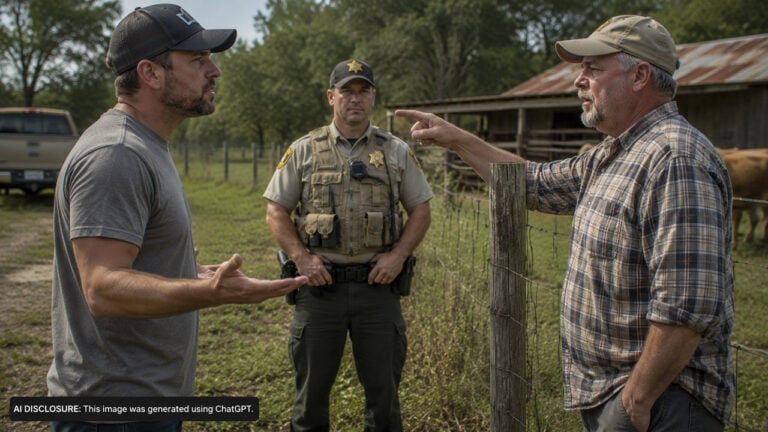
The neighbor didn’t take it well. According to the account, he became angry, told the goat owner to leave, and later called demanding $3,000 for the dead dog. The goat owner’s response was what most stock owners would say out loud: if anyone owes anyone, it’s the dog owner who let a German Shepherd roam and kill livestock.
The call didn’t cool down. The neighbor allegedly cursed at him, threatened to come over with a shotgun, and hung up. At that point, the conflict wasn’t just about dead animals—it was about safety and the real possibility of a late-night confrontation between armed adults who were both fired up.
The money question: dogs are “pets,” but livestock are property and income
The goat owner’s frustration wasn’t just emotional; it was financial. He explained that breeding billies can be worth “several thousand dollars over the course of their lives,” and that the adult goat killed was only three years old. If you’ve ever built a herd around one good male, you know that’s not exaggeration. Genetics and proven performance aren’t interchangeable like buying a replacement hammer.
In his later update, he put a number on it: $4,500. He broke it down as $500 for the baby, $500 for the billy, and $3,500 for the offspring the billy might have produced in a year. Whether a court would accept every dollar of that kind of “future value” is another matter, but the basic point stands—one roaming dog can wipe out years of careful breeding decisions in a few minutes.
And there’s a hard truth here for anybody who owns goats, sheep, poultry, or calves: when a dog gets a taste for it, it often doesn’t stop at one animal. Even if it’s “never done that before,” it’s doing it now, in your pasture, and you’re the one left stacking bodies and figuring out what comes next.
Rabies, bite risk, and why vaccination records suddenly matter
After the dust settled, the goat owner’s mind went to something a lot of folks don’t think about until they’re forced to: disease risk. He said he wasn’t sure whether the dog had bitten any other goats, and he wanted the dog’s shot records to make sure he wouldn’t lose more animals to rabies.
That’s a real-world concern, especially outside city limits where dogs may not be registered and paperwork may be thin. Even if rabies isn’t common in your county, the consequences are severe enough that it changes how you handle the aftermath—who you call, what records you demand, and how fast you need answers.
He noted that his photos showed the dog’s collar and the neighbor’s name on the tags. That kind of small detail can matter later when the conversation shifts from “my dog would never” to “prove it was my dog.”
Trying to settle it, then shifting toward small claims
The next day, the neighbor emailed an “apology” and asked if they could put it behind them. The goat owner replied that he was willing to move on, but not to eat thousands of dollars in losses. He asked again for shot records and told the neighbor he could pay or the matter could go to small claims court.
That’s where the tone flipped again. The neighbor responded aggressively, telling him off for asking for money after shooting the dog. The goat owner, weighing his options, started looking at a demand letter—possibly from a lawyer—not necessarily to file a full-blown lawsuit, but to put a clean, formal request in writing.
That’s a move a lot of landowners use when a handshake solution fails: keep the paper trail tight, keep communication calm, and let the next step be a courthouse process instead of a driveway argument.
What outdoorsmen tend to focus on in situations like this
This kind of dispute always pulls people in two directions: the emotion of a dead “family pet” versus the reality that a loose dog killing livestock is a serious problem. Livestock owners see it as protection of property and animals under their care. Dog owners sometimes see only the end result, not the chain of decisions that led there.
From a practical, country-living standpoint, a few themes stand out in the goat owner’s approach: he responded to an active attack in the dark, he documented the scene, and he tried to notify the neighbor directly. He also recognized that the real danger wasn’t just the dog—it was the human side of the situation once threats started flying.
No matter where you fall on it emotionally, the takeaway for rural folks is pretty plain: if you own dogs, keep them contained. If you own livestock, harden your fencing where dogs like to dig, keep lights handy, and document everything when something goes wrong. And if tempers start boiling, it’s worth stepping back and letting paperwork and proper channels do the work instead of meeting anger with anger.
In the end, dead goats and a dead dog are bad enough. Turning it into a neighbor-versus-neighbor standoff is how situations like this get even uglier—fast.